

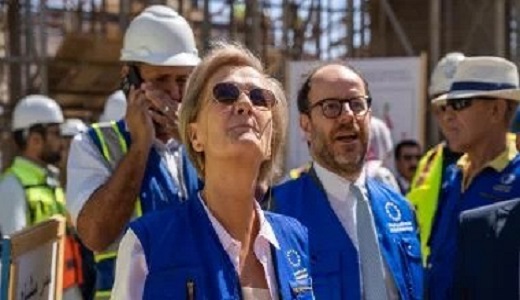
Egypt Daily News – A high-level EU delegation, including Ambassador Angelina Eichhorst, Head of the European Union Delegation to Egypt; Guido Clary, Representative of the European Investment Bank (EIB); and Sašo Podlesnik, Slovenia’s Ambassador to Egypt, visited the Abu Qir Metro project in Alexandria. The transformative infrastructure project is co-financed by the European Bank for Reconstruction and Development (EBRD), the EIB, the French Development Agency (AFD), the Asian Infrastructure Investment Bank (AIIB), and the Egyptian government, with a total investment of €1.764 billion.
The delegation received a detailed technical briefing from representatives of Orascom Construction, the project’s contractor. The Abu Qir Metro project involves the rehabilitation and modernization of an existing railway line to create a high-capacity, high-frequency metro system. Once completed, the metro is expected to offer significantly faster travel times, improved passenger comfort, and a boost in the use of public transport—ultimately helping to reduce traffic congestion in Alexandria.
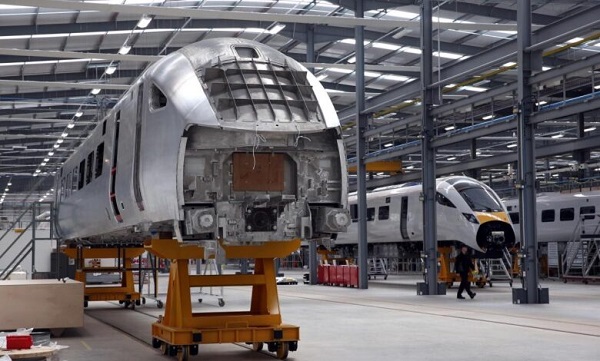
The 21.7-kilometer metro line will consist of 20 stations and is considered one of the largest urban railway projects in the region. It is projected to serve approximately 1.5 million passengers daily.
Ambassador Eichhorst emphasized the EU’s full support for the Egyptian government, the private sector, and technical and academic institutions, especially in the transportation sector. She highlighted the importance of accelerating project implementation due to the high public demand. “I am delighted that residents of Alexandria will soon be able to travel across the city in under an hour,” she said, praising all the parties involved.
Eichhorst also stressed the need to balance development with environmental and human considerations. “Improving energy efficiency and phasing out fossil fuels like diesel are crucial,” she noted. “Tackling climate change requires speeding up the transition to sustainable alternatives, and this is an essential investment in our shared future.”
Guido Clary of the European Investment Bank echoed those sentiments, underlining the significance of the bank’s contribution of over €700 million to the project. “This is a transformative investment that promotes clean energy and helps reduce pollution and carbon emissions, aligning with global climate objectives,” he said.
“We are proud to support a project that will fundamentally improve the lives of Alexandria’s residents—shortening commutes, improving access to employment, and fostering a more sustainable environment,” Clary added. He also noted that the metro project will create job opportunities, particularly for women, and contribute to Alexandria’s social and economic development.
Ibrahim Naguib Ragheb, Vice President of Egypt’s National Authority for Tunnels, confirmed that around 33% of the project has been completed, with full completion expected by 2027. He added that alternative transportation options are being provided to ease disruptions during construction.
The Abu Qir Metro project aims to transform a deteriorated railway line into a modern electric metro system that integrates environmentally friendly and human-centered design. As part of Egypt’s broader “Green Cities” strategy, it supports efforts to reduce emissions and achieve sustainable urban development.
With its significant investment and forward-looking approach, the metro is set to place Alexandria firmly on the map of future-ready cities—enabling residents to traverse the city in less than an hour and dramatically improving the quality of urban life.
