

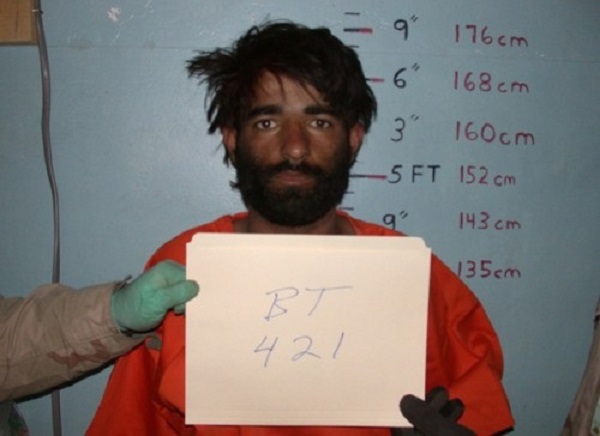
Egypt Daily News – Dilawar, a 22-year-old Afghan Pashtun taxi driver, became a haunting symbol of the brutality inflicted during the U.S.-led “War on Terror” after being tortured to death in American custody at Bagram Air Base in December 2002. His story, later documented in the award-winning film Taxi to the Dark Side, exposed the extent of abuse practiced in secret detention facilities and the absence of justice for victims like him.
The ordeal began on December 5, 2002, when Dilawar was stopped by a local militia led by Janbaz Khan in Afghanistan’s Khost province, near the American base at Camp Salerno. Dilawar was transporting three passengers when militia forces found a broken walkie-talkie with one of them and a generator voltage regulator in the car’s trunk. The four men were accused of involvement in a rocket attack on the base that had occurred earlier that morning.
They were handed over to American forces and transferred to the U.S.-run detention facility at Bagram Air Base. There, Dilawar endured five days of relentless torture. He was beaten repeatedly on the thighs and legs with batons, hung from the ceiling by his wrists while blindfolded, deprived of sleep, exposed to freezing temperatures, dragged by his beard, and stomped on by guards.
As he screamed “Allah” in pain during the torture, U.S. soldiers reportedly mocked his cries as a running joke. On the fifth day, December 10, after yet another brutal interrogation session, Dilawarby then unable to move was hung once more from the ceiling. He died just hours later.
An autopsy report described his injuries as consistent with being “run over by a bus.” His legs were so badly damaged that they would have required amputation if he had survived. The cause of death was listed as “blunt force trauma to the lower extremities complicating coronary artery disease,” and the method of death was officially labeled as “homicide.”
Initially, U.S. military authorities falsely claimed that Dilawar had died of natural causes. The truth only came to light when his family provided his death certificate to The New York Times, sparking international attention.
Eventually, an internal U.S. investigation concluded that Dilawar had been innocent, arrested at the wrong place at the wrong time. Later, U.S. forces arrested the very militia leader who had detained him Janbaz Khan, on suspicion that he had orchestrated the rocket attack himself to gain favor with the Americans.
As for the three passengers who were with Dilawar, they were sent to Guantanamo Bay and held for 15 months before being released without charges. Each received documentation stating that they posed “no threat.”
The military prosecutions that followed left many observers disillusioned. The harshest sentence handed down was five months in jail for Sgt. Joshua Claus, who was also demoted. Another soldier, Brian Cammack, served three months. A third, MP Selena Salcedo, was demoted and fined $1,000.
Shockingly, Capt. Carolyn Wood, the officer who oversaw interrogations at Bagram during this period, was awarded the Bronze Star and later transferred to Iraq’s Abu Ghraib prison another facility infamous for its abuse of detainees.
Dilawar’s death remains a stark example of the systemic abuse that took place in U.S. detention centers during the post-9/11 era. His final moments his body suspended, broken, and brutalized stand as a symbol of unchecked power, misplaced justice, and the enduring scars of a global war waged in the name of security.
Though Dilawar’s tragedy became public, many believe his story is only one of countless untold abuses hidden within the shadows of American-run detention facilities during the War on Terror.
