

Ahmed Kamel – Egypt Daily News
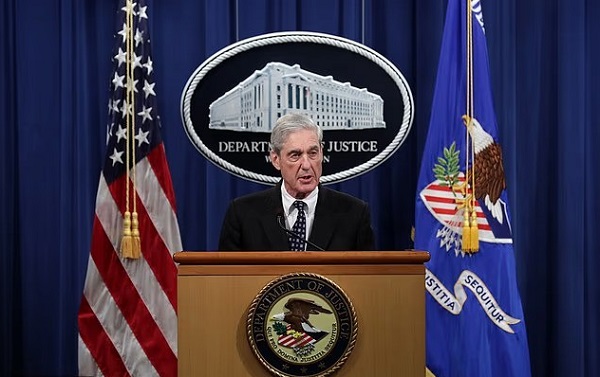
Former FBI Director Robert Mueller, best known for leading the high-profile Russia investigation into Donald Trump’s 2016 presidential campaign, has reportedly been living in a memory-care facility for several years, raising new questions about his ability to testify in an upcoming congressional investigation into the FBI’s handling of Jeffrey Epstein.
The revelation, first reported by RealClear Investigations, comes as the House Oversight Committee, led by Chairman James Comer (R-Ky.), prepares to question Mueller about his knowledge of the FBI’s role in Epstein’s 2005 Florida sex crimes case. At the time, Mueller was serving as FBI director and oversaw the bureau during a period when Epstein was investigated for soliciting minors but ultimately received what many critics considered an extraordinarily lenient sentence.
“Sources tell me Mueller has been living in a memory-care facility for the past few years,” journalist Paul Sperry posted Tuesday on X (formerly Twitter), citing unnamed individuals familiar with Mueller’s condition. Mueller, now 80, has not publicly addressed the reports, and a former spokesperson declined to comment.
The news of Mueller’s reported cognitive decline comes amid mounting Republican pressure to reopen scrutiny of the Epstein case. GOP lawmakers are particularly interested in Mueller’s tenure at the FBI and whether he was aware of any attempts to downplay or limit the bureau’s involvement in the case against the disgraced financier.
Despite the reported health concerns, the House Oversight Committee has scheduled Mueller for a transcribed interview on September 2. It remains unclear whether the committee has formally confirmed Mueller’s condition or how it may affect his testimony.
Committee Chairman Comer, however, has shown no signs of backing down. In a post on X, he reaffirmed plans to include Mueller in a broader inquiry into what he calls “institutional failures and political interference” surrounding the Epstein investigations across multiple administrations.
Mueller’s reputation once lionized in Washington for his tenure at the FBI and his methodical handling of the Russia investigation has undergone significant reappraisal in recent years. His 2019 congressional testimony on the Russia report was marked by moments of visible confusion and memory lapses. During the hearing, Mueller struggled to recall key details and, at times, asked for questions to be repeated. One particularly striking moment came when he appeared unfamiliar with the role of Fusion GPS, the firm behind the controversial Steele Dossier that helped ignite the Trump-Russia narrative.
Former Rep. Matt Gaetz (R-Fla.), a vocal Trump ally, seized on the reports of Mueller’s decline, suggesting that the former special counsel had long shown signs of cognitive deterioration. “It was clear this is where things were heading when we questioned him before Congress,” Gaetz wrote on social media. “Mueller was used by some very vicious people. I’m not sure he really ever knew what was happening in the investigation.”
While some Democrats have expressed skepticism about the committee’s latest inquiry, Republicans argue the Epstein case warrants renewed attention, especially in light of persistent public outrage over his light 2008 plea deal and the web of high-profile figures connected to him.
Mueller is not the only figure expected to face questions. The committee has also lined up testimony from a wide range of former officials, including former Presidents Bill and Hillary Clinton, and former Attorneys General Eric Holder, Loretta Lynch, Merrick Garland, and William Barr. These testimonies are set to take place through the fall.
Additionally, Trump’s former Attorney General Pam Bondi has come under bipartisan criticism for allegedly stalling the release of key Epstein-related documents. Pressure is mounting on her to accelerate transparency, particularly after accusations that the Trump administration withheld information as part of a broader “cover-up.”
In a related development, current Deputy Attorney General Todd Blanche reportedly met with Ghislaine Maxwell, Epstein’s long-time associate who is now serving a 20-year sentence for sex trafficking. Blanche’s multi-day visit to Maxwell’s Florida detention facility was described as an effort to gain further insight into Epstein’s network and alleged accomplices.
Shortly after the meeting, Maxwell was transferred to a lower-security facility, a move that has raised eyebrows and further fueled speculation about her potential cooperation.
As for Mueller, questions remain about whether he will be physically or mentally fit to participate in the committee’s inquiry. If his health precludes him from testifying, it could complicate efforts to explore the FBI’s handling of one of the most notorious criminal cases in recent American history and potentially spark partisan clashes over the legitimacy and aims of the investigation itself.
For now, all eyes remain on September 2, when the committee hopes Mueller will appear though what he will be able to offer remains an open question.
