

Ahmed Kamel – Egypt Daily News
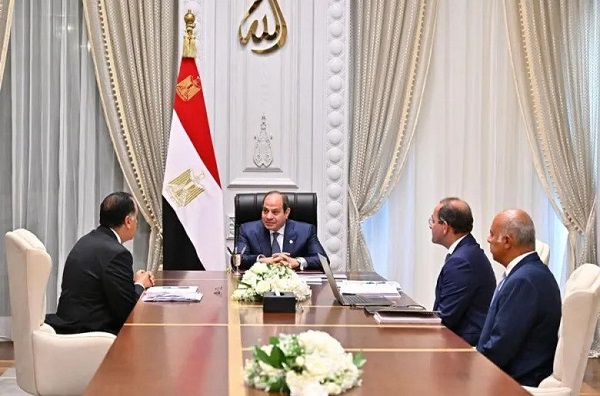
President Abdel Fattah El-Sisi has directed the government to boost public spending on key social sectors particularly healthcare, education, and welfare programs such as “Takaful and Karama”, as part of a broader commitment to social justice and inclusive development. The directive came during a high-level meeting on Sunday with Prime Minister Mostafa Madbouly and Minister of Finance Ahmed Kouchouk to review Egypt’s financial performance for the 2024/2025 fiscal year.
According to Presidential Spokesman Ambassador Mohamed El-Shenawy, the President was briefed on the preliminary results of the national budget, which showed strong and balanced fiscal performance despite challenging global conditions. Egypt achieved its highest-ever primary surplus, amounting to EGP 629 billion, or 3.6% of GDP, an 80% increase compared to the previous fiscal year’s surplus of EGP 350 billion.
Finance Minister Ahmed Kouchouk attributed this fiscal achievement to a combination of disciplined spending, a surge in private investment, and a significant rise in tax revenues. However, he noted that the country still faced external pressures, including a 60% decline in revenues from the Suez Canal compared to target figures resulting in an estimated loss of EGP 145 billion.
Despite this setback, the broader economic indicators have shown resilience. Private sector investment, manufacturing, and exports have all witnessed a notable recovery, helping to drive economic momentum. Kouchouk reported that tax revenues grew by 35% to reach EGP 2.204 trillion, Egypt’s highest growth rate in recent years, thanks to a series of reforms aimed at expanding the tax base, simplifying compliance, and improving cooperation with the business community.
Tax Reform and Revenue Growth
The finance minister outlined key elements of Egypt’s ongoing tax reform strategy, which includes attracting new taxpayers, resolving disputes amicably, advancing digitalization, and implementing a risk-based tax management system. As part of the first phase of tax facilitation measures launched between February and August 2025, more than 401,000 requests were submitted to settle outstanding disputes. Additionally, 650,000 new or amended tax declarations were filed voluntarily, helping the state collect EGP 77.9 billion in additional revenue.
The small and microenterprise sector also benefited from targeted incentives, with approximately 104,000 taxpayers taking advantage of support measures designed to reduce their financial burden and bring them into the formal economy.
Focus on Social Spending and Public Services
In a strong signal that Egypt remains committed to inclusive development, President El-Sisi instructed the government to scale up public investment in healthcare, education, and social safety nets. This includes supporting critical medical care for more than 80,000 patients through public funding and covering the insurance premiums of vulnerable citizens in the Universal Health Insurance System, at a cost of EGP 2.3 billion.
In education, the government hired 160,000 new teachers to address staffing shortages across the country’s public schools, a move costing approximately EGP 4 billion. Meanwhile, EGP 6.25 billion has been allocated to school feeding programs in 2025 to ensure nutritional support for students across Egypt.
“These measures are not just about numbers. They are about people,” President El-Sisi emphasized during the meeting. “We must continue to strike a balance between fiscal discipline and social responsibility. Prioritizing health, education, and social protection is not only an economic imperative it is a moral one.”
Looking Ahead: Fiscal Prudence with Social Impact
The President also reaffirmed the state’s commitment to maintaining financial discipline while fostering economic growth. He called for a balanced fiscal policy that emphasizes debt reduction, long-term sustainability, and the efficient use of public resources. Special emphasis was placed on reducing debt servicing costs, which continue to represent a major share of government spending.
Kouchouk echoed this vision, saying Egypt’s economic strategy is grounded in reform, resilience, and responsible investment. “We are working to support growth without compromising stability,” he said. “The stronger the economy becomes, the more sustainable our financial outcomes will be.”
As Egypt navigates both domestic priorities and external economic headwinds, the government appears determined to anchor its fiscal strategy in both sound economics and social equity, a dual commitment that will likely shape the country’s policy agenda in the months ahead.
