

Ahmed Kamel – Egypt Daily News
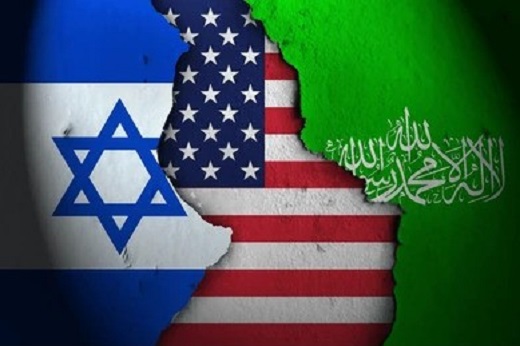
After weeks of silence, negotiations between the United States and Hamas have resumed in recent days, according to Israeli media reports. The revival of indirect communication mediated by regional and international actors marks a critical development in the ongoing conflict in Gaza, with Washington increasingly focused on resolving the hostage crisis and advancing toward a sustainable ceasefire.
Citing American and Arab sources, the Israeli daily Israel Hayom reported that contacts between the administration of U.S. President Donald Trump and Hamas have been reactivated. These talks, though unofficial and conducted through intermediaries, center on a framework that ties a potential end to hostilities with a prisoner exchange agreement and the release of all hostages currently held in the Gaza Strip.
The development comes amid a significant escalation in military operations. Over the past 48 hours, the Israeli military launched the second phase of its “Operation Gideon’s Chariots,” intensifying strikes on multi-story buildings in Gaza City, particularly in the north of the enclave where Israeli intelligence believes hostages may be held.
U.S. President Donald Trump, speaking at a White House press briefing, characterized the renewed negotiations as “highly intensive.” He emphasized the urgency of securing the immediate release of Israeli captives, framing such an action as a gateway to broader humanitarian concessions and more serious diplomatic engagement. “We made it clear to Hamas that releasing the hostages will lead to much better outcomes,” Trump stated. “Refusing to do so will make things significantly worse.”
According to estimates shared with media outlets, there are approximately 48 Israeli captives currently being held by Hamas in Gaza. Of those, around 20 are believed to be alive, while U.S. intelligence suggests that up to 30 may have died during the course of the conflict.
Hamas, for its part, issued a formal statement reaffirming its willingness to consider proposals submitted by international mediators. The statement stressed the group’s readiness to engage in meaningful negotiations that would lead to a comprehensive ceasefire, the complete withdrawal of Israeli forces from Gaza, and the unrestricted entry of humanitarian aid into the besieged enclave.
The militant group also reiterated its commitment to a genuine prisoner exchange deal, underlining that any arrangement must respect the interests and security of all parties involved. “We are open to serious negotiations through credible intermediaries,” Hamas stated, signaling an openness to diplomatic solutions after months of devastating warfare.
The humanitarian toll of the ongoing conflict remains staggering, with casualties mounting and infrastructure in Gaza heavily damaged. Recent footage released by Hamas’ military wing, the Al-Qassam Brigades, showed two Israeli captives, reinforcing claims that some hostages remain alive. The group claims to be holding at least eight Israeli prisoners in Gaza City.
The renewed diplomatic activity between the U.S. and Hamas despite their long-standing adversarial relationship, suggests a possible shift in Washington’s approach, balancing support for Israel with a more pragmatic effort to end the violence and secure the release of captives.
As military operations intensify and international pressure mounts, the coming days could prove decisive. Whether this latest round of backchannel communication leads to tangible progress remains uncertain, but the reactivation of talks signals that key actors are exploring alternatives to open-ended warfare.
