

Ahmed Kamel – Egypt Daily News
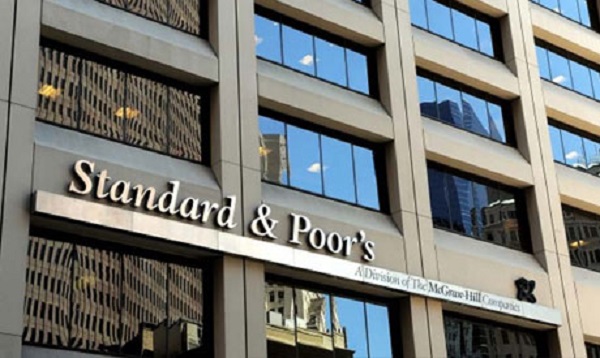
In a significant vote of confidence for Egypt’s economic trajectory, global credit rating agency Standard & Poor’s (S&P) announced on Friday an upgrade to Egypt’s sovereign credit rating, moving it from “B-” to “B” with a stable outlook. The agency cited substantial progress in the country’s reform agenda, supported by the International Monetary Fund (IMF), and particularly highlighted Egypt’s shift toward a flexible exchange rate regime, which has contributed to renewed economic growth.
The rating upgrade reflects what S&P described as “reforms undertaken by the authorities over the past 18 months.” Among the most notable was Egypt’s decision to allow the currency to float more freely, an IMF-backed measure aimed at addressing structural imbalances and restoring investor confidence.
S&P noted that Egypt’s real GDP growth rose from 4.2 percent to 4.4 percent in the last fiscal year and is expected to average 4.6 percent annually over the next three years. The agency stated that the government’s commitment to market-determined exchange rates, along with the fiscal and policy anchor provided by the IMF program, is supporting improved macroeconomic performance and fiscal consolidation.
The report also acknowledged the Egyptian government’s efforts to stabilize the economy amid global challenges, including high inflation, rising interest rates, and geopolitical uncertainty. Egypt’s reform program has included the sale of state assets, reduction of subsidies, diversification of revenue sources, and support for the private sector efforts praised by international financial institutions.
However, S&P cautioned that risks remain, particularly those stemming from the ongoing war in Gaza and the threat posed by Houthi attacks on shipping routes in the Red Sea. These factors could impact the performance of the Suez Canal, a vital source of foreign currency and government revenue.
“The risks associated with the Gaza conflict and regional instability continue to pose potential challenges,” the agency warned. “Houthi threats to maritime traffic in the Red Sea could affect Suez Canal revenues, which are a key part of Egypt’s external income.”
Nevertheless, S&P emphasized Egypt’s regional posture as one of diplomatic neutrality and humanitarian engagement. The agency noted that Egypt is likely to remain outside the direct scope of regional conflicts while continuing to play a pivotal role as a peace mediator and humanitarian corridor to Gaza via the Rafah crossing.
The upgrade comes at a crucial time for Egypt, which is working to attract foreign investment, reduce external debt pressures, and navigate the economic fallout from the prolonged war in Gaza and its ripple effects on trade and tourism. The announcement may bolster investor sentiment ahead of further reforms and planned privatizations under the IMF program.
In conclusion, while acknowledging external headwinds, S&P’s decision reflects growing confidence in Egypt’s economic resilience and reform momentum, positioning the country for a more stable financial outlook if regional tensions remain contained.
