

Ahmed Kamel – Egypt Daily News
The United States Central Command (CENTCOM) has issued a stark warning to Hamas, calling on the group to halt violence against civilians and to disarm “without delay” as tensions escalate in Gaza during a fragile ceasefire. The statement came Wednesday as Hamas intensified its internal security campaign, deploying forces throughout the Strip and executing individuals it accuses of collaborating with Israel.
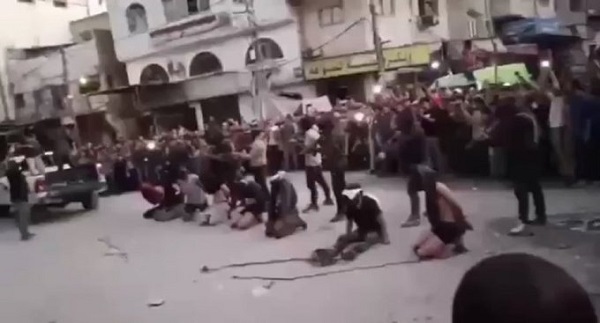
Since the ceasefire took effect on Friday, Hamas has gradually reasserted its presence in Gaza’s streets, establishing checkpoints and detaining suspected informants. According to a Palestinian security source, more than 30 people labeled as part of a “gang” were executed in Gaza City alone. The identities of those killed were not disclosed, but Hamas claims the crackdown is part of a broader effort to restore public order as tens of thousands of displaced residents return to northern Gaza—now a landscape of devastation.
In response, General Michael “Erik” Kurilla, head of U.S. Central Command, released a statement urging Hamas to immediately cease violent actions against innocent Palestinians and to commit fully to disarmament as outlined in the Trump administration’s peace plan.
“We strongly urge Hamas to stop all violence and refrain from firing on innocent Palestinian civilians in Gaza,” Kurilla said. “We’ve conveyed our concerns to the intermediaries, who have agreed to work with us to ensure peace and the protection of civilians.”
Conflicting Messages from Washington?
The U.S. military’s direct appeal to Hamas reflects growing discomfort within Washington over the group’s recent actions. The Trump administration, while publicly committed to a ceasefire and long-term peace in Gaza, has sent mixed signals in recent days regarding Hamas’s role in maintaining local security.
President Donald Trump appeared to downplay concerns about the summary executions during comments to the press on Tuesday. “Hamas killed a number of gang members,” he said, adding that the development did not particularly trouble him. The president noted that internal criminal elements must be “cleared out” and expressed optimism that “what’s going on with Hamas will be straightened out quickly.”
Despite the president’s comments, the official U.S. position remains that Hamas must relinquish both weapons and political control. Under the Trump administration’s 20-point Middle East peace framework unveiled as part of the ongoing ceasefire negotiations, Hamas would be excluded from governance in Gaza. Instead, a new Palestinian-led administrative body would assume control, supported by an international stabilization mission.
Demilitarization and International Oversight
The peace plan envisions Gaza as a demilitarized zone governed by a committee of Palestinian figures unaffiliated with militant factions. The proposal includes the deployment of an international force tasked with stabilizing the area, training a new local police force, and supporting the transition to civil governance. The mission would be overseen by international monitors and backed by regional states involved in the Abraham Accords.
Although the United States has ruled out stationing troops within Gaza itself, Washington is expected to contribute up to 200 military personnel to Israel to assist in coordination, intelligence sharing, and logistical support for the stabilization effort. Their role will stop short of direct involvement in Gaza’s internal affairs.
A Tense, Uncertain Future
The U.S. military’s call for immediate disarmament underscores growing impatience with Hamas’s ambiguity regarding its future role in Gaza. Since the ceasefire began, the group has not made any public commitment to relinquish its weapons or cede authority, both core components of the Trump peace plan.
Meanwhile, humanitarian organizations have raised concerns over reported human rights abuses, including extrajudicial killings. Civil society leaders warn that Hamas’s actions risk undermining the already fragile truce and may alienate international partners vital to Gaza’s reconstruction.
As Washington balances diplomacy with military posture, the next steps remain uncertain. The ceasefire, while holding, is under strain, and the international community is watching closely to see whether Hamas will cooperate—or provoke a new round of conflict.
With the situation in Gaza evolving rapidly, U.S. officials have made it clear: Hamas must choose between participating in a peaceful transition or facing renewed pressure from Israel and its allies.
