

Ahmed Kamel – Egypt Daily News
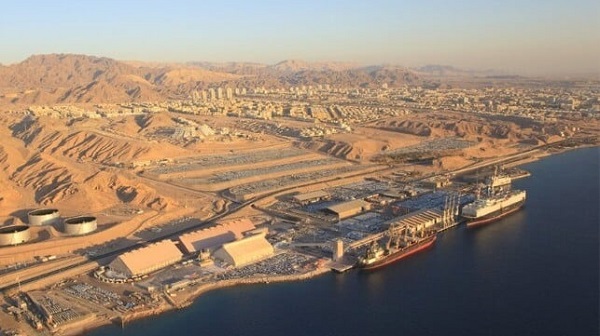
The Israeli port of Eilat has reportedly requested Egypt’s assistance in pressuring the Houthi movement to halt its missile attacks and maritime threats in the Red Sea region, which continue to disrupt shipping activity despite the current ceasefire between Israel and Hamas.
According to reports in Israeli newspapers Yedioth Ahronoth and Calcalist, officials from Eilat Port have reached out to both the U.S. Embassy in Israel and the Egyptian government, seeking coordinated efforts to address the ongoing threat posed by the Houthis. Despite the ceasefire agreement, commercial traffic to and from Eilat remains severely affected, largely due to Houthi threats against vessels navigating through the Red Sea and approaching the Suez Canal.
The newspapers note that Eilat Port has not returned to normal operations and remains under economic distress. Although the Houthis previously announced they would cease targeting Israel as long as the ceasefire holds, they have not stopped targeting international maritime shipping, particularly vessels associated with Israel or its allies.
Yedioth Ahronoth cited a continuing threat from the Houthis, who previously warned that any shipping company operating vessels without their approval would be considered a legitimate target—regardless of where in the world the ships may be. As a result, Eilat Port, which is operated by the shipping company PFAO, has operated at near standstill since November 2023, suffering an 80% decline in revenue.
Due to the ongoing threats, many international shipping companies have opted to reroute away from the Suez Canal and avoid docking at Eilat altogether, causing ripple effects on regional trade. Reports indicate that only Russian, Iranian, and occasionally Chinese ships are still using the waterway, often through workaround strategies such as changing ship flags or taking on higher insurance risks.
With this backdrop, Calcalist revealed that Eilat port authorities have urged the U.S. to include the Suez Canal’s security situation in discussions tied to the ceasefire deal brokered by former U.S. President Donald Trump. Additionally, port officials have reached out to Egypt’s Suez Canal Authority and international maritime bodies to help address the escalating crisis in the Red Sea.
Eilat’s administration hopes Egypt whose own economy is being impacted by the same maritime threats can lead regional and international diplomatic pressure on the Houthis to restore freedom of navigation in the Suez and nearby waters.
The reports point out that Egypt has been severely affected by the decline in Suez Canal traffic. In 2022, the canal generated about $8 billion in revenue, which rose to $10.25 billion in 2023. However, by 2024, revenues dropped dramatically to just $3.99 billion. According to Arab media sources, Egypt lost around 60% of its canal income in 2024 and 2025 due to Houthi activity.
This represents a significant economic blow. Prior to the disruptions, nearly one-third of Egypt’s national budget depended on Suez Canal revenues, making it one of the country’s most stable and critical income sources.
The International Monetary Fund (IMF) has warned that the sharp decline in Suez Canal income presents a serious fiscal challenge for Egypt, urging the country to diversify revenue sources and reduce its dependency on foreign income.
In response, Egypt undertook a sweeping set of economic reforms including overhauling its tax collection system and cutting subsidies on fuel, electricity, and food. Gulf nations also provided billions of dollars in support to help Egypt weather the economic shock.
By the end of 2024, these efforts helped Egypt achieve a fiscal surplus of approximately $13 billion. However, analysts noted that this figure was only reached by excluding interest payments on Egypt’s large public debt, a move seen more as a temporary stabilization strategy than a long-term financial solution.
Despite some progress, Egypt continues to face high inflation, mounting debt, and now renewed instability linked to disruptions in Red Sea trade.
For its part, Eilat Port hopes that Egyptian diplomacy particularly through cooperation with Arab nations and the United States will succeed in convincing the Houthis to formally end their targeting of international maritime routes. Such a move would restore access to Eilat and reinvigorate shipping activity in both Israel and Egypt.
According to Calcalist, the Israeli government has allocated 15 million shekels to support Eilat Port since the beginning of the crisis. A portion of that funding has been used to settle debts, pay property taxes to the city of Eilat, and cover operational costs.
Israel’s labor federation, Histadrut, has also stepped in by offering emergency loans through its support fund. Nevertheless, port officials stress that their goal is not merely to survive but to return to full commercial activity and restore the port’s profitability.
