

Ahmed Kamel – Egypt Daily News
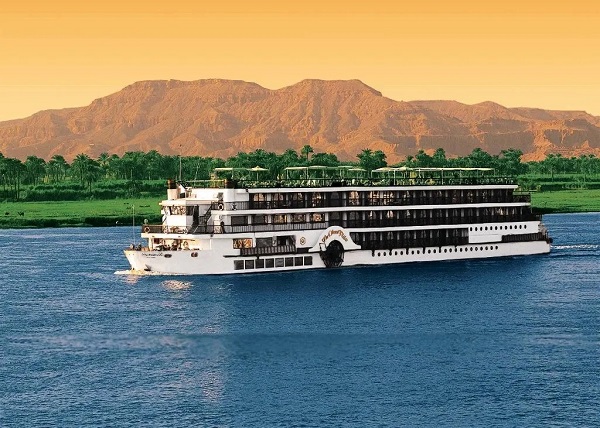
Egypt’s Nile tourism investors are voicing growing frustration over bureaucratic overlaps and conflicting regulations that, they say, are stifling one of the country’s most promising tourism sectors. Owners of floating hotels and cruise operators along the Nile have warned that the lack of coordination between government bodies particularly the Ministries of Irrigation and Agriculture poses a serious threat to billions of pounds in investments.
Investors argue that reviving Nile tourism requires urgent action, beginning with the modernization of floating hotels and the rehabilitation of docking sites along the river. They emphasize that developing marinas and improving logistical infrastructure should be treated as top priorities for revitalizing this unique tourism product, which combines Egypt’s natural beauty with its unrivalled cultural heritage.
One of the key issues raised by investors is the multiplicity of authorities imposing fees and issuing permits for the same operations. They are calling for all financial and regulatory dealings with floating hotels to be centralized under a single authority specifically, the Ministry of Tourism and Antiquities, to simplify procedures, prevent overlapping oversight, and safeguard the sector’s growth.
According to Ihab Abdel Aal, Treasurer of the Egyptian Tourism Federation, the lack of clear laws or unified regulations within the Ministries of Irrigation and Agriculture has created confusion and unnecessary burdens. “Both ministries apply fees and permit requirements to all floating hotels indiscriminately, regardless of their location or the services they provide,” he explained. “A vessel docked in Maadi pays the same as one in Luxor, which is illogical and unsustainable. The law must be enforced so that only the Ministry of Tourism and Antiquities deals with these establishments, as stipulated in Law No. 27 of 2024.”
Abdel Aal noted that each floating hotel currently faces up to 18 different government fees whenever it renews its license or sets sail. He cited an example from Luxor, where the governorate attempted to impose a new 1% levy on hotel revenues, a measure later ruled unconstitutional by the courts. Despite this, the same fee was reintroduced, leaving operators with little choice but to comply to continue their operations. “No authority should collect any fees other than the Ministry of Tourism and Antiquities,” he stressed, “especially as the ministry is actively working to revive Nile and cultural tourism.”
The Ministry’s recent review of inactive floating hotels led to the cancellation of 30 licenses, part of a broader effort to improve standards and restore investor confidence. Abdel Aal underscored that supporting Nile tourism requires a comprehensive development plan that includes modernizing marinas, upgrading fleets, and enhancing service quality. “The Ministry’s willingness to listen to investors on the ground is a positive sign that the government is serious about tackling these challenges,” he added.
He also praised the recent visit by Minister of Tourism and Antiquities Sherif Fathy to Luxor, describing it as a key step toward strengthening cooperation between the public and private sectors. The visit included inspections of both fixed and floating hotels as well as traditional dahabiyas, along with discussions about the obstacles facing Nile tourism. The minister also inaugurated the long-restored tomb of Amenhotep III in the Valley of the Kings, an event Abdel Aal described as “symbolically significant,” showcasing Egypt’s ongoing commitment to preserving its archaeological treasures and positioning Luxor as the world’s largest open-air museum.
Abdel Aal emphasized that the timing of the minister’s visit just ahead of the peak winter season reflects the government’s awareness of the sector’s importance. “By meeting investors face-to-face and assessing conditions on-site, the minister demonstrated a clear vision for strengthening collaboration with the private sector,” he said.
Industry leaders maintain that Egypt holds all the natural, historical, and cultural elements needed to become a global leader in Nile cruise tourism. However, achieving that potential requires coordinated efforts, streamlined regulations, and a unified government approach to eliminate red tape and restore confidence among investors eager to see the Nile reclaim its place as one of Egypt’s greatest tourism assets.
