

Ahmed Kamel – Egypt Daily News
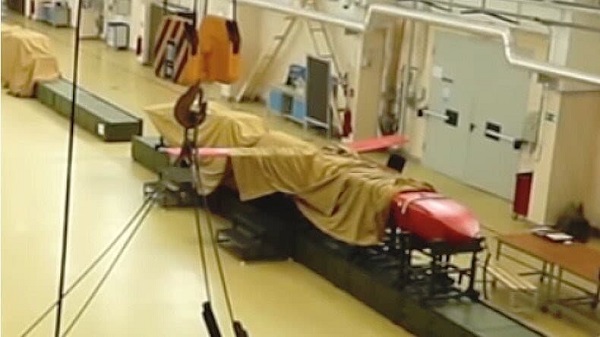
In a statement that has drawn global attention, Russian President Vladimir Putin announced the successful completion of tests for the “Burevestnik,” the world’s first cruise missile powered by a nuclear engine. Speaking during a meeting with top military commanders involved in the operation in Ukraine, Putin hailed the missile as a technological breakthrough unmatched by any other nation and directed Russia’s General Staff to begin developing the necessary infrastructure for its deployment and to define its operational objectives.
“The modernization of our armed forces and in particular our nuclear deterrent has reached its highest level,” Putin said. “It would not be an exaggeration to say that it now surpasses that of all other nuclear powers.”
According to the Russian leader, the final phase of testing for the Burevestnik has been completed successfully. However, he emphasized that additional procedures and technical steps remain before the weapon can be placed on full combat alert. Putin described the missile as a unique system “unlike anything else in the world,” capable of ensuring Russia’s strategic security for decades to come.
A Missile Beyond Conventional Limits
Chief of the Russian General Staff Valery Gerasimov briefed Putin on the details of the test, revealing that the Burevestnik flew a distance of 14,000 kilometers and remained airborne for 15 hours. During its test flight, the missile reportedly executed both horizontal and vertical trajectories while evading all radar detection systems before striking its intended target with precision.
Gerasimov stated that the missile’s tactical and technical characteristics allow it to strike fortified targets anywhere on Earth with guaranteed accuracy. Russian defense officials have described the Burevestnik as part of a new generation of strategic weapons designed to maintain Russia’s nuclear deterrent in the face of evolving global defense technologies.
Strategic Implications and International Reactions
Military experts suggest that the successful testing of a nuclear-powered cruise missile could mark a major shift in the balance of global nuclear power. Chinese military analyst Song Zhongping, commenting to the Global Times, said that “the Burevestnik represents a weapon unlike any other in the world.”
Unlike traditional cruise missiles that rely on chemical fuel, the Burevestnik uses a compact nuclear propulsion system, granting it a virtually unlimited flight range. This technology, Song explained, allows the missile to remain airborne for extended periods, maneuver unpredictably, and bypass conventional air-defense systems. “The success of such a weapon could alter the balance of strategic nuclear capabilities worldwide,” he said.
Song noted that developing nuclear propulsion for a cruise missile poses immense technical challenges, particularly in terms of fuel stability and safety. Russia’s ongoing series of tests, he added, likely aims to refine these aspects and ensure the system’s reliability for long-term deployment.
Reinforcing Russia’s Nuclear Doctrine
Putin linked the Burevestnik’s development to broader efforts to strengthen Russia’s nuclear deterrent, referencing recent large-scale exercises by the country’s strategic forces. “Our strategic forces are fully capable of ensuring the national security of both Russia and the Union State with Belarus,” he said.
He also praised Russian troops for their recent battlefield advances in Ukraine, citing progress around Krasnoarmeysk, Dmitrovskoye, and Kupyansk as examples of “the heroic efforts of our soldiers and the precise coordination of command at all levels.”
At the same time, Putin urged adherence to international and Russian law in the treatment of prisoners of war, instructing military commanders to take all necessary measures to guarantee the safe surrender of Ukrainian soldiers. “The Russian army has always treated defeated enemies with mercy and will continue to do so,” he said.
A New Era of Strategic Weaponry
The Burevestnik’s successful test marks another step in Russia’s ongoing effort to diversify its nuclear arsenal and develop systems capable of penetrating any missile defense network. Described by Western analysts as a “doomsday weapon,” the missile’s nuclear engine theoretically enables it to remain in the air for days, covering vast distances and approaching targets from unpredictable directions.
If fully operationalized, the Burevestnik could represent one of the most significant advancements in modern weapons technology since the advent of intercontinental ballistic missiles. Whether it ushers in a new era of strategic stability or escalates a new arms race will depend on how other world powers respond to what Moscow has declared a historic achievement in military innovation.
