

Ahmed Kamel – Egypt Daily News
Egypt has begun laying the groundwork for a command center intended to coordinate the proposed International Stabilization Force (ISF) for the Gaza Strip, a central component of US President Donald Trump’s post-war vision for the territory. The project is advancing despite doubts surrounding the wider plan and growing reluctance among potential troop-contributing nations.
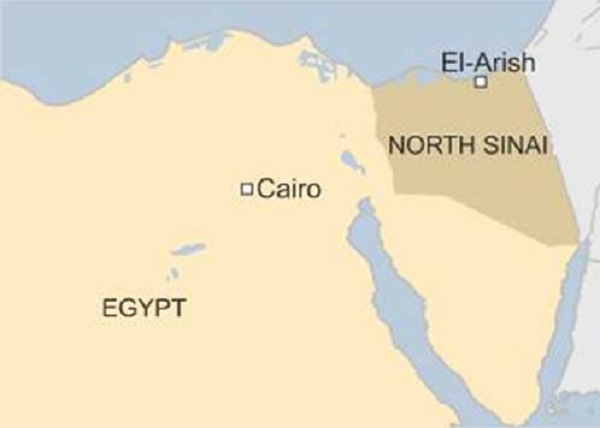
Work is underway in the northern Sinai city of Al-Arish, roughly 40 kilometers from Gaza where Cairo intends to host the ISF’s primary command hub. The initiative featured prominently in US–Egypt discussions held on 16 November and was first reported by an Arab diplomat quoted by the Times of Israel. The Al-Arish center is expected to operate in coordination with a US-run Civil-Military Coordination Center already established in Kiryat Gat.
The effort dovetails with an Egyptian-Jordanian program to train a Palestinian police force capable of operating in post-war Gaza. That training, already in progress, is seen as a foundational element of the security architecture Washington hopes to build once major combat subsides.
Regional analysts cited by the New Arab argue that Egypt’s decision to host the command headquarters could reshape the strategic role of the Sinai Peninsula. They say the facility would reposition Sinai from a long-troubled frontier into a strategic platform for regional stability, strengthening Cairo’s influence in humanitarian coordination, reconstruction planning, and security oversight. At the same time, Egyptian forces would be better positioned to counter any spillover threats from Gaza or militant groups operating in the Sinai.
Still, the ISF remains an uncertain project at best. Trump’s plan envisions that the force would oversee the surrender of Hamas weaponry and use force if necessary to compel compliance. That mandate has proven to be a major point of contention, sparking criticism among Palestinian factions and serious hesitation among countries that were initially open to participating.
Palestinian groups have warned that deploying international soldiers with an enforcement mandate would serve to accomplish militarily what Israel could not during its two-year offensive. Their concerns appear to be shared abroad: multiple nations have signaled they will not risk placing their troops in direct confrontation with Palestinian fighters.
Pakistan’s deputy prime minister and foreign minister, Ishaq Dar, articulated that reluctance on 30 November, saying his country would not join any force tasked with disarming Hamas. Dar also revealed that Indonesia, which at one point had considered contributing as many as 20,000 troops, has privately expressed similar reservations.
The Washington Post reported just a day earlier that several governments that had once indicated willingness to join the ISF are now distancing themselves from the proposal. According to officials familiar with the discussions, concerns over being ordered to use force against Palestinians have left the stabilization force struggling to take shape.
For now, Egypt appears committed to building the infrastructure required for the mission, even as the political consensus needed to field the force remains elusive. The Al-Arish command center may soon stand ready, but whether an international contingent will ever arrive to occupy it remains an open question.
