

Ahmed Kamel – Egypt Daily News
Egypt is moving to expand its domestic defense manufacturing capabilities through a new agreement with China that will see the production of unmanned aerial vehicles (UAVs) on Egyptian soil. The memorandum of understanding, signed on December 1, 2025, marks a significant step in Cairo’s ongoing effort to localize advanced military technology and strengthen its position within the regional defense landscape.
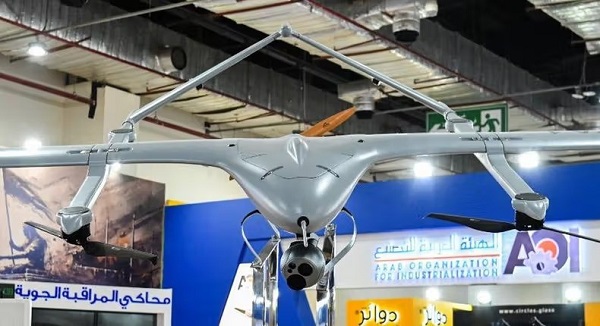
The deal was formalized between Egypt’s Arab Organization for Industrialization (AOI) and China North Industries Corporation (NORINCO). During the signing ceremony, the two sides unveiled a scale model of the Hamza-2, a combat drone that will be produced in Egypt. AOI Chairman Major General Engineer Mokhtar Abdel Latif praised the agreement as a milestone for Egypt’s defense sector, emphasizing its long-term strategic benefits.
“We value the partnership with the Chinese company,” Abdel Latif said, noting that the cooperation aims to localize drone technology and significantly increase Egypt’s share of local manufacturing. He added that the AOI’s Aircraft Factory provides the industrial capacity needed to support the project’s ambitions.
The Hamza-2 is widely understood to be based on China’s ASN-209, a medium-altitude UAV featuring a twin-boom configuration and equipped for real-time reconnaissance and precision strike missions. With the Egyptian version expected to inherit similar capabilities, the Hamza-2 is poised to become a key asset for surveillance and combat operations, offering Egypt a more flexible and self-sustaining approach to aerial defense.
Analysts say the introduction of the Hamza-2 could prove especially valuable for African governments and coastal states facing maritime security challenges or ongoing regional conflicts. The combination of reconnaissance and strike functions in a single platform gives militaries a cost-effective force multiplier, particularly as drone warfare continues to reshape modern combat strategies.
Beyond Egypt, the race to develop and manufacture advanced drones is accelerating across North Africa. Just last month, reports surfaced that Israel’s defense industry is preparing to open the region’s first large-scale suicide drone production facility in Morocco. The plant, to be located in Benslimane near Casablanca, will assemble SpyX loitering munitions, drones designed to strike armored vehicles, fortified bases, and other high-value targets with high precision.
Together, these developments signal a broader shift in the region, as nations increasingly pivot from simply purchasing foreign UAVs to establishing their own production lines through strategic partnerships. For Egypt, the collaboration with China represents not only an expansion of its defense manufacturing base but also a deeper alignment with one of the world’s leading military technology exporters.
The Hamza-2 project is expected to bolster Egypt’s military autonomy, enhance its technological expertise, and potentially position the country as a regional hub for UAV development in the years ahead.
