

Ahmed Kamel – Egypt Daily News
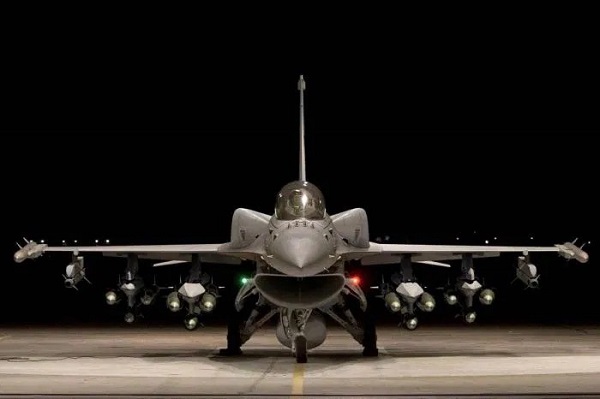
Discussions are underway between Egypt and the United States to upgrade Cairo’s long-serving fleet of F-16 fighter jets to the newest and most advanced configuration, the Block 70/72 standard. The news was confirmed by U.S. defense contractor L3Harris during the EDEX 2025 defense exhibition in Cairo, signaling a potential leap in the capabilities of one of the Middle East’s largest F-16 operators.
Travis Rohl, Director of International Business Development for L3Harris’ Viper Shield electronic warfare (EW) system, said that Egypt has formally submitted a request to upgrade its aircraft. “Talks are already taking place between the Egyptian and U.S. governments to move toward this advanced configuration,” Rohl said.
Viper Shield: A Next-Generation Electronic Warfare Suite
Central to the potential upgrade is L3Harris’ Viper Shield AN/ALQ-254(V)1 EW system, purpose-built for the F-16 Block 70/72. Rohl described it as the optimal solution for Egypt should the deal proceed, emphasizing that the technology is years ahead of competing systems.
L3Harris is currently producing the Viper Shield, supported by seven international partners and with 219 units on the production list. The system is designed to provide pilots with powerful situational awareness through instantaneous frequency coverage and an integrated digital jamming suite. Its fully automated architecture allows the aircraft to detect threats and activate countermeasures without pilot intervention, adjusting responses dynamically according to tactical conditions.
Developed in partnership with Lockheed Martin, the F-16 manufacturer and the U.S. Air Force, Viper Shield creates what Rohl described as a “virtual electronic shield” around the aircraft. This protective bubble enhances survivability in contested airspace, allowing Egyptian F-16 pilots to operate effectively amid evolving and complex aerial threats.
Its fully digital design also enables the system to incorporate commercial off-the-shelf components, simplifying maintenance, upgrades, and long-term modernization while keeping size and weight to a minimum.
F-16 Block 70/72: The Most Advanced Variant Ever Built
Lockheed Martin characterized the Block 70/72 version as the most capable and durable F-16 built to date. The aircraft incorporates a fully modern avionics suite, an advanced active electronically scanned array (AESA) radar, and enhanced cockpit systems with improved safety and mission-management features. The airframe is designed for an extended service life of up to 12,000 hours a record in its class.
The fighter’s improvements include:
- APG-83 AESA radar derived from F-22 and F-35 technologies, offering superior situational awareness and faster targeting in all weather conditions.
- Advanced datalink capabilities for secure and high-speed battlefield connectivity.
- A next-generation targeting pod, IRST (infrared search and track) system, and precision GPS navigation.
- A powerful digital flight-control computer, autopilot with automatic throttle, and the Auto GCAS system to prevent ground collisions.
- Compatibility with a wide array of modern weapons, plus conformal fuel tanks for extended range.
The AESA radar is fully integrated with the Viper Shield electronic warfare system, including a new digital radar-warning receiver that enables seamless coordination between tracking and countermeasure operations.
A Strategic Upgrade for the Egyptian Air Force
If finalized, the upgrade would represent one of the most significant enhancements to Egypt’s air combat capabilities in decades. The Egyptian Air Force operates one of the largest F-16 fleets outside the United States, with aircraft acquired across multiple batches since the 1980s. Upgrading to the Block 70/72 standard would shift the F-16 from its earlier configurations, some of which lack modern sensors and EW systems, into a near-fifth-generation role within Egypt’s broader air power structure.
The discussions come at a moment when Egypt is actively modernizing its defense infrastructure, leveraging partnerships displayed prominently at EDEX 2025. An upgrade of this scale would also signal a renewed strategic alignment between Cairo and Washington following years of fluctuating defense cooperation.
While no timeline has been officially announced, officials familiar with the talks say both sides are exploring technical, financial, and logistical pathways to implement the upgrades across Egypt’s F-16 fleet.
As negotiations continue, industry observers believe that equipping Egypt’s fighters with advanced AESA radar technology and next-generation electronic warfare systems would markedly enhance the country’s operational capabilities, strengthening its deterrence posture and its ability to respond to regional security challenges.
