

Ahmed Kamel – Egypt Daily News
A recent attack on a joint U.S.-Syrian military delegation near Palmyra has revealed serious security vulnerabilities within Syria’s restructured internal security forces, officials said Sunday. The assailant, identified as a member of the Syrian General Security Directorate, was neutralized during the incident, which left two U.S. soldiers dead and two Syrian security personnel injured.
According to a Syrian security source, the attacker had joined the General Security Directorate over ten months ago and had served in multiple cities before being reassigned to Palmyra. Following the attack, authorities detained more than 11 personnel from the same agency for investigation. Interior Ministry spokesperson Nour al-Din al-Baba noted that the attacker had previously been flagged in security assessments for holding extremist or radicalized views, and a decision to remove him from service was reportedly underway prior to the incident.
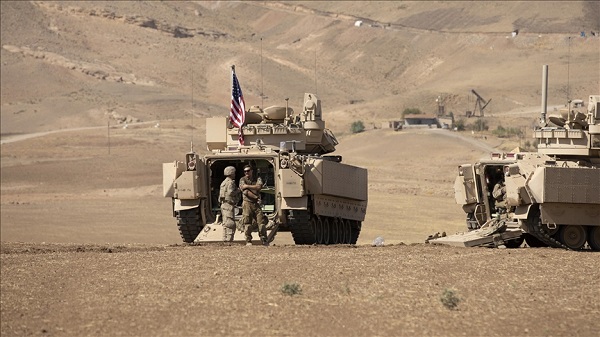
The U.S. Central Command (CENTCOM) confirmed that the assailant was killed and that the U.S. troops were on a mission supporting ongoing operations against the Islamic State in the region. President Donald Trump vowed a strong response, describing the area as “extremely dangerous” and only partially under Syrian government control, underscoring the continued threat posed by ISIS cells operating in the Syrian desert.
The attack highlights structural weaknesses in Syria’s security apparatus following years of conflict and the collapse of police and internal security institutions. After the fall of the previous regime, the new authorities, supported in part by opposition factions including Hay’at Tahrir al-Sham, opened recruitment widely to fill the security vacuum. Thousands of new recruits joined security agencies across the country, and a new military force was created incorporating former fighters from allied factions, creating gaps in vetting and oversight, particularly in desert regions where ISIS cells remain active.
Despite these vulnerabilities, al-Baba emphasized that weekly assessments of over 5,000 personnel aim to detect potential breaches. However, the Palmyra attack demonstrates that even internal monitoring could not prevent an insider from exploiting his position to target the joint delegation. Syrian authorities described the assault as a “terrorist act” and offered condolences to the U.S. government and people, reflecting an unusual level of coordination with Washington, following Syria’s official accession to the U.S.-led coalition against ISIS during President Ahmad al-Sharaa’s recent visit to the United States.
Palmyra and the Syrian desert have long been a theater of ISIS activity. The city was under ISIS control between 2015 and 2016, during which militants carried out executions and destroyed significant historical sites. While ISIS lost most territorial control by 2019, its cells continue to conduct sporadic attacks across the vast desert regions.
The Palmyra attack underscores that, even with new alliances and U.S.-Syrian military cooperation, the threat from remnants of the Islamic State and the risk of insider breaches within local security forces remain acute. The incident also illustrates the ongoing complexities of stabilizing Syria’s desert regions while supporting international counterterrorism operations.
