

Ahmed Kamel – Egypt Daily News
Egypt produced more than 10 million mobile devices in 2025, a threefold increase from 3.3 million units last year, reflecting the country’s accelerating push to become a regional hub for electronics manufacturing and digital services, Communications and Information Technology Minister Amr Talaat said on Sunday.
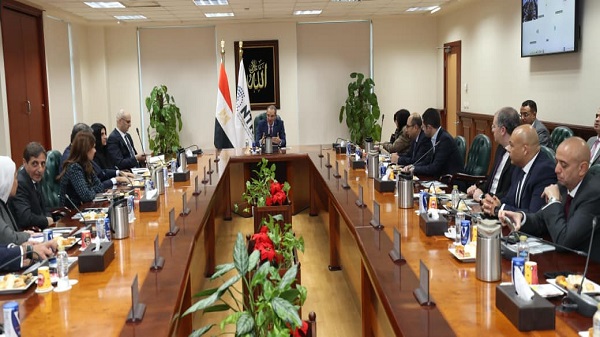
Speaking during a meeting with members of the newly restructured Telecommunications Industry Committee at the National Telecommunications Regulatory Authority (NTRA), Talaat attributed the sharp rise in production to Egypt’s success in attracting a growing number of international mobile phone manufacturers. He noted that locally sourced components now account for more than 40 percent of devices assembled in the country, signaling deeper integration of domestic supply chains and higher value-added manufacturing.
The expansion in device production comes amid sustained momentum in Egypt’s broader communications and information technology sector. Talaat said the sector has recorded the highest growth rates in the Egyptian economy for the seventh consecutive year, with annual growth ranging between 14 percent and 16 percent. Its contribution to gross domestic product has risen to around 6 percent, underscoring its role as a key engine of economic growth.
The minister also highlighted strong investment activity and job creation. During the Global Outsourcing Summit held in Cairo in November, Egypt signed 55 agreements with international and local companies to expand operations in the country. These projects are expected to generate approximately 75,000 new jobs, particularly in technology services, software development, and business process outsourcing.
Export performance has mirrored this growth. Talaat said digital exports increased by 124 percent over the past seven years to reach $7.4 billion, while outsourcing exports have doubled in the past three years alone. He added that outsourcing revenues are projected to reach $4.8 billion by 2025, driven by Egypt’s large, multilingual talent pool and competitive operating costs.
Egypt has also made notable progress in digital governance. According to Talaat, the country advanced 47 places in the World Bank’s 2025 Digital Government Maturity Index, climbing to 22nd globally from 69th. The improvement reflects expanded digital public services, increased government use of data and technology, and efforts to enhance service delivery to citizens and businesses.
Cybersecurity remains another priority area. The minister said Egypt has strengthened its digital defenses by signing the United Nations Convention against Cybercrime and deepening cooperation with the UN Office on Drugs and Crime. As part of this effort, Egypt plans to establish an Egyptian-African center dedicated to combating cybercrime, positioning the country as a regional leader in cybersecurity coordination.
During the meeting, officials also reviewed the rollout of several new telecommunications services, including fifth-generation (5G) mobile networks, Internet of Things applications for vehicles, WiFi calling to improve indoor call quality, and the introduction of eSIM technology. These initiatives are intended to modernize Egypt’s digital infrastructure and support emerging technologies across industries.
Together, the surge in mobile device production, sustained sector growth, and expanding digital services point to Egypt’s ambition to move beyond being a consumer market and toward becoming a competitive producer and exporter in the global technology ecosystem.
