

Ahmed Kamel – Egypt Daily News
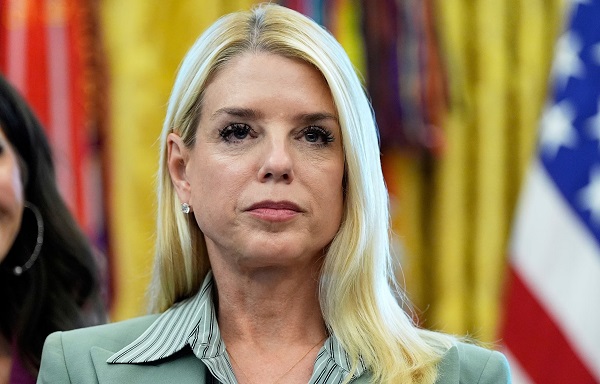
In a dramatic and unprecedented development, Venezuelan President Nicolás Maduro and his wife, Cilia Flores, have been indicted in the United States and are expected to face criminal charges in New York, U.S. Attorney General Pam Bondi announced on Saturday. The announcement followed a sweeping overnight military operation in Venezuela that U.S. officials say resulted in the capture of the country’s leader and his removal from power.
According to the Justice Department, the indictment was filed in the Southern District of New York and includes serious federal charges related to narco-terrorism and international drug trafficking. While Maduro was first charged by U.S. prosecutors in 2020, officials confirmed this is the first time Flores has been formally indicted alongside him.
President Donald Trump said U.S. forces conducted a “large-scale strike” in the early hours of Saturday morning, triggering explosions across Caracas and culminating in the arrest of Maduro and his wife. Trump said the operation was carried out in coordination with U.S. law enforcement agencies and described it as successful. He said further details would be released later in the day.
Residents of Caracas reported multiple explosions beginning shortly before 2 a.m., accompanied by low-flying aircraft and plumes of smoke rising from military installations. Witnesses said the blasts shook buildings and sent people fleeing into the streets. Some areas of the capital experienced power outages, while other neighborhoods remained quiet amid uncertainty and fear.
Venezuela’s government condemned the attack, accusing the United States of targeting both military and civilian infrastructure. In a statement issued shortly after the explosions, authorities labeled the operation an “imperialist attack” and called on supporters of the ruling party to mobilize nationwide. Officials also declared a state of external disturbance, granting the government expanded emergency powers and increasing the role of the armed forces.
Despite the intensity of the strikes, Venezuelan state television did not interrupt its regular programming. Government officials said they did not know the whereabouts of Maduro or Flores and demanded proof that they were alive. Under Venezuelan law, the vice president would assume power in the president’s absence, though no formal transfer of authority was immediately confirmed.
In Washington, the operation raised immediate legal and constitutional questions. Some lawmakers said they had not been formally notified in advance and questioned the legal authority for detaining a sitting foreign head of state without a declaration of war or explicit congressional authorization. Administration officials have not publicly detailed the legal framework underpinning the operation.
The Federal Aviation Administration moved quickly to restrict U.S. flights in Venezuelan airspace, citing safety concerns amid ongoing military activity. U.S. officials also issued warnings advising American citizens in Venezuela to shelter in place.
The capture of Maduro marks a sharp escalation in a long-running confrontation between Washington and Caracas. For months, the United States has intensified military operations aimed at disrupting drug trafficking networks in the Caribbean and eastern Pacific, increasingly shifting from maritime interdictions to land-based actions closer to Venezuelan territory. U.S. officials have described the campaign as part of an armed conflict with transnational criminal organizations.
U.S. prosecutors allege that Maduro led a vast criminal network that used Venezuela as a hub for cocaine shipments bound for the United States and worked in coordination with armed groups and corrupt officials. Maduro has repeatedly denied the accusations, accusing Washington of attempting to overthrow his government under the guise of counter-narcotics enforcement.
International reaction was swift and sharply divided. Several U.S. allies welcomed the announcement of the indictment, while governments aligned with Caracas condemned the operation as a violation of Venezuelan sovereignty and warned of regional destabilization. Calls emerged for emergency international consultations as uncertainty spread over Venezuela’s political future.
The indictment of Maduro and Flores represents one of the most consequential moments in modern U.S.–Venezuela relations. It signals a decisive shift from sanctions and diplomatic pressure toward direct judicial and military action, even as questions remain over the legality of the operation, the fate of Venezuela’s leadership, and the broader implications for international law and regional stability.
