

Ahmed Kamel – Egypt Daily News
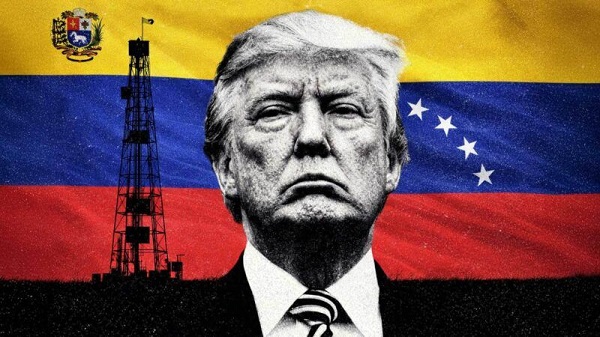
U.S. President Donald Trump has defended the arrest of Venezuelan President Nicolás Maduro by American forces, framing the dramatic operation as a decisive break from past U.S. interventions and openly linking it to Washington’s long-standing interest in oil-producing nations. Speaking in media interviews, Trump compared Venezuela to Iraq, arguing that earlier U.S. administrations made a strategic mistake by failing to retain control over Iraqi oil after the 2003 invasion.
Despite widespread international criticism, including condemnation from the United Nations, Trump expressed pride in the operation carried out in Caracas, which resulted in Maduro’s transfer to a high-security detention facility in New York. The U.S. president emphasized that Washington is not at war with Venezuela, portraying the move instead as a targeted action against what his administration describes as a criminal regime involved in drug trafficking and corruption.
Trump said the United States intends to rebuild Venezuela’s oil infrastructure, much of which has deteriorated after years of mismanagement, sanctions, and economic collapse. However, he made clear that, unlike Iraq, the U.S. would “keep the oil” this time, a statement that has reignited global debate over sovereignty, international law, and the real motivations behind American foreign interventions.
Senior U.S. officials have begun discussions with executives from major oil companies about restoring Venezuela’s oil production, which once ranked among the highest in the world but has since plummeted. The administration has also floated the idea of compensating companies willing to invest in the country to stabilize and expand output, positioning Venezuela as a potential pillar of Western energy security.
Within Venezuela, opposition leader María Corina Machado welcomed Maduro’s arrest, declaring that the country could emerge as a major energy hub for the Americas after years of economic devastation. Her comments signal a sharp political divide inside the country, where some see U.S. involvement as an opportunity for recovery, while others view it as a violation of national independence.
International reaction has been largely negative. Governments in Latin America, Europe, and Asia have warned that the detention of a sitting president by a foreign power sets a dangerous precedent and undermines the principles of international law. Critics argue that the open rhetoric about retaining oil resources reinforces long-standing accusations that U.S. foreign policy is driven by access to energy rather than democratic values.
Inside the United States, the operation has also sparked political controversy. Some lawmakers have questioned the legal basis for the arrest and accused the administration of bypassing Congress and misleading legislators about the scope of its plans for Venezuela. Human rights groups have raised concerns about Maduro’s detention conditions and the broader implications of using military force to resolve political crises.
Maduro, who faces multiple charges related to drug trafficking and weapons offenses, remains in U.S. custody as legal proceedings move forward. Meanwhile, Venezuela’s future remains uncertain, caught between the promise of economic reconstruction and the risk of prolonged instability. Trump’s blunt comparison to Iraq and his insistence on retaining Venezuelan oil have ensured that the crisis is no longer just about regime change, but about the reshaping of power, resources, and influence in the Western Hemisphere.
