

Ahmed Kamel – Egypt Daily News
Egypt has taken a significant step toward reviving and modernising its textile industry with the signing of an agreement to establish a large-scale integrated spinning and textile industrial complex in New October City. The project, backed by investments estimated at approximately $350 million, is expected to strengthen domestic manufacturing capacity and expand Egypt’s export-oriented industrial base.
The initiative forms part of the government’s broader strategy to revitalise one of the country’s most historically important industries. Textiles have long been a cornerstone of Egypt’s manufacturing sector, benefiting from the country’s cotton heritage, but have faced increasing global competition and structural challenges in recent decades.
The new industrial complex will be developed within a designated industrial zone operating under the free zones framework, covering an area of around 800,000 square metres. Officials say this structure is intended to attract investment, facilitate exports, and integrate Egyptian production more closely into global supply chains.
Strategically located in New October City, the project benefits from proximity to major transport corridors, ports, and modern logistics infrastructure. This location is expected to reduce transportation costs and enhance the efficiency of exports to key international markets, particularly in Europe, the Middle East, and Africa.
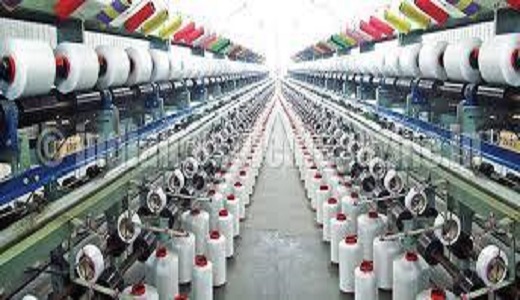
Designed as a fully integrated production hub, the complex will encompass the entire textile manufacturing process, including fibre spinning, yarn production, advanced weaving, textile processing, dyeing, and finishing. By consolidating these stages within a single industrial ecosystem, the project aims to improve operational efficiency, enhance product quality, and minimise waste and production losses.
Government officials have said the initiative aligns with national objectives to deepen local value chains, reduce reliance on imported intermediate goods, and increase value-added industrial output. By processing raw and semi-finished materials domestically, Egypt hopes to capture a larger share of global textile value while improving the competitiveness of its exports.
The project is also expected to have a substantial social and economic impact. Once fully operational, the complex is projected to create around 20,000 direct jobs, making it one of the largest employment-generating ventures in Egypt’s textile sector. In addition to job creation, the development is expected to support skills transfer, workforce training, and the emergence of a more technologically advanced and specialised industrial labour base.
The launch of the textile complex reflects Egypt’s wider industrial policy, which prioritises export-led growth, localisation of manufacturing, and the attraction of foreign and domestic investment in strategic sectors. As global supply chains continue to shift, Egyptian authorities see the modernisation of traditional industries such as textiles as a key pillar in strengthening the country’s industrial resilience and export competitiveness.
If successful, the New October City complex could serve as a model for future large-scale industrial projects, reinforcing Egypt’s ambition to position itself as a regional manufacturing and export hub.
