

Ahmed Kamel – Egypt Daily News
U.S. President Donald Trump said on Wednesday that he wants to bring together the leaders of Egypt and Ethiopia to reach a negotiated solution to the long-running dispute over Ethiopia’s Grand Ethiopian Renaissance Dam, a project that Egypt and Sudan view as a serious threat to their vital water supplies.
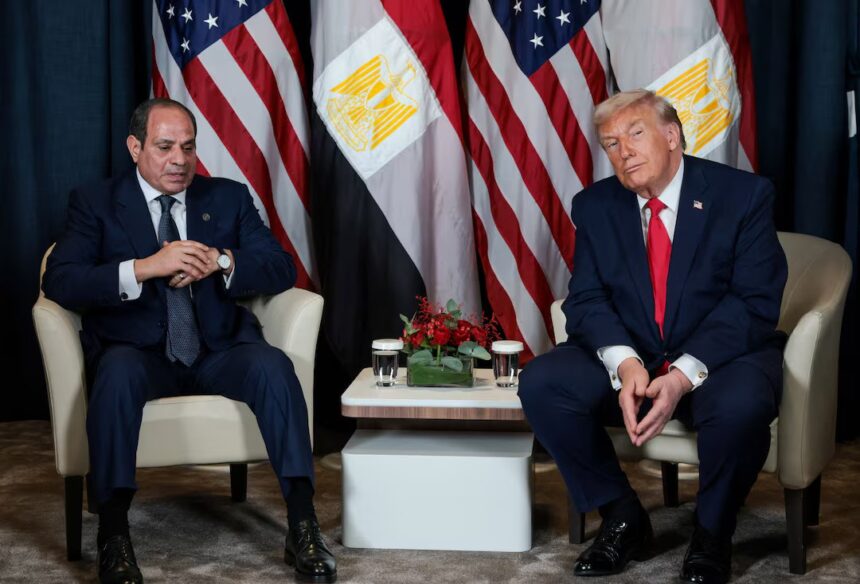
Trump made the remarks during a meeting with President Abdel Fattah El-Sisi on the sidelines of the World Economic Forum in Davos, Switzerland, where regional security, economic cooperation, and transboundary challenges featured prominently on the agenda. According to officials familiar with the discussions, the Nile dam issue was raised as part of broader talks on stability in Africa and the Middle East.
The Grand Ethiopian Renaissance Dam, built on the Blue Nile near Ethiopia’s border with Sudan, is Africa’s largest hydroelectric project and a centerpiece of Ethiopia’s development strategy. Addis Ababa argues that the dam is essential for meeting its growing energy needs and supporting economic growth, insisting it will not cause significant harm to downstream countries. Egypt, however, which relies on the Nile for more than 90 percent of its freshwater, fears that the filling and operation of the dam could severely reduce water flows, particularly during periods of drought.
Sudan shares some of Egypt’s concerns, especially regarding dam safety and the coordination of water releases, although its position has at times been more nuanced, reflecting potential benefits from regulated flows and cheaper electricity. Years of negotiations under the auspices of the African Union, as well as previous U.S.- and World Bank-led mediation efforts, have failed to produce a binding agreement governing the dam’s operation.
Trump’s comments signal renewed U.S. interest in facilitating dialogue between Cairo and Addis Ababa, reviving a mediating role Washington previously attempted during his earlier term in office. In 2020, U.S.-brokered talks collapsed after Ethiopia declined to sign a draft agreement that Egypt supported, leading to heightened tensions and sharp exchanges among the parties.
Egyptian officials have consistently called for a legally binding agreement that sets clear rules for filling and operating the dam, including mechanisms for data sharing and dispute resolution. They argue that without such guarantees, Egypt’s water security and agricultural stability could be placed at risk. Ethiopia, by contrast, has favored flexible guidelines rather than binding commitments, framing the dam as a sovereign development project.
The renewed diplomatic push comes at a time when Egypt is seeking to position itself as a regional stabilizer and active international partner, while Ethiopia faces internal economic pressures and the need to reassure neighbors as it continues filling the dam’s reservoir. Analysts say any successful mediation would require balancing Ethiopia’s development ambitions with the existential water concerns of downstream states.
While Trump did not provide details on how or when such talks might take place, his public call for engagement suggests that the Nile dam dispute could return to the international diplomatic spotlight. For Egypt, U.S. involvement is seen as a potentially important lever, given Washington’s political influence and longstanding strategic ties with Cairo. Whether this renewed attention can translate into a breakthrough, however, remains uncertain after years of stalled negotiations and entrenched positions.
