

Ahmed Kamel – Egypt Daily News
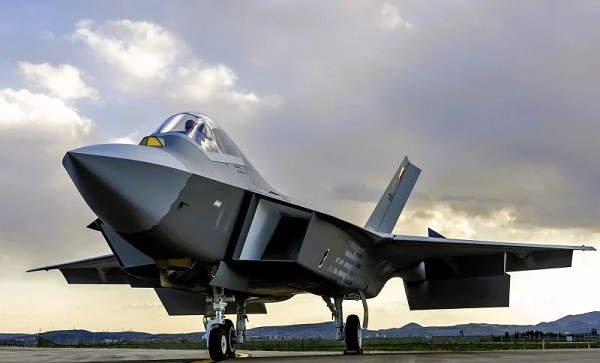
Egypt and Turkey have entered what analysts describe as the first phase of concrete implementation in their partnership to develop the KAAN fifth-generation fighter jet, moving beyond years of political signaling into active industrial and technical cooperation.
According to specialized intelligence reports, most notably an assessment by the defense-focused outlet Tactical Report, the Egyptian-Turkish partnership has begun forming joint working units responsible for manufacturing specific aircraft components and conducting intensive testing. The report indicates that cooperation is no longer limited to public declarations but has transitioned into coordinated production and evaluation efforts.
The KAAN fighter, Turkey’s flagship fifth-generation combat aircraft program, is scheduled to reach full production by 2030. The aircraft is designed to feature advanced stealth characteristics, multi-role strike capabilities, and enhanced reconnaissance systems, positioning it as a strategic airpower platform within Turkey’s long-term defense planning.
Tactical Report noted that Egypt is contributing to the program through the Arab Organization for Industrialization, where selected components of the aircraft are being manufactured. These reportedly include elements related to electronic systems and flight control technologies, alongside the preparation of advanced testing units to assess components prior to their integration into the aircraft.
The report emphasized that the cooperation is structured around a clearly defined funding mechanism, under which Egypt finances the production and testing of its assigned components. This approach, according to analysts, ensures transparency in expenditures while allowing Turkey to concentrate resources on overall aircraft development and system integration.
Defense observers say the arrangement reflects a substantive industrial partnership rather than a symbolic or politically driven initiative. The next phase of the program is expected to involve expanded ground and flight testing of the aircraft, underscoring the seriousness with which both sides are approaching operational readiness and performance validation prior to deployment.
The collaboration marks a shift from political coordination to a long-term strategic defense project, one that could significantly enhance Egypt’s air force capabilities while strengthening Ankara’s ambitions to emerge as a leading producer of advanced combat aircraft.
Analysts also note that Egypt’s participation appears aimed not only at acquiring a modern fighter platform, but at gaining access to critical technologies and developing domestic capabilities in maintenance, manufacturing, and systems integration. Such an approach would support greater operational independence over the long term and reduce reliance on external suppliers.
As regional competition intensifies and airpower remains a central element of military deterrence, the KAAN program represents a significant step in Egypt and Turkey’s evolving defense relationship, with implications extending beyond procurement to technological sovereignty and strategic autonomy.
