

Ahmed Kamel – Egypt Daily News
The newly formed Palestinian Technocratic Committee tasked with administering the Gaza Strip has announced its first major decision, exempting residents from all local service fees and taxes in a move aimed at alleviating mounting economic and humanitarian pressures on the population.
According to a statement issued by the committee, the exemption applies to all categories of local fees and taxes imposed in exchange for municipal and public services. The decision also extends to the commercial and industrial sectors, which will be exempted from any taxes or service charges amid what the committee described as exceptionally harsh economic and humanitarian conditions in the enclave.
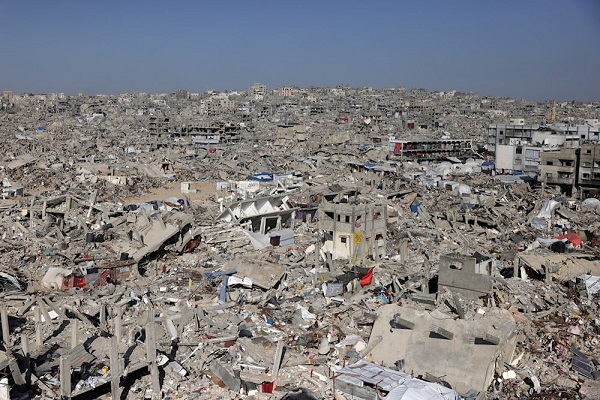
The committee said the measure is intended to support civilian resilience, ensure the continuity of essential services, and mitigate the impact of Gaza’s prolonged economic crisis. Officials described the move as a necessary first step to ease the daily burden on Palestinians following months of conflict, widespread infrastructure damage, and severe income disruption.
The Technocratic Committee was formally announced on January 14, 2026, following mediation efforts by Egypt, Qatar, and Turkey, which confirmed the completion of the committee’s formation under the leadership of Dr. Ali Abdel Hamid Shaath. In a joint statement at the time, the mediators said the establishment of the committee represented a significant development toward stabilizing Gaza and improving humanitarian conditions.
The mediators expressed hope that the committee’s work would pave the way for implementing the second phase of the Gaza ceasefire agreement, in line with the plan announced by U.S. President Donald Trump. They emphasized that full implementation of the agreement is essential to sustaining calm, preventing renewed escalation, and creating conditions conducive to Gaza’s reconstruction and long-term recovery.
Sources familiar with the committee’s preparations told Al-Eqtisadiah that detailed mechanisms have been agreed upon for managing existing government employees in Gaza, including issues related to salaries, administrative restructuring, and security oversight. According to the sources, committee members have not yet entered Gaza due to their participation in an administrative and protocol training program organized by the Quartet. Egyptian security officials, however, have urged that the committee assume its duties in Gaza as soon as possible, a move that could shorten the training period to approximately one week.
The sources said the committee’s leadership has insisted that their return to Gaza take place via the Rafah crossing, coinciding with its reopening and the resumption of humanitarian aid flows and the entry of materials for dignified shelter centers. They expect the return to occur as early as Thursday, in parallel with the crossing’s operation.
The committee has reportedly received direct approval from U.S. envoys Jared Kushner and Steve Witkoff to authorize heads of institutions to work with existing ministerial staff in Gaza. This includes the option of drawing on personnel from the Palestinian Authority or hiring external experts as operational needs require, with the committee assuming responsibility for salaries and financial allowances.
Municipalities are expected to continue operating with their current councils and staff, with guarantees that salaries will be paid and that municipal bodies will participate in implementing infrastructure projects. Sector heads within the committee will be granted full authority to oversee administrative, professional, and security restructuring across government institutions.
On the security front, sources said that the commissioner for internal security, Major General Sami Nasman, will work closely with Interior Ministry staff, police forces, and specialized security units, while implementing administrative and technical reforms. The plan also allows for the integration of experienced Palestinian Authority security personnel currently based in Gaza.
The committee has also agreed on mechanisms to address the status of employees objected to by Israel, ensuring their financial rights are preserved through early retirement schemes or alternative arrangements.
Officials stressed that there is broad consensus within the committee to adopt a unified national Palestinian approach to governance, prioritizing professionalism, public service, and the national interest over political affiliation. The committee is expected to operate under an open-ended funding framework, backed by international and Arab guarantees, to secure the financial and technical resources required for its mission.
The tax and fee exemption decision will be formally announced as part of a broader package of measures designed to reduce economic strain on Gaza’s population and signal a shift toward civilian-focused governance during the post-conflict transition period.
