

Ahmed Kamel – Egypt Daily News
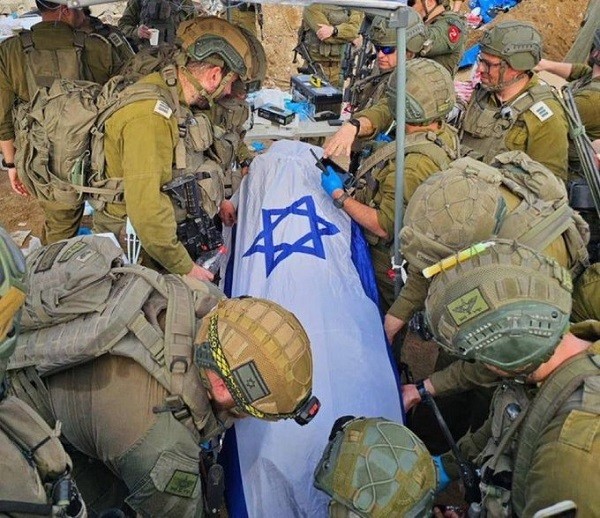
Israel announced on Monday the recovery of the remains of the last hostage previously held in the Gaza Strip, marking a significant and symbolic milestone in the aftermath of months of conflict and negotiations linked to the ceasefire agreement.
In a statement, the Israeli army said it had formally identified the remains of Ran Gvili following forensic examinations conducted by the National Institute of Forensic Medicine in cooperation with Israeli police and the military rabbinate. The army confirmed that the remains had been returned to Israel for burial and that the family had been officially notified.
“Following the completion of identification procedures, representatives of the Israel Defense Forces informed the family of the hostage Ran Gvili that their loved one has been formally identified and his remains have been returned to Israel for burial,” the statement said, adding that all hostages who had been held in Gaza had now been accounted for.
Israeli Prime Minister Benjamin Netanyahu described the operation as an “exceptional achievement for the State of Israel,” reiterating a longstanding pledge to bring all hostages home. “We promised and I personally promised to bring everyone back. We have returned them all, down to the last hostage,” Netanyahu said, praising the military and intelligence services for what he called a major national accomplishment.
Netanyahu added that the recovery of the remains was carried out based on intelligence information obtained from Hamas, highlighting the role of indirect coordination and information-sharing mechanisms that have accompanied the ceasefire arrangements.
For its part, Hamas said that the recovery of the remains constituted confirmation of its commitment to the ceasefire agreement. The group framed the development as evidence of its adherence to the terms governing the cessation of hostilities and related understandings, including issues concerning detainees and hostages.
The announcement comes amid continued international efforts to stabilize the fragile ceasefire and prevent a renewed escalation of violence. While the return of all hostages both living and deceased has been a central demand of the Israeli government and society, it has also remained a key component of mediation efforts led by regional and international actors.
Observers note that the recovery of the final hostage’s remains closes one of the most emotionally charged chapters of the conflict, though broader political, humanitarian, and security challenges in Gaza remain unresolved. The coming period is expected to test the durability of the ceasefire and the willingness of all parties to translate limited confidence-building measures into a more sustainable political process.
