

Ahmed Kamel – Egypt Daily News
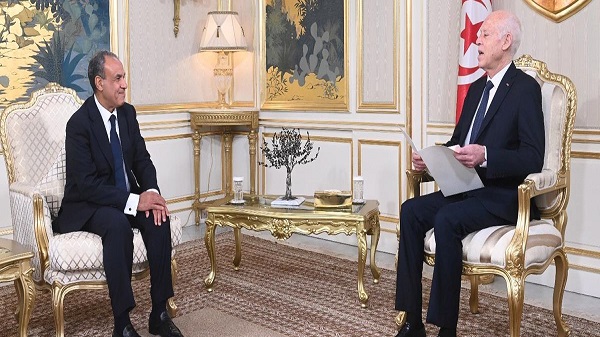
Egyptian Minister of Foreign Affairs, Emigration and Egyptian Expatriates Badr Abdelatty delivered a written message from President Abdel Fattah El-Sisi to Tunisian President Kais Saied during an official visit to Tunisia on Monday, January 26, underscoring the strength of bilateral relations and ongoing political coordination between the two countries.
The meeting took place at the presidential palace in Tunis and was held in accordance with directives from President El-Sisi. Abdelatty conveyed the Egyptian president’s greetings and his best wishes for Tunisia’s continued stability, progress, and prosperity. The message also reaffirmed Egypt’s commitment to strengthening cooperation with Tunisia across a broad range of sectors, in line with the historic, fraternal ties and longstanding political alignment between the two nations.
President Saied, in turn, asked that his greetings be conveyed to President El-Sisi, praising the depth of the brotherly relationship between Egypt and Tunisia and commending the sustained level of coordination and cooperation at various levels between the two governments and peoples.
During the meeting, Abdelatty welcomed the outcomes of the 18th session of the Egyptian-Tunisian Joint High Committee, which was held in Cairo from September 8 to 11, 2025. He said the results reflected a shared determination to enhance cooperation in priority sectors and advance bilateral relations to broader horizons.
He also highlighted the positive results of the 16th session of the Joint Consular Committee, convened in Tunis on January 15 and 16, 2026, describing it as another indication of both sides’ commitment to accelerating cooperation on practical and institutional levels.
Economic cooperation featured prominently in the discussions, with Abdelatty emphasizing the importance of maximizing opportunities to expand trade volumes, encourage reciprocal investments, and strengthen partnerships between Egyptian and Tunisian business communities. He stressed that deeper economic, trade, and investment ties would support development efforts in both countries and open new avenues for sustainable growth.
The meeting also addressed regional and international developments amid what Abdelatty described as unprecedented challenges facing the region. At the forefront of the discussions was the Palestinian issue, with the Egyptian foreign minister outlining Cairo’s intensive efforts, in coordination with regional and international partners, to advance the implementation of the second phase of the plan proposed by US President Donald Trump.
Abdelatty highlighted Egypt’s support for the formation of a national committee to administer Gaza, the rapid deployment of an international stabilization force to monitor the ceasefire, and the need to ensure the uninterrupted flow of humanitarian assistance into the enclave. He stressed that sustained aid access is essential to enable early recovery and reconstruction efforts and to alleviate the severe humanitarian crisis in Gaza.
Developments in Libya were also discussed, with Abdelatty underscoring the importance of the tripartite consultation mechanism between the foreign ministers of Egypt, Tunisia, and Algeria as a key framework for coordinating efforts among neighboring states. He reiterated Egypt’s support for a comprehensive political settlement in Libya that preserves the country’s unity, sovereignty, and territorial integrity and is grounded in an inclusive, Libyan-led process.
The talks further covered other issues of shared concern, including the situation in Sudan and developments in the Horn of Africa. Both sides stressed the importance of continued coordination and consultation between Cairo and Tunis on regional developments, with the aim of supporting stability, enhancing regional security, and advancing the aspirations of the region’s peoples for development and prosperity.
