

Ahmed Kamel – Egypt Daily News
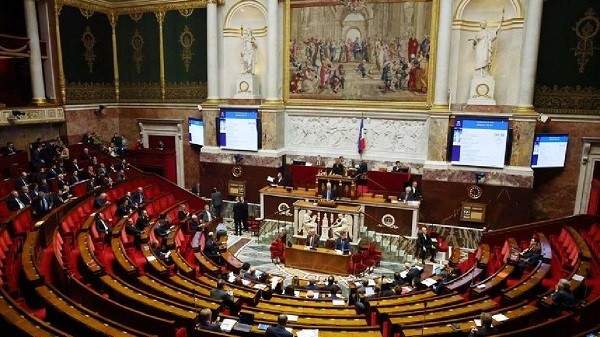
The French National Assembly has approved a bill to prohibit children under the age of 15 from accessing social media platforms, amid growing concerns over online bullying and mental health risks. Lawmakers voted 116 in favor and 23 against the legislation on Monday, sending it to the Senate for further consideration before a final vote in the lower house.
The proposed law would ban access not only to standalone social media platforms but also to social networking functionalities embedded in broader apps. President Emmanuel Macron has highlighted the role of social media in contributing to youth violence and psychological stress, advocating for regulations similar to Australia’s pioneering policy, which restricts access for under-16s to platforms such as Facebook, Snapchat, TikTok, and YouTube. Macron aims for the French ban to take effect by the start of the next school year in September.
Speaking in parliament, centrist lawmaker Laure Miller framed the legislation as a safeguard for young minds. “With this law, we are setting a clear boundary in society and saying social media is not harmless,” she said. “Our children are reading less, sleeping less, and comparing themselves to one another more. This is a battle for free minds.”
The bill enjoys broad political and public backing in France. Conservative lawmaker Thierry Perez described the measure as a response to a “health emergency,” stressing that the unrestricted use of social media comes at a cost to children’s well-being. A 2024 Harris Interactive survey found that 73% of the French public supported restricting social media access for those under 15.
If enacted, the legislation would require platforms to implement age-verification measures compliant with European Union law. Enforcement, however, may face challenges, as Australia’s rollout has shown, with minors frequently finding ways to bypass restrictions.
In addition to limiting social media use, the bill extends France’s existing smartphone ban in junior and middle schools to cover high schools. Teenagers in Paris expressed mixed reactions: some acknowledged the potential dangers of social media, while others considered the ban excessive.
France joins a growing list of countries, including Australia, Britain, Denmark, Spain, and Greece, exploring age-based restrictions to protect minors online. The European Parliament has called for minimum age requirements across the European Union, though enforcement remains the responsibility of individual member states.
