

Ahmed Kamel – Egypt Daily News
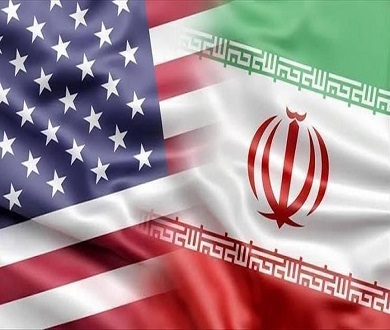
A senior Iranian official said on Saturday that negotiations with the United States are showing tangible progress, pushing back against what he described as exaggerated media narratives suggesting the two countries are on the brink of war.
Ali Larijani, secretary of Iran’s Supreme National Security Council, said that despite what he called “manufactured media hype around war,” talks between Tehran and Washington are advancing at the structural level. Writing on the social media platform X, Larijani noted that the emerging framework for negotiations was moving forward, contrary to public portrayals of imminent military confrontation.
His remarks come amid renewed tensions between Iran and the United States, marked by sharp rhetoric and warnings from Iranian officials. Earlier on Saturday, Iranian sources cautioned that U.S. diplomatic missions in Saudi Arabia, Qatar, and the United Arab Emirates could become potential targets if Washington were to launch an attack on Iran, according to regional media reports.
The diplomatic signals were further complicated by reporting in Iran’s state-aligned newspaper Ettela’at, which claimed that U.S. President Donald Trump had settled on a military option against Iran but was seeking to prevent any conflict from expanding into a broader regional war. The report reflects growing uncertainty over Washington’s strategic intentions, as well as concerns among regional actors about the spillover effects of any escalation.
Iranian Foreign Minister Abbas Araghchi has meanwhile acknowledged the existence of indirect communication channels between Tehran and Washington, facilitated through third parties. He reiterated that Iran remains open to negotiations, provided they are conducted on the basis of equality and mutual respect. Iranian officials have repeatedly rejected direct talks under pressure or threat, while leaving the door open to diplomacy through intermediaries.
The latest statements come as Iran prepares for a critical shift in its international obligations. Araghchi previously noted that with the expiration of United Nations Security Council Resolution 2231 on October 18, 2025, Iran would consider itself bound only by commitments under the Nuclear Non-Proliferation Treaty. That framework, he said, does not impose the same restrictions on the scope of Iran’s nuclear program as the now-fraying agreements tied to the 2015 nuclear deal.
Taken together, the comments from Iranian officials suggest a dual-track approach: projecting deterrence amid heightened regional tensions while signaling continued engagement through diplomatic channels. Whether this cautious progress in negotiations can withstand the broader political and military pressures on both sides remains an open question.
