

Ahmed Kamel – Egypt Daily News
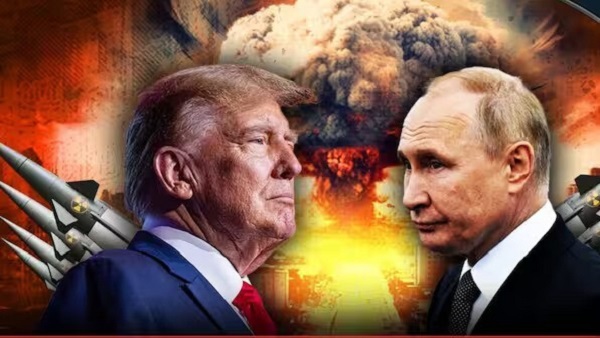
The expiration of the New START treaty, the last remaining nuclear arms control agreement between Russia and the United States, has drawn expressions of regret from Moscow while prompting U.S. President Donald Trump to call for a new and broader pact, a divergence that has heightened concerns about an unconstrained global nuclear arms race.
The treaty’s expiration on Thursday removed the final limits on the world’s two largest nuclear arsenals for the first time in more than half a century, ending a framework that capped deployed strategic warheads and delivery systems and provided a degree of predictability in U.S.-Russian relations even during periods of severe political tension.
Kremlin spokesman Dmitry Peskov said Russia views the treaty’s expiration “negatively” and regrets its end, while reaffirming Moscow’s commitment to what he described as a responsible and balanced approach to nuclear stability. He stressed that Russia would continue to act based on a careful assessment of the global security environment and its national interests, while remaining open to dialogue if it receives “constructive responses” from Washington.
Russian President Vladimir Putin had offered last year to continue observing New START’s core limits for an additional year if the United States did the same, arguing that a sudden collapse of the arms control regime would be destabilizing and could fuel nuclear proliferation. According to Kremlin adviser Yuri Ushakov, Putin reiterated that position in discussions with Chinese President Xi Jinping this week, noting that Washington did not respond to the proposal.
President Trump, however, made clear that he does not favor extending the treaty in its current form. In a post on his Truth Social platform, Trump described New START as “a badly negotiated deal” that he claimed was being violated and said he wants U.S. nuclear experts to work on a new, improved, and modernized agreement that could endure well into the future.
Trump has repeatedly argued that any new arms control framework must include China, whose nuclear arsenal, while significantly smaller than those of the United States and Russia, is expanding rapidly. U.S. Secretary of State Marco Rubio echoed that position this week, saying that meaningful arms control in the 21st century is impossible without Beijing’s participation.
China has firmly rejected that idea, maintaining that its nuclear forces are not comparable in scale to those of Washington and Moscow. Foreign Ministry spokesperson Lin Jian said Beijing regrets the expiration of New START and urged the United States to resume nuclear dialogue with Russia, while calling on Washington to respond positively to Moscow’s proposal to continue observing the treaty’s limits for the time being.
Russian officials have said they respect China’s position but have also argued that any broader nuclear agreement should include the arsenals of NATO nuclear powers France and the United Kingdom, an idea that would further complicate already stalled arms control efforts.
New START was signed in 2010 by then-U.S. President Barack Obama and Russian President Dmitry Medvedev, limiting each side to no more than 1,550 deployed nuclear warheads on no more than 700 deployed missiles and bombers. Originally set to expire in 2021, the treaty was extended for five years. Although it envisioned intrusive on-site inspections to verify compliance, those inspections were suspended in 2020 due to the COVID-19 pandemic and never resumed.
In February 2023, Putin announced Russia was suspending its participation in the treaty, citing the inability to allow U.S. inspections while Washington and its NATO allies openly backed Ukraine against Moscow. The Kremlin insisted at the time that Russia was not withdrawing from the agreement entirely and would continue to respect its limits.
With the treaty now expired, Russia’s Foreign Ministry warned that Moscow remains ready to take “decisive military-technical measures” to counter any additional threats to its national security. At the same time, both countries signaled a limited willingness to maintain communication. U.S. European Command said Washington and Moscow agreed Thursday to reestablish high-level military-to-military dialogue following talks in Abu Dhabi, restoring a channel that had been suspended in 2021.
Arms control advocates warned that the collapse of New START could trigger a dangerous new arms race involving not only the United States and Russia, but also China.
“If the Trump administration continues to stiff-arm nuclear arms control diplomacy with Russia and decides to increase the number of nuclear weapons in the U.S. deployed strategic arsenal, it will only lead Russia to follow suit and encourage China to accelerate its strategic buildup,” said Daryl Kimball, executive director of the Arms Control Association. He warned that such a trajectory could result in a prolonged and destabilizing three-way nuclear competition.
New START was the final agreement in a series of nuclear arms limitation treaties dating back to the Cold War-era SALT I agreement of 1972. Its expiration marks a turning point in global arms control, leaving the future of nuclear restraint dependent on uncertain diplomacy at a time of heightened geopolitical rivalry.
