

Ahmed Kamel – Egypt Daily News
The opening ceremony of the Milano Cortina 2026 Winter Olympics unfolded Friday night in a festive atmosphere inside Milan’s San Siro stadium, but moments of political tension cut through the celebration as Israel’s Olympic delegation and U.S. Vice President JD Vance were met with scattered boos from sections of the crowd.
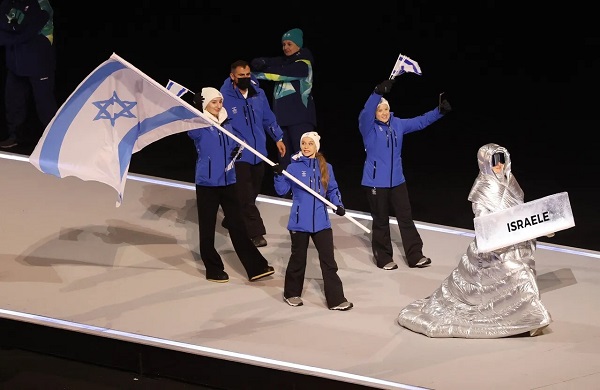
Israel’s four-member team entered the stadium during the traditional parade of nations, smiling and waving the national flag. While applause could be heard, it was accompanied by audible boos, though the jeers were partially drowned out by the ceremony’s music. A similar reaction followed later in the evening when Vice President Vance appeared on the stadium’s giant screens. Cheers for the large U.S. delegation quickly turned into boos once Vance was identified.
The response to the American vice president reflected broader political unrest that has followed the Games into Italy. In the days leading up to the ceremony, protests erupted in Milan over U.S. immigration enforcement policies under the Trump administration. Demonstrators were particularly angered by reports that analysts linked to U.S. Immigration and Customs Enforcement would assist the American Olympic delegation, a form of security support that has been routine at previous Games but has taken on heightened symbolic meaning amid domestic U.S. debates over immigration.
On Friday afternoon, hundreds of protesters marched through central Milan chanting “ICE OUT,” connecting Olympic visibility with opposition to U.S. federal enforcement practices. Italian police maintained a visible presence, though demonstrations remained largely peaceful.
Reactions to Israel’s presence varied across Olympic venues. In Cortina d’Ampezzo, where a parallel opening event was held for athletes based in the mountain cluster, both the U.S. and Israeli teams received warm applause. In Predazzo, home to the ski jumping venue, some spectators again booed the Israeli delegation, underscoring the uneven and localized nature of public sentiment.
Israeli athletes had anticipated the possibility of a hostile reception, given the ongoing fallout from the war in Gaza. Although a truce has been in place since October, violence has continued. Gaza health officials report that nearly 560 Palestinians, most of them civilians, have been killed by Israeli fire since the truce began, while Israeli authorities say four Israeli soldiers have been killed by Palestinian militants during the same period.
“I’m prepared. They can do whatever they want,” Israeli skier Barnabas Szollos said ahead of the ceremony. “I just want to have a good race, a fun race, and do the best I can.”
Israel’s Olympic history is deeply marked by political violence. During the 1972 Munich Summer Games, 11 Israeli athletes and coaches were killed in an attack by Palestinian militants at the Olympic Village, an event that remains one of the darkest chapters in Olympic history. For decades, the International Olympic Committee resisted calls to formally commemorate the victims during opening ceremonies, despite sustained pressure from families and Israeli officials. The athletes were finally honored during the opening ceremony of the Tokyo Summer Olympics in 2021, nearly half a century later.
The mixed reactions in Milan highlighted the persistent challenge facing the Olympic movement as it seeks to project unity and neutrality while operating in a world shaped by conflict and political division. As competition begins, organizers hope athletic achievement will take center stage, though the opening ceremony made clear that global tensions have not been left outside the stadium gates.
