

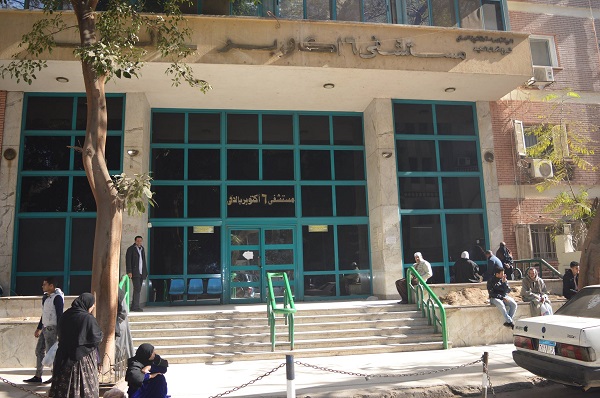
Ahmed Kamel – Egypt Daily News
Egyptian prosecutors have referred ten doctors and administrative officials from the 6 October Health Insurance Hospital to criminal trial on charges of gross negligence after 75 patients suffered severe eye injuries following routine cataract surgeries.
The case, described by observers as one of the most serious incidents of collective medical negligence in Egypt in recent years, centers on operations performed in August 2025 at the state-run 6 October Health Insurance Hospital. According to the prosecution’s findings, patients developed acute bacterial infections inside the eyeball shortly after undergoing cataract removal procedures.
Investigators said the infections led to endophthalmitis, a severe inflammation affecting the inner structures of the eye, including the cornea and vitreous body resulting in rapid and dramatic deterioration of vision. In a number of cases, patients were forced to undergo complete removal of the eye to prevent the infection from spreading to the brain or the other eye. Under Egyptian law, such outcomes are classified as permanent disabilities.
Systemic Failures in Sterilization and Infection Control
Prosecutors cited “grave negligence” and serious technical and administrative shortcomings in the hospital’s sterilization and infection control systems. Evidence gathered during the investigation pointed to inadequate sterilization of surgical instruments and injectable solutions, as well as failure to adhere to established safety protocols during operations.
These lapses, authorities say, allowed a bacterial outbreak to spread among dozens of patients undergoing what is typically considered one of the safest and most common surgical procedures worldwide. Cataract surgery generally has a high success rate when infection control standards are rigorously maintained.
Legal experts note that the scale of the outbreak significantly aggravated the charges, transforming what might otherwise have been isolated malpractice claims into a broader criminal case involving systemic institutional failure.
Families Describe “Nine Days of Horror”
The human toll of the incident has been laid bare by accounts from victims’ families.
In October, Abdel Rahman Mohamed Hussein recounted in a Facebook post the ordeal of his father, who underwent cataract surgery at the hospital on September 1, 2025. According to his account, the procedure was followed by intense pain, pus discharge, and severe infection. Doctors ultimately decided to remove the eye entirely in an emergency operation to prevent the infection from spreading to the brain or the patient’s other eye.
In another case, Abdel Moneim El-Gendy described his mother’s experience as a “nightmare” that unfolded over nine days. What began as a routine cataract procedure quickly deteriorated into debilitating pain and inability to eat. Upon returning to the hospital, doctors discovered a bacterial infection believed to have originated inside the operating room. She was later transferred to Cairo University Hospitals (Kasr Al Ainy) for emergency surgery to remove the infected eye.
Ongoing Investigation and Accountability
The Public Prosecution continues to pursue the case, emphasizing that all those found responsible will be held accountable under the law. Authorities have also indicated that corrective measures are being reviewed to prevent similar incidents in the future, including stricter oversight of infection control procedures in public hospitals.
Medical safety advocates say the case underscores the urgent need for stronger monitoring systems within Egypt’s public healthcare network, particularly in high-volume surgical units. They argue that consistent enforcement of sterilization protocols and transparent reporting mechanisms are critical to restoring public trust.
As the trial proceeds, the families of the affected patients are seeking not only justice but assurances that systemic reform will follow. For many, the damage is irreversible, a life-altering consequence of what should have been a straightforward medical intervention.
