

Ahmed Kamel – Egypt Daily News
Egypt’s installed renewable energy capacity climbed to 9.1 gigawatts (GW) by the end of 2025, with solar power emerging as the country’s largest single source of green electricity, according to new figures released by the New and Renewable Energy Authority (NREA).
Solar installations now account for approximately 3.2 GW in operation, overtaking wind and hydropower in installed capacity. Wind farms contribute about 3 GW, while hydropower stands at 2.8 GW. Biomass remains a marginal contributor at 64 megawatts (MW).
The milestone reflects Cairo’s accelerating push to diversify its energy mix and reduce reliance on fossil fuels, amid rising domestic demand and commitments to expand clean energy generation.
Obelisk Project Boost
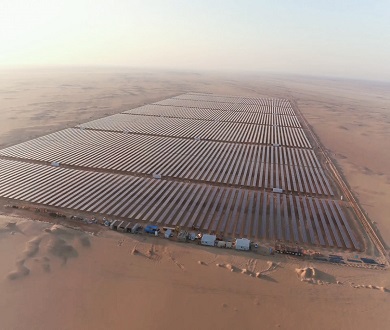
A key contributor to the latest gains was the first 500 MW phase of the Obelisk solar project in Naga Hammadi, which recently entered commercial operation. The project also includes 200 megawatt-hours (MWh) of battery storage capacity, marking an important step in enhancing grid stability and addressing intermittency challenges associated with solar generation.
A second 500 MW phase of the Obelisk project is planned, which would further consolidate solar’s leading position within Egypt’s renewable portfolio.
Strong Pipeline of Projects
Beyond existing capacity, Egypt currently has around 4 GW of renewable projects under construction, including 1.3 GW of wind and 2.7 GW of solar. The broader development pipeline is even more substantial, totaling approximately 14 GW.
Of this, around 9.4 GW consists of privately developed wind projects, while 4.7 GW comprises private-sector solar schemes. The heavy private-sector presence underscores Egypt’s strategy of leveraging independent power producers and public-private partnerships to scale up investment in renewables.
Rising Generation Output
Electricity output from renewable plants is also trending upward in line with installed capacity growth. During the final quarter of 2025, renewable facilities generated more than 7,660 gigawatt-hours (GWh), up from 7,063 GWh in the same period the previous year.
Despite ranking third in installed capacity, hydropower delivered the largest share of renewable generation in the quarter through December, producing 4,141 GWh, a 16.5% increase year-on-year. Wind energy followed with 2,143 GWh, up 7.5%, while solar output rose 6.1% to 1,350 GWh.
The higher hydropower contribution reflects the stable baseload nature of dam-based generation compared with variable solar and wind resources.
Strategic Context
Egypt has set ambitious targets to increase the share of renewables in its electricity mix over the coming decade, aiming to position itself as a regional energy hub connecting Africa, the Middle East and Europe.
Grid modernization, energy storage expansion and cross-border interconnections are expected to play a critical role in integrating the rapidly expanding renewable fleet.
With solar now the largest installed renewable source and a robust pipeline underway, Egypt’s energy transition appears to be entering a new phase, one defined by private investment, technological upgrades and growing generation capacity to meet both domestic demand and potential export ambitions.
