

Ahmed Kamel – Egypt Daily News
On the sidelines of the inaugural meeting of the Peace Council in Washington on February 19, Egypt’s Foreign Minister and Minister of International Cooperation and Egyptian Expatriates, Badr Abdelatty, conducted a series of high-level bilateral meetings with senior international officials, underscoring Cairo’s expanding diplomatic engagement on pressing regional crises.
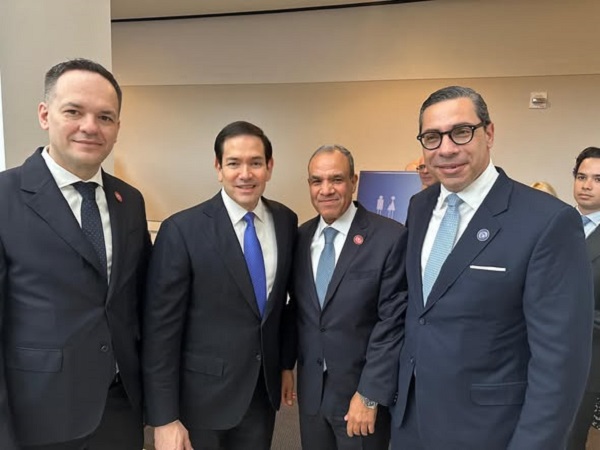
Abdelatty was part of the Egyptian delegation headed by Prime Minister Mostafa Madbouly. During his visit, he met with U.S. Secretary of State Marco Rubio, U.S. Special Envoy to the Middle East Steve Witkoff, President of the World Bank Group Ajay Banga, Jordanian Deputy Prime Minister and Foreign Minister Ayman Safadi, UAE Deputy Prime Minister and Foreign Minister Abdullah bin Zayed Al Nahyan, Omani Foreign Minister Badr Albusaidi, and Cypriot Foreign Minister Constantinos Kombos.
Strengthening U.S.–Egypt Strategic Ties
Talks with Rubio and Witkoff focused on reinforcing the long-standing strategic partnership between Egypt and the United States. Abdelatty emphasized Cairo’s commitment to sustained coordination with Washington on key regional and international issues.
Central to the discussions was the ongoing war in Gaza. The Egyptian minister praised U.S. diplomatic efforts aimed at ending hostilities and expressed support for American initiatives designed to consolidate a ceasefire and restore regional stability. Egypt has played a pivotal mediating role since the outbreak of the conflict, facilitating humanitarian access and ceasefire negotiations between Israel and Palestinian factions.
Abdelatty reiterated Egypt’s longstanding position that any durable resolution must rest on a comprehensive political settlement to the Palestinian issue. He called for a full and sustainable ceasefire, unimpeded humanitarian aid delivery, and the launch of a credible political process leading to the implementation of the two-state solution and the establishment of an independent Palestinian state.
Diplomatic Solutions to Regional Escalation
Beyond Gaza, the meetings addressed broader regional tensions, including concerns surrounding Iran’s nuclear program. Abdelatty stressed the urgency of avoiding further escalation and underscored the primacy of diplomatic and political solutions. He called for a peaceful, negotiated settlement that addresses the concerns of all parties through mutual respect and shared interests, warning that military confrontation would carry grave consequences for regional security.
Sudan’s Stability as a National Security Priority
The deteriorating situation in Sudan featured prominently in Abdelatty’s discussions with U.S. officials. Egypt, which shares a long border with Sudan and has been directly affected by the ongoing conflict, views Sudanese stability as integral to its national security.
Abdelatty outlined Egypt’s efforts to preserve Sudan’s state institutions and territorial integrity while supporting international and regional initiatives aimed at ending the conflict. He advocated for an immediate and sustainable humanitarian truce and called for intensified global humanitarian assistance as conditions on the ground worsen.
The minister also warned against attempts to create parallel governing structures in Sudan, arguing that such moves could threaten national unity and complicate prospects for a comprehensive political settlement.
Horn of Africa and Red Sea Governance
Discussions extended to developments in the Horn of Africa, a region of mounting strategic importance. Abdelatty reaffirmed Egypt’s support for Somalia’s unity and sovereignty and stressed the importance of ensuring adequate and sustainable funding for the African Union’s stabilization mission in Somalia.
He also addressed Red Sea security, emphasizing that governance of the vital waterway should remain the prerogative of littoral states. Egypt has consistently opposed efforts by non-coastal actors to assert a role in Red Sea security arrangements, citing principles of sovereignty and regional ownership.
Nile Waters and International Law
Water security, particularly regarding the Nile River, was another key issue. Abdelatty described access to water as a fundamental human right and stressed the necessity of adhering to international law principles governing shared watercourses, notably cooperation, prior consultation, and the obligation not to cause significant harm.
While Egypt has repeatedly called for negotiated agreements among Nile Basin countries, it has also rejected unilateral measures that it argues undermine the water rights of downstream states. The issue remains central to Cairo’s foreign policy, especially in light of ongoing disputes over large-scale upstream projects.
Economic and Development Dimensions
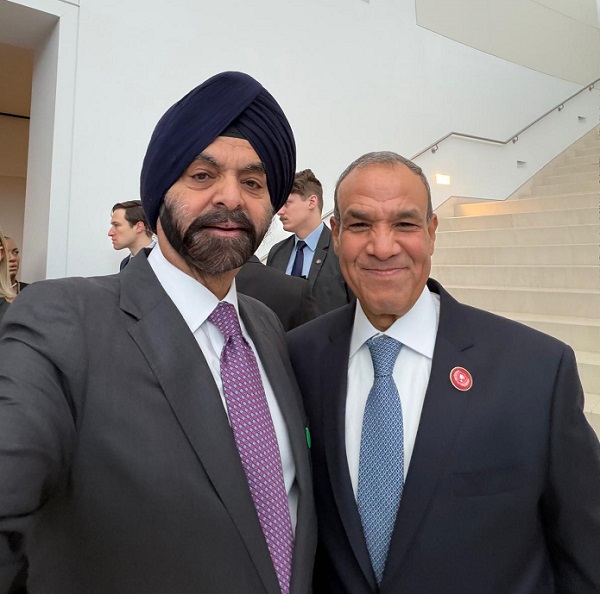
In his meeting with World Bank President Ajay Banga, Abdelatty discussed economic cooperation and development financing, linking sustainable development to long-term stability across Africa and the Middle East. Egypt has sought to position itself as both a regional diplomatic actor and a development partner capable of bridging political and economic initiatives.
Coordinated Regional Diplomacy
Meetings with Arab and Mediterranean counterparts, including Jordan, the United Arab Emirates, Oman, and Cyprus, reflected Egypt’s broader strategy of coordinated regional diplomacy. Officials exchanged views on de-escalation efforts, energy cooperation, and multilateral coordination in addressing shared security challenges.
Concluding his engagements, Abdelatty reaffirmed Egypt’s commitment to continued consultation with regional and international partners in support of conflict resolution, peacebuilding, and sustainable stability.
The Washington meetings highlighted Cairo’s effort to balance immediate crisis management, from Gaza to Sudan with long-term strategic priorities, including Red Sea security, Nile water governance, and regional development. As conflicts and geopolitical rivalries reshape the Middle East and Africa, Egypt is positioning itself as a central diplomatic interlocutor seeking negotiated solutions in an increasingly polarized landscape.
