

The Presidency
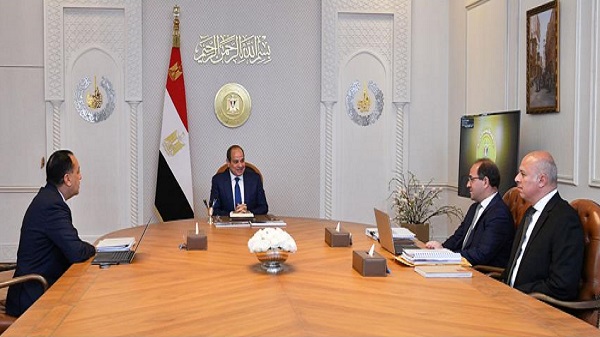
Today, President Abdel Fattah El-Sisi met with Prime Minister, Dr. Moustafa Madbouly, and Minister of Finance, Ahmed Kouchouk.
Spokesman for the Presidency Ambassador Mohamed El-Shennawy said the meeting reviewed the priorities and parameters of the fiscal policy for the short and medium term for the Fiscal Year 2026/2027 Budget. This policy includes the establishment of a new partnership with the business community to bolster confidence, improve services, and ensure clarity of vision. This is in addition to the implementation of targeted tax and customs facilitations, and the expansion of the tax base by increasing tax compliance, without imposing additional or significant burdens on citizens or the business community.
The Minister of Finance noted that the priorities and parameters of the fiscal policy encompass the implementation of a balanced fiscal policy that fosters growth and enhances the competitiveness of the Egyptian economy, while maintaining fiscal discipline. These policies target a growth rate of 5.4%, inflationary stability, and the allocation of EGP 90 billion for economic activity support programs tied to tangible outcomes.
This is in addition to continued financial support for energy and the achievement of a primary surplus of EGP 1.2 trillion. Minister Kouchouk added that there will be a significant improvement in all debt service indicators, coupled with a sustained reduction in the debt-to-GDP ratio. He emphasized that the priorities and parameters of the fiscal policy also include achieving substantial increases in health and education budgets, as well as teachers’ salaries, alongside a real increase in state employees’ wages tied to performance merit and exceeding inflation rates.
The meeting also reviewed the target rates for growth, the primary surplus, primary expenditures, and various revenue streams. It also discussed the government’s efforts to achieve fiscal balance, thereby enhancing the performance of the national economy, particularly in light of the increasing regional challenges and their subsequent economic repercussions. In this context, the Minister of Finance emphasized that the government is steadfast in its reform trajectory to ensure financial and economic stability and to stimulate private sector growth.
Minister Kouchouk also underscored the commitment to sustaining economic activity, production, manufacturing, and exports through balanced fiscal policies that incentivize investment. He highlighted the ongoing implementation of tax, customs, and real estate facilitations aimed at easing the burdens on both citizens and investors.
The meeting included a presentation of proposals for wage increases, as well as the primary policies aimed at reducing the debt of budgetary entities and lowering the debt service bill. The presentation also highlighted key targeted policies and procedures, which include achieving high growth rates, supporting the private sector, and relying on commodity and service exports as a fundamental driver of growth. The government is also focused on increasing productivity, expanding expenditure on research and development and incentivizing private investment.
President El-Sisi underlined the necessity of sustaining the path of comprehensive institutional reform. This reform aims to ensure fiscal discipline and sound governance by rationalizing public expenditure, enhancing public revenues, and reducing government debt, thereby bolstering the economy’s resilience against various challenges. The President underscored the vital need for the government to continue its efforts to attract further domestic and foreign investment, while maintaining direct and positive engagement with global direct investment circles to provide a better understanding on Egypt’s targeted economic measures intended to contain regional repercussions.
