

Ahmed Kamel – Egypt Daily News
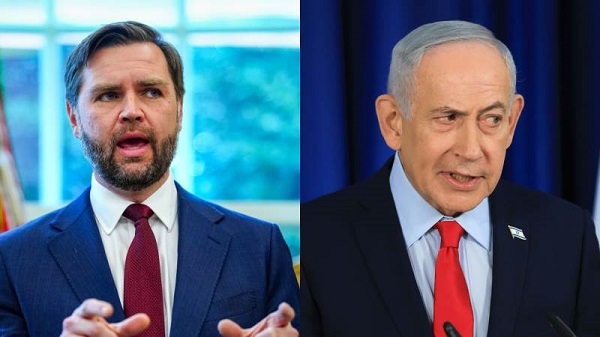
U.S. Vice President JD Vance held a tense phone call with Israeli Prime Minister Benjamin Netanyahu this week, reflecting growing strains within the alliance as Washington reassesses the trajectory of the ongoing war with Iran.
According to reports cited by Axios, Vance challenged Netanyahu over what he described as overly optimistic assumptions about the conflict, particularly claims that the war could quickly lead to regime change in Tehran. Sources familiar with the call said the vice president made clear that several key expectations presented to President Donald Trump prior to the conflict had failed to materialize.
Despite the reported killing of Supreme Leader Ali Khamenei, Iran’s political structure remains intact, with hardline factions consolidating power rather than weakening. The reality on the ground has complicated early projections of a swift strategic shift in Tehran.
Vance, who had previously advised against military escalation, has since taken on a central diplomatic role in efforts to bring the conflict to an end. He has been tasked by Trump with helping lead negotiations, signaling a shift toward a more negotiation-driven approach after weeks of military confrontation.
The tensions between Washington and Tel Aviv were further underscored by reports from an Israeli media outlet linked to Miriam Adelson, which claimed Vance had also confronted Netanyahu over Israeli settler violence in the West Bank. However, White House officials dismissed the report as false and suggested it may have been intended to damage the vice president’s standing. Israeli officials, for their part, denied any role in disseminating the claims.
As diplomatic efforts intensify, Vance has engaged with key regional partners, including senior officials from the United Arab Emirates and the prime minister of Qatar, in talks focused on de-escalation and support for Gulf allies. The White House has also floated the possibility of Vance leading a U.S. delegation in high-level negotiations with Iran, signaling the administration’s intent to pursue a negotiated settlement.
Regional mediators from Egypt, Pakistan, and Turkey have been enlisted to convey Washington’s seriousness about talks, particularly by highlighting Vance’s potential leadership role in negotiations.
Meanwhile, Trump has extended a deadline related to potential strikes on Iranian energy infrastructure, announcing a 10-day pause to allow negotiations to continue. He maintained that talks were progressing positively, despite conflicting reports.
A proposed 15-point framework reportedly modeled on previous U.S. initiatives in Gaza, calls for Iran to dismantle its nuclear and long-range missile programs, reopen the Strait of Hormuz, and sever ties with proxy groups. However, Iranian state media indicated that Tehran has rejected the proposal, instead demanding the closure of U.S. bases in the Gulf, financial reparations, and a halt to Israeli military operations against Hezbollah in Lebanon.
Iran has also sought greater control over the Strait of Hormuz a critical chokepoint for global oil shipments, raising concerns about potential disruptions to international energy markets. U.S. officials have described Tehran’s demands as unrealistic, warning that prospects for a diplomatic breakthrough have become more complicated than before the conflict began.
In a further sign of escalation, Iran’s Islamic Revolutionary Guard Corps issued warnings urging civilians across the Middle East to avoid areas near U.S. military installations, following Trump’s statements that negotiations were ongoing.
The conflict, now entering its fourth week since initial U.S. and Israeli strikes on Iran in late February, continues to fuel uncertainty across the region. For many civilians inside Iran, the situation remains increasingly dire, with daily life overshadowed by the risks of prolonged war and the fading hope for a swift resolution.
