

Ahmed Kamel – Egypt Daily News
European leaders pushed back Monday against a proposal by Russian President Vladimir Putin to involve former German chancellor Gerhard Schröder in future negotiations over European security and the war in Ukraine, exposing deep mistrust between Moscow and the European Union despite renewed talk of diplomacy.
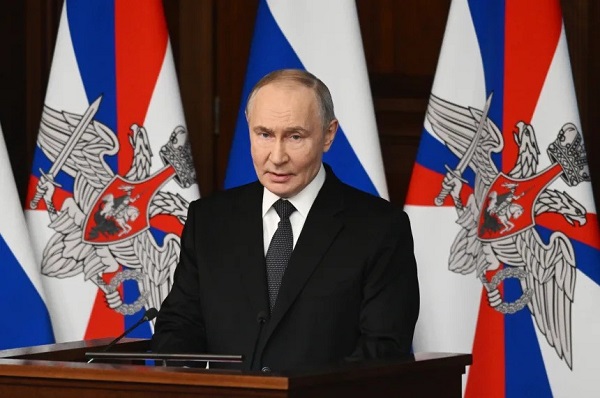
The dispute erupted after Putin suggested over the weekend that the conflict in Ukraine may be “coming to an end” and indicated he would be willing to discuss a new security framework with Europe. As part of that vision, the Russian leader floated Schröder as a possible intermediary between Moscow and European governments.
The proposal was swiftly rejected in Brussels.
Arriving for a meeting of EU foreign ministers, European Union foreign policy chief Kaja Kallas dismissed the idea outright, warning that allowing Russia to effectively choose Europe’s negotiator would undermine the credibility of any talks from the outset.
Kallas also pointed to Schröder’s longstanding business ties with Russian energy companies, arguing that his close relationship with Moscow creates a clear conflict of interest.
Schröder has remained one of the most controversial political figures in Germany since leaving office in 2005, largely because of his deep connections to Russian state-backed energy projects and his personal relationship with Putin. Shortly after stepping down as chancellor, he joined the leadership of a major German-Russian gas pipeline consortium, triggering years of criticism from political opponents and European officials.
The latest exchange highlights the complicated diplomatic landscape surrounding the Ukraine war as both Russia and parts of Europe cautiously begin discussing what a future post-war security order could look like.
Although fighting continues across multiple fronts, recent comments from senior European officials suggest that some governments are beginning to consider the possibility of broader strategic talks with Moscow, particularly concerning the long-term security architecture of Europe.
Antonio Costa said last week that there may be “potential” for future negotiations with Russia, including discussions over European security arrangements once conditions allow.
Still, the strong reaction to Putin’s mediator proposal underscores how politically toxic any perceived Russian influence over the negotiation process remains within the European Union.
The Kremlin’s latest messaging appears aimed at signaling openness to diplomacy while simultaneously testing divisions inside Europe over how future relations with Russia should be managed after years of war, sanctions, and geopolitical confrontation.
For now, however, European leaders appear determined to maintain control over any future negotiation framework themselves, rejecting any scenario in which Moscow could shape the diplomatic playing field before formal talks even begin.
