

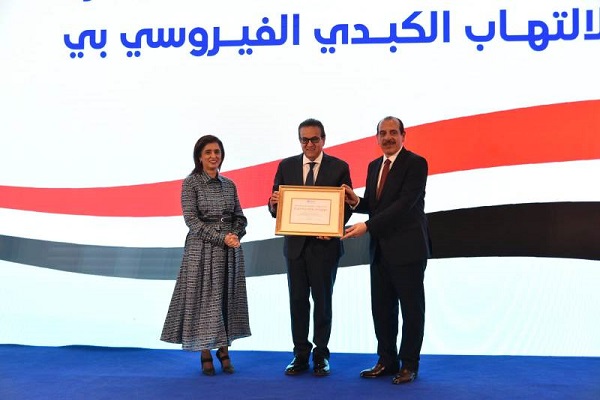
Egypt Daily News – In a major regional and international milestone, Egypt has officially become the first country in the Eastern Mediterranean to achieve the World Health Organization’s (WHO) target for controlling hepatitis B. This recognition was marked by the presentation of an international certificate to Dr. Khaled Abdel Ghaffar, Deputy Prime Minister and Minister of Health and Population, during a special celebration organized to honor Egypt’s achievement.
Dr. Abdel Ghaffar stated in his opening speech that the Egyptian state, under the leadership of President Abdel Fattah El-Sisi, places public health at the top of its national priorities. This comes as part of a broader vision aimed at strengthening health security and localizing the production of medicines and vaccines.
The ceremony was attended by high-level officials, including Deputy Ministers Dr. Amr Qandil and Dr. Abla El-Alfi, Dr. Ahmed Taha, President of the General Authority for Healthcare Accreditation and Regulation, as well as representatives from international partners and national health institutions.
A Landmark in Egypt’s Health System
The Minister emphasized that this accomplishment marks a turning point in Egypt’s healthcare journey and reflects the state’s strong commitment to safeguarding citizens’ health and expanding preventive and universal health coverage. Hepatitis B, he noted, remains a serious global health challenge due to its severe consequences if left unaddressed. The WHO has set a global target for eliminating the virus by 2030, and Egypt is now leading the way in its region.

Dr. Abdel Ghaffar highlighted the efforts of the Ministry of Health’s Preventive Medicine Sector from 2008 to 2024, noting a 15% decline in the virus’s prevalence among those under 60 compared to 2015. Among children under ten, infections decreased by 50%, and the rate among children under five dropped to less than 1%, according to national survey results.
Success in Disease Prevention
Egypt’s success also extends to vaccine-preventable diseases. The country has been officially declared free of polio and has eliminated measles, rubella, congenital rubella syndrome, neonatal tetanus, and diphtheria. These accomplishments complement ongoing efforts to combat viral hepatitis through active surveillance, laboratory monitoring, and infection control.
The national immunization program was credited as a key pillar of this achievement, with a coverage rate exceeding 95%. The program’s effectiveness was bolstered by digital infrastructure upgrades, allowing for real-time data-driven decisions, improved service delivery, reduced vaccine wastage, and greater health equity. Additionally, investments were made in cold chain development and workforce training.
Free and Universal Access to Hepatitis B Vaccination
The state has made the hepatitis B vaccine freely available to all new born Egyptian and non-Egyptian alike administering the birth dose within the first few hours of life. For babies born to infected mothers, Egypt provides immunoglobulin to prevent transmission.
Efforts have also targeted high-risk groups, such as healthcare workers, close contacts of infected individuals, dialysis patients, and people living with HIV. The minister stressed that this comprehensive preventive approach was a cornerstone to success.
Sustainable Vaccine Manufacturing
As part of a long-term health strategy, the Ministry has partnered with stakeholders to establish the Egyptian Vaccines Manufacturers Alliance (EVMA). This strategic move aims to secure self-sufficiency, ensure sustainable vaccine supply, and promote local biopharmaceutical production.
Dr. Abdel Ghaffar credited the success to collective efforts and coordinated action between the Ministry’s teams, the WHO, and other international partners. He described the Egyptian model as an example of how political will, technical expertise, and institutional support can turn challenges into real, measurable achievements.
He concluded by thanking all the preventive medicine professionals across Egypt’s governorates, as well as the local and international partners who contributed to this historic public health accomplishment.
