

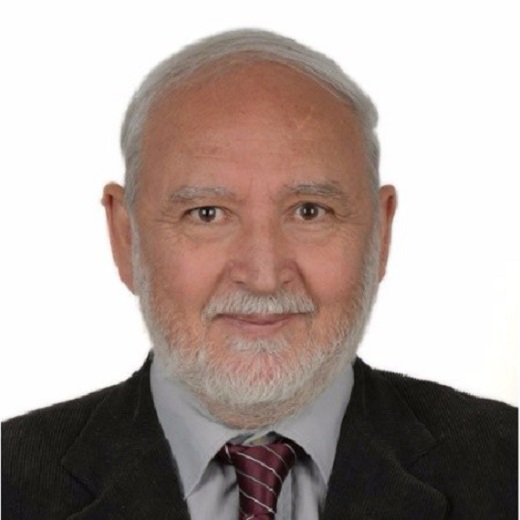
Egypt Daily News – In a revealing and potentially alarming interview, Dr. Yousry Abu Shady, the former senior expert at the International Atomic Energy Agency (IAEA), has provided fresh insights into the American strikes on Iran and the status of Tehran’s nuclear program. With decades of experience in nuclear energy and non-proliferation, Dr. Abu Shady’s assessment contradicts recent official narratives and raises serious concerns about the global security landscape.
According to Dr. Abu Shady, Iran successfully moved 500 kilograms of highly enriched uranium (HEU), enriched to 60 percent purity, from its Natanz nuclear site on the night of June 12–13, 2025. This amount of HEU, he explained, is enough to produce up to ten nuclear bombs, each with a potential explosive power equivalent to 1.5 tons of TNT.
The operation was carried out just hours after the IAEA, led by Director-General Rafael Grossi, passed a resolution condemning Iran and referred its nuclear file to the United Nations Security Council.
Natanz, a key component of Iran’s nuclear infrastructure, is considered one of the most sensitive and strategically important facilities in the country. However, it wasn’t the only site involved in these recent developments. Dr. Abu Shady also revealed that at the Fordow facility, another heavily fortified Iranian site 16 truckloads of enriched uranium were removed on June 19 and 20, right before the United States launched airstrikes on Iranian targets.
“Iran was prepared,” Dr. Abu Shady said. “They had likely anticipated a reaction and moved their most valuable assets before the attack could take place.”
Even more concerning, he added, is the fact that Iran may have undisclosed nuclear sites, unknown to the international community. According to Dr. Abu Shady, Tehran possesses not only the enriched materials but also the technical expertise and scientific personnel required to produce nuclear weapons.
“They have the materials, they have the technology, and they have the scientists,” he said. “It wouldn’t surprise me if Iran were to announce tomorrow that it has built a nuclear bomb.”
When asked about the effectiveness of the recent American strikes, Dr. Abu Shady was highly critical. Contrary to claims made by U.S. officials that the strikes reached underground facilities at depths of up to 80 meters, he stated that the bombardment only damaged surface-level structures and entrances to nuclear reactors.
“These strikes did not penetrate the fortified layers of Iran’s nuclear sites,” he said. “They damaged external parts and access points, not the core of the program. The real infrastructure remains intact.”
Dr. Abu Shady described the operation as little more than a publicity move, calling it a “media show” that may have had more political than strategic value. In his view, the action did little to alter Iran’s nuclear capabilities and may, in fact, have accelerated the country’s determination to complete its nuclear ambitions.
“This was not a strategic blow,” he argued. “It was a symbolic act meant to reassure the public, but it won’t stop what’s coming.”
With tensions rising across the region and nuclear proliferation again in the spotlight, Dr. Abu Shady’s warnings should not be taken lightly. If his assessment is accurate, Iran may already be in possession of the materials necessary for nuclear weapons and is merely steps away from building them, if it hasn’t already.
The international community now faces an urgent challenge: how to respond to a nuclear-armed Iran, and whether diplomatic or military strategies can prevent further escalation in the Middle East. One thing is certain, according to Dr. Abu Shady. the world may be standing at the edge of a very dangerous turning point.
