

Ahmed Kamel – Egypt Daily News
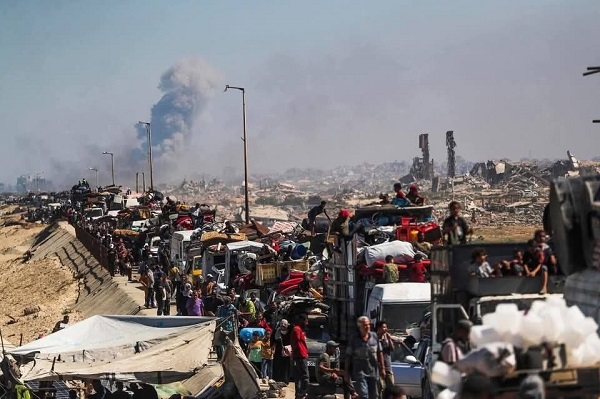
Gaza City endured another devastating day on Sunday as Israeli airstrikes pounded residential neighborhoods, public buildings, and vital infrastructure, leaving dozens dead and wounded, and reducing entire blocks to rubble. Among the most prominent targets was the Islamic University, which suffered repeated bombardments, including buildings housing displaced families, turning parts of the once-vibrant campus into smoking ruins.
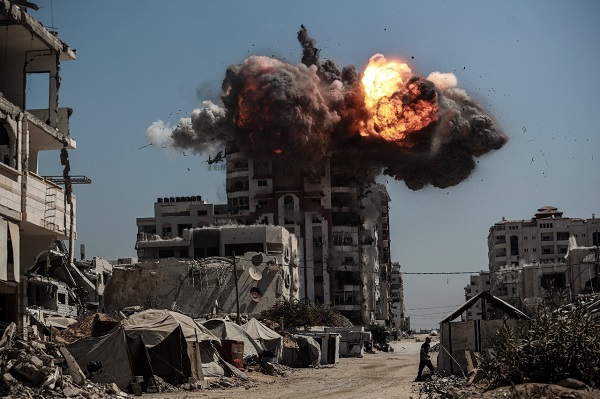
As night fell, the city was cloaked not in darkness, but in the flash of explosions and the wailing sirens of ambulances. The humanitarian situation continued to deteriorate amid mounting casualties, mass displacement, and the near-total collapse of basic services.
Systematic Bombardment of Gaza’s West
From early morning until the late afternoon, Israeli warplanes carried out a relentless series of strikes across western Gaza, focusing heavily on the Tel al-Hawa and al-Rimal neighborhoods. Local emergency sources confirmed at least dozens of fatalities, with many bodies still trapped beneath the rubble. Entire residential towers, such as Al-Kawthar Tower in southern Rimal and Al-Rabi’ building behind the Roman School, were obliterated in seconds.
One of the most harrowing scenes unfolded at the Islamic University, a longstanding educational institution now reduced to charred remains. Multiple buildings were hit in three separate strikes over a few hours, according to eyewitnesses, including dormitories sheltering displaced families. Emergency teams described scenes of carnage, with both students and civilians killed or missing beneath collapsed structures.
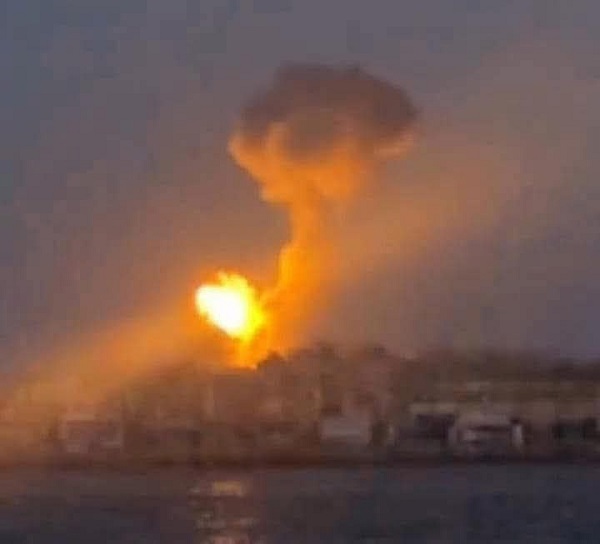
A civil defense source confirmed that parts of the university’s female student residence, “Al-Madina Al-Munawara,” were directly hit. Israeli officials claimed the institution was being used for what they termed “incitement and terror coordination.” Finance Minister Israel Katz boasted that “the rubble of the Islamic University reaches the sky,” vowing continued targeting of such sites.
List of Key Sites Targeted on Sunday
The scope of destruction stretched far beyond the university. According to local sources and rescue teams, the following areas and buildings were hit throughout the day:
- Residential building near Barcelona Park in Tel al-Hawa (7 confirmed dead).
- Sixth floor of Al-Falah Building near Palestine TV and Radio HQ.
- Al-Kawthar Tower, southern al-Rimal (completely destroyed).
- Qaza’at family home, east of Barcelona Park.
- Al-Rabi’ Building, behind the Roman School, Tel al-Hawa (total collapse).
- Former Ministry of Detainees Affairs, near civil defense headquarters.
- “Palestine” displacement camp, housing over 100 tents.
- Al-Samaneh Building, near the Community College in southern Tel al-Hawa.
- Upper floors of Mahna Tower, near the Finance Ministry junction.
- Bakr family council house, Aideyah Street (casualties reported).
- Female dormitory of the Islamic University, directly hit.
- Attallah family home, near Al-Taj restaurant on Yarmouk Street.
- Civilian car near Al-Iman Mosque, Sheikh Radwan neighborhood — a body was pulled from the wreckage near Al-Rantisi Hospital.
Adding to the distress, Israeli drones reportedly used quadcopters to strike rooftop water barrels in al-Rimal, exacerbating water scarcity for thousands trapped in partially damaged buildings.
Population Ordered to Evacuate Before Further Bombing
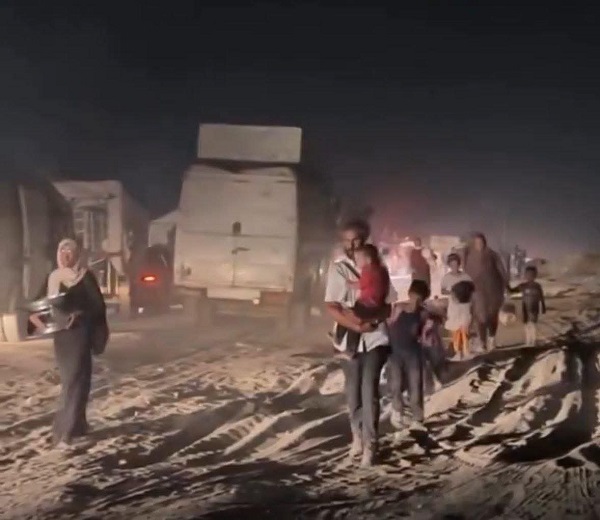
By evening, the Israeli military issued evacuation warnings to residents of the “Unknown Soldier” area and surrounding camps in al-Rimal, signaling an impending airstrike. The pattern warning followed by obliteration has become grimly familiar to Gaza residents, many of whom have nowhere to go after fleeing their homes multiple times.
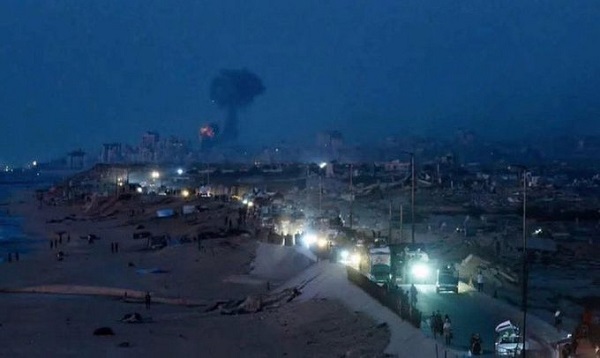
Local sources say many residents are choosing to remain, fearing displacement into overcrowded southern Gaza, where humanitarian conditions are no better. Others say they have no access to transport or have relatives trapped under rubble they refuse to leave behind.
Humanitarian Crisis Escalates
The continued bombardment comes amid dire warnings from the United Nations and aid organizations about the deepening humanitarian catastrophe in Gaza. The UN declared a state of famine in parts of the territory in August, and with fuel, food, and medical supplies almost entirely cut off, the situation is now critical.
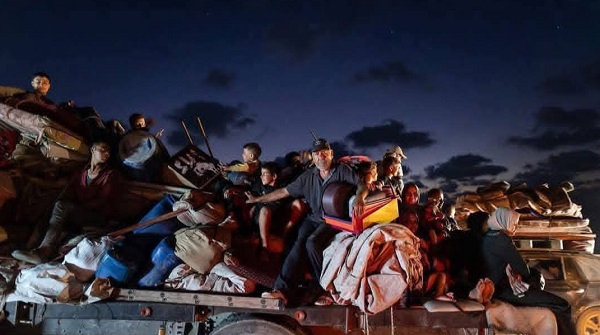
Rescue operations have become increasingly difficult as civil defense teams operate with limited equipment, dwindling fuel, and under constant risk of further strikes. Many bodies remain under debris, and entire families are feared to have been wiped out in the day’s attacks.
A City Reduced to Ashes
Once a symbol of resilience, Gaza City now resembles a ghost town in many of its western districts. Streets that once bustled with vendors and children are now coated in dust and shrapnel. Mosques, schools, and government buildings stand shattered. Entire neighborhoods, like Tel al-Hawa, are unrecognizable their familiar landmarks now jagged ruins.
Residents describe the scale of devastation as unlike anything witnessed in previous conflicts. With no end to the bombardment in sight and prospects for a ceasefire fading amid stalled negotiations and diplomatic paralysis, Gaza’s suffering looks set to deepen in the days ahead.
“The Steadfast Become Martyrs”
Among the ruins, search teams continue digging not just for survivors, but for the bodies of what locals now call the “steadfast”, those who refused to leave their homes, choosing to face the bombs rather than endure the indignity of displacement. Some survived. Many did not.
For Gaza, today was another chapter in a long and harrowing ordeal. And for its people, the question is no longer whether their city can survive but how long the world will allow its destruction to continue.
