

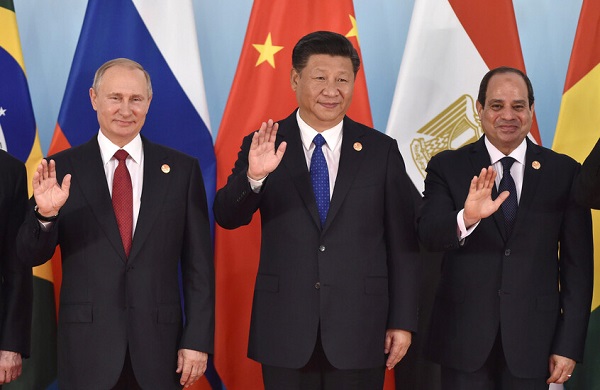
Egypt Daily News – Egypt has taken a significant step toward reducing its reliance on the U.S. dollar by deepening monetary cooperation with China and Russia. The country is expanding the use of the Chinese yuan, Russian rubble, and Egyptian pound in trade and financial transactions, moving away from dependence on the greenback.
During a high-level meeting in Cairo, the Governor of the Central Bank of Egypt signed three memorandums of understanding with his Chinese counterpart, Pan Gongsheng. The agreements include a currency swap deal, the settlement of bilateral payments in local currencies, and the issuance of Panda bonds in the Egyptian market.
This meeting was part of Egypt’s broader efforts to strengthen economic ties with China, the world’s second-largest economy, as Cairo seeks to diversify sources of funding and attract targeted investments to bridge its trade deficit and bolster its foreign currency reserves.
The two central banks discussed a range of initiatives to promote direct monetary cooperation. Key topics included expanding the use of the yuan and the Egyptian pound in trade, linking electronic payment systems, facilitating the presence of Chinese banks in Egypt, and enabling Egyptian banks to enter the Chinese and broader Asian markets.
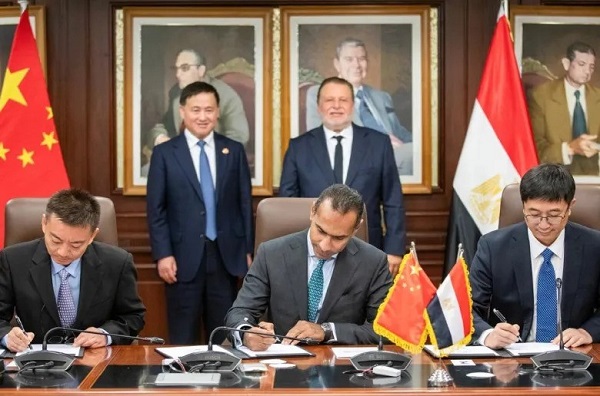
One notable outcome was a tripartite memorandum of understanding signed between Egypt’s Suez Canal Bank, Chinese-African TEDA Investment, and CIPS the operator of China’s interbank payment system, to promote bilateral payment settlements in yuan.
Additionally, China’s UnionPay signed two protocols with Egypt’s Banks of Egypt and Paymob to enhance the local digital payment infrastructure and support the acceptance of UnionPay cards in the Egyptian market.
Commenting on the development, Egyptian broadcaster Ahmed Moussa described the agreements as a significant step toward deepening strategic cooperation between Egypt and China. He highlighted the role of these deals in enhancing economic integration and developing the country’s financial services infrastructure.
“This is a very important piece of news that deserves wide coverage,” Moussa said on social media platform X. “Egypt and China have signed an agreement to support local currency settlements between the two countries. Egypt and China (pound and yuan), Egypt and Russia (pound and ruble), this means we will no longer need the dollar in our trade with China and Russia. An excellent step in the right direction, by the grace of God.”
Separately, Russian President Vladimir Putin ratified an amendment to a 2015 agreement with Egypt, allowing repayment of a Russian loan in rubbles instead of other currencies. The decision was attributed to the difficulty of repaying the loan in less favorable currencies. The necessary government protocol was signed in September last year.
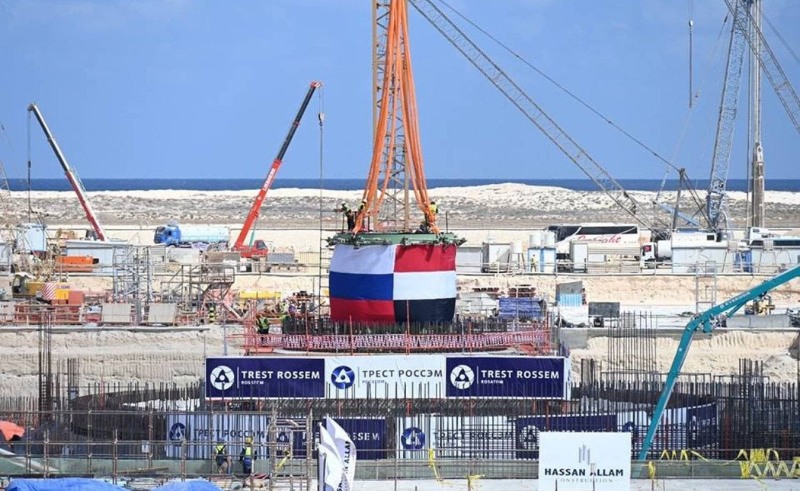
Relations between Egypt and Russia have been warming, especially in terms of trade, with both central banks reportedly nearing an agreement to begin accepting Russia’s Mir payment card.
Dr. Karim El-Omda, professor of international economics, emphasized the importance of the Mir system in advancing Egypt-Russia economic ties, noting that it serves as a tool for circumventing the effects of Western sanctions on Russia.
Speaking to RT, El-Omda explained that the Mir system facilitates payment processes by enabling the use of the Russian ruble and other currencies, and that Egypt’s central bank has been studying its implementation for months. This, he said, would significantly boost the volume of trade in goods and services between the two countries.
He revealed that official figures show Egypt-Russia trade reached $4.8 billion in 2022, with Egypt exporting goods worth $450 million and importing approximately $4.3 billion. In 2023, the trade volume reportedly exceeded $6 billion.
El-Omda also noted the significance of Russian tourism, which brings in an estimated $3.5 billion annually. He added that the adoption of the Mir system would likely increase the number of Russian tourists, as it would allow them to use their Mir-compatible cards in Egypt, making travel and spending easier.
The Mir system, launched in 2015, is a Russian national payment network developed in response to Western sanctions that affected Russian banks’ access to Visa and Mastercard services. Today, the Mir card is accepted for payments and ATM withdrawals in several countries worldwide.
Mir is a Moscow-based financial services provider owned by an entity affiliated with the Central Bank of Russia. The company supports electronic money transfers through Russia’s national payment system, established by law on May 1, 2017.
