

Egypt Daily News – Former U.S. President Donald Trump has urged Ukrainian President Volodymyr Zelensky to exercise restraint and avoid targeting Moscow, following reports that the two leaders recently discussed Ukraine’s potential use of U.S.-supplied long-range weapons to strike deep within Russian territory.
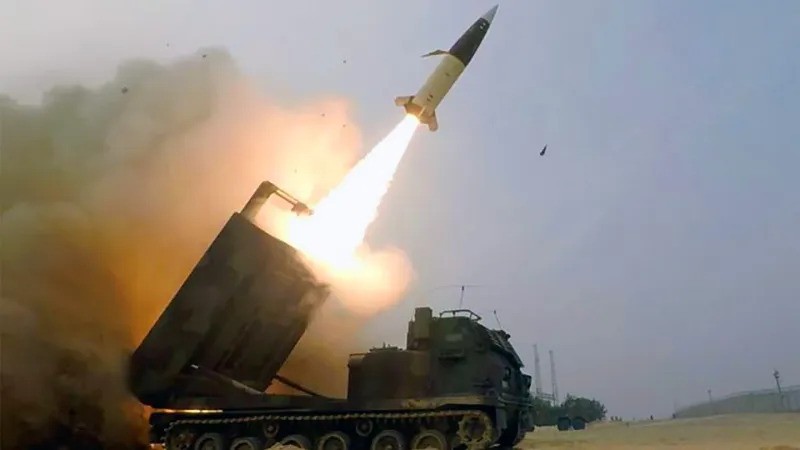
Trump’s comments come in the wake of a Financial Times report published Monday, which claimed that during a phone call on July 4, the former president raised the possibility of providing Kyiv with advanced missile systems. specifically the U.S.-made Army Tactical Missile System (ATACMS) and inquired whether Ukraine would consider using them to strike strategic targets in Russia, including Moscow.
The ATACMS, a ground-launched tactical ballistic missile with a range of up to 300 kilometers (about 190 miles), has been a game-changer on the battlefield. In late 2023, the Biden administration discreetly transferred a limited number of ATACMS to Ukraine, reportedly under tight usage constraints.
Unlike shorter-range systems such as the HIMARS-launched GMLRS rockets, ATACMS allows Ukraine to hit command centers, airfields, and logistics hubs deep behind Russian front lines, even inside Russian territory when permitted.
According to unnamed sources cited by the Financial Times, Trump floated the idea of a retaliatory military operation and questioned Zelensky on his government’s readiness to carry out such attacks, should Ukraine receive more of the advanced missiles without geographic usage limitations.
However, when pressed by reporters at the White House on Tuesday about whether he supports Ukrainian strikes on the Russian capital, Trump offered a definitive response: “He [Zelensky] should not do that.” When further questioned about his stance on supplying Ukraine with long-range missile systems, Trump added, “That’s not something we’re looking at.”
The revelation of the conversation has stirred fresh debate in Washington over the U.S. role in the ongoing war between Russia and Ukraine, a conflict Trump has long claimed he could resolve quickly if re-elected. The call reportedly took place just one day after Trump met with Russian President Vladimir Putin, where they discussed a range of issues, including the war in Ukraine.
Although the nature of Trump’s discussion with Putin remains largely undisclosed, his recent statements suggest a shift in tone. Trump has expressed disappointment in Putin, stating that Russia’s continued military aggression against Ukraine undermines the potential for any meaningful dialogue.
In response to the Financial Times report, White House Press Secretary Caroline Leavitt downplayed its significance, suggesting the newspaper had distorted the content of the conversation to attract attention. “The Financial Times has a track record of taking comments out of context in pursuit of more clicks,” Leavitt said. She clarified that Trump’s question to Zelensky was analytical in nature, not a policy recommendation or a call for escalation.
“President Trump is committed to ending this war and saving lives,” she added, reiterating his longstanding campaign pledge to bring the conflict to a close within 24 hours of returning to the Oval Office.
The debate over whether to permit Ukraine to strike targets inside Russia has been a contentious issue among Western allies. While some nations have supplied advanced weapons to Ukraine, they often include restrictions on how and where those weapons can be used,a precaution aimed at avoiding further escalation with Moscow.
In addition to ATACMS, Ukraine has also reportedly received permission from certain NATO allies to use Storm Shadow and SCALP-EG cruise missiles, developed by the UK and France, to target Russian military infrastructure in occupied Crimea and parts of southern Russia. These air-launched missiles, with ranges of up to 250 kilometers, have been instrumental in striking high-value targets like ammunition depots, airbases, and naval facilities.
As the U.S. heads toward the 2024 presidential election, Trump’s comments on foreign policy, particularly on the war in Ukraine, continue to draw scrutiny. Whether his diplomatic style marked by high-profile meetings, bold claims, and strategic ambiguity will translate into a viable peace strategy remains to be seen.
