

Ahmed Kamel – Egypt Daily News
sraeli Prime Minister Benjamin Netanyahu informed then-U.S. President Donald Trump of Israel’s plan to strike Hamas leaders in Qatar ahead of last week’s surprise attack on the Gulf state, according to a report published by Axios citing seven Israeli officials. The account appears to contradict the White House’s official position that it was notified only after the missiles were already in the air.
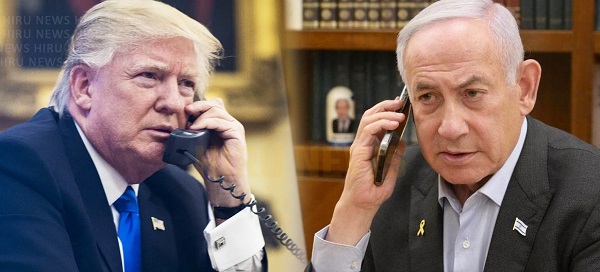
According to Israeli sources familiar with the events, Netanyahu placed a call to Trump at approximately 12:00 GMT on Tuesday, briefing him on Israel’s intent to carry out a targeted strike in Doha. Roughly 50 minutes later, initial reports of explosions in the Qatari capital began to surface. The attack reportedly killed five Hamas operatives and one Qatari security officer. The Hamas members were said to be in the middle of discussing a U.S.-backed ceasefire proposal.
Despite the Israeli timeline, U.S. officials have maintained that Trump was only made aware of the strike after it had already been launched. White House spokesperson Karoline Leavitt told Axios that the president was notified by the U.S. military once the operation was underway, after which he immediately instructed Special Envoy Steve Witkoff to alert Qatari authorities.
However, Qatari officials have disputed that account. Foreign Minister Sheikh Mohammed bin Abdulrahman Al Thani said the call from the U.S. came a full ten minutes after the first explosions were heard in Doha. This delay, he suggested, meant there was little that could be done to prevent the attack or mitigate its consequences.
Israeli sources argue otherwise. “Trump knew about the strike before the missiles were launched and didn’t say no,” one senior Israeli official claimed. Another source insisted that the U.S. administration was informed “well in advance” at a political level, and that if President Trump had objected, Israel would have canceled the operation.
“The call happened before the launch. If the president had wanted to stop it, there was still time,” the official said. These remarks suggest that, at the very least, the U.S. had a window of opportunity, albeit a narrow one to intervene diplomatically before the attack took place.
Neither the U.S. nor Israeli governments have officially confirmed or denied the details of the Axios report. The ambiguity has fueled speculation about the level of coordination, or lack thereof between Washington and Tel Aviv, and whether the strike signals a breakdown in protocol between two close allies.
The international response to the strike has been swift and critical. Human rights groups, Arab nations, and several Western governments have condemned the attack, which they say violated Qatar’s sovereignty and risked escalating regional tensions at a time when diplomatic efforts were underway to contain the broader Israel-Hamas conflict.
President Trump, for his part, publicly expressed dissatisfaction with the Israeli move. “I was very unhappy about it,” he said during a press briefing, though he stopped short of condemning the attack outright.
Netanyahu, speaking alongside U.S. Secretary of State Marco Rubio at a press conference on Monday, defended the operation as a necessary unilateral action to neutralize what he described as an imminent threat. “We will act wherever Hamas seeks refuge. No place is beyond our reach,” the Israeli leader stated.
The incident has raised pressing questions about the balance between Israel’s security prerogatives and the diplomatic implications of striking a sovereign Gulf nation, especially one that has historically served as a key intermediary in Israeli-Palestinian negotiations.
As of now, neither Washington nor Doha has formally responded to the claims that the Trump administration had prior knowledge of the attack and chose not to intervene. With tensions in the region already at a boiling point, the episode risks driving a deeper wedge between U.S. allies and complicating efforts for a sustainable ceasefire.
