

Ahmed Kamel – Egypt Daily News
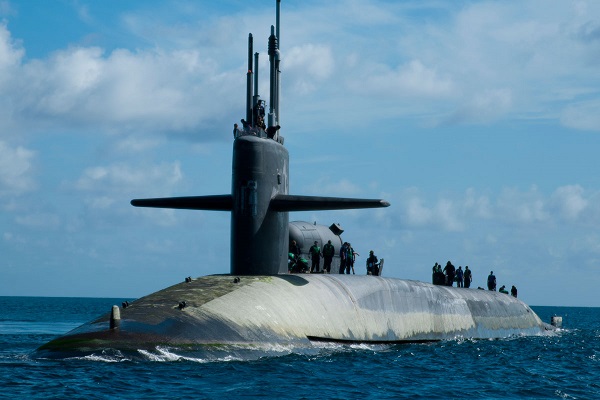
In a stark demonstration of rising tensions between Washington and Moscow, President Donald Trump announced the deployment of two U.S. nuclear submarines to undisclosed strategic regions. The move, though largely symbolic given the constant global presence of America’s nuclear fleet, comes amid a flurry of increasingly hostile exchanges between Trump and a senior Russian official over the war in Ukraine.
The deployment follows a contentious week in which Trump issued a ten-day ultimatum to the Kremlin: negotiate a peace agreement to end the war in Ukraine or face sweeping new sanctions. These sanctions, Trump warned, would not only target Russia but also any country continuing to trade with it so-called “secondary sanctions” that could ripple across global markets.
The latest escalation was triggered by a provocative statement from Dmitry Medvedev, the former Russian president and current deputy chairman of Russia’s Security Council. Medvedev, responding to Trump’s threats, accused the U.S. president of playing a “game of ultimatums” and warned that such rhetoric could push the world closer to war. He implied that Trump’s approach risked open conflict not just with Ukraine, but between the United States and Russia itself.
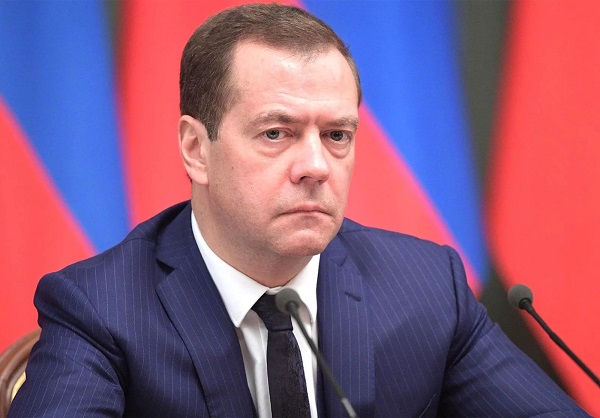
In a fiery response posted to his Truth Social platform, Trump said: “I have ordered two nuclear submarines to be positioned in the appropriate regions, just in case these foolish and inflammatory statements are more than just that. Words are very important, and can often lead to unintended consequences. I hope this will not be one of those instances.”
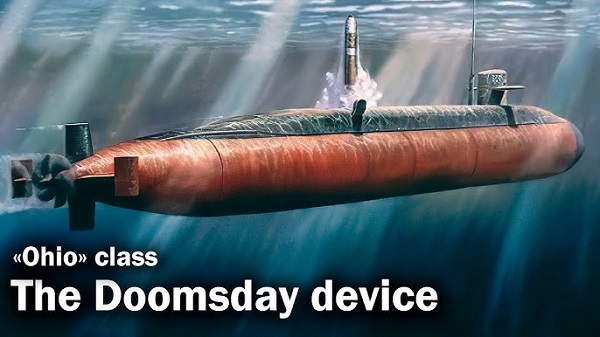
Trump did not specify where the submarines were being sent, but such vessels are typically used for their stealth capabilities and overwhelming firepower. The U.S. Navy operates 14 Ohio-class ballistic missile submarines, each capable of carrying up to 20 Trident II missiles. These intercontinental weapons can travel over 7,500 miles and deliver multiple nuclear warheads each with a yield exponentially greater than the atomic bomb dropped on Hiroshima.
Medvedev, a longtime hardliner who has taken on an increasingly hawkish tone since Russia’s invasion of Ukraine in 2022, fired back earlier in the week with his own caustic remarks. “Trump’s playing the ultimatum game with Russia,” he wrote on social media. “Each new ultimatum is a threat and a step towards war. Not between Russia and Ukraine, but with his own country. Don’t go down the Sleepy Joe road!”
Trump’s response was immediate and sharp. “Tell Medvedev, the failed former President of Russia, who thinks he’s still President, to watch his words. He’s entering very dangerous territory,” Trump posted in a midnight message.
The verbal skirmish marks a dramatic turn in Trump’s posture toward the Kremlin. While he has previously boasted of a personal rapport with Russian President Vladimir Putin, Trump has recently expressed frustration over Russia’s continued bombardment of Ukrainian cities even after what he described as “positive” phone calls with Putin.
“I go home, I tell the First Lady, ‘You know, I spoke to Vladimir today. We had a wonderful conversation.’ And she said, ‘Oh really? Another city was just hit,’” Trump said last month during a meeting with NATO Secretary General Mark Rutte at the White House.
Those attacks have continued. Just days before Trump’s latest statements, Russia launched a massive missile barrage on Kyiv, killing at least 31 civilians and injuring over 150. Ukrainian President Volodymyr Zelensky posted a grim video of a missile striking a residential building, calling Russian forces “terrorists.”
“Kyiv. Missile strike. Directly into a residential building. People under the rubble. All services are on site,” Zelensky wrote.
In contrast, Russian President Vladimir Putin has adopted a more restrained tone publicly, downplaying expectations for an imminent peace deal. “All disappointments come from inflated expectations,” he said in his first comments since Trump issued his deadline. “In order to solve the issue in a peaceful way, we need deep conversations, not in public, but in the silence of a negotiating process.”
Still, Moscow has shown no sign of yielding to Trump’s demand for a ceasefire. Russia continues to assert its own terms for ending the war, which so far remain unacceptable to Kyiv and its Western allies.
Trump’s approach to the conflict marks a departure from President Joe Biden’s policy, which involved billions of dollars in military aid and a close strategic partnership with Ukraine. In recent weeks, the Pentagon briefly froze arms transfers to Kyiv, reflecting a shift in Washington’s stance under Trump’s leadership.
Meanwhile, Trump and his administration have also resumed their rhetorical defense against longstanding accusations that Russia supported his 2016 presidential campaign. A declassified intelligence assessment from 2017 concluded that Moscow had favored Trump over Hillary Clinton an allegation the former president has persistently denied and called politically motivated.
As the war in Ukraine grinds on into its fourth year, Trump’s decision to raise the specter of nuclear readiness highlights the fragile state of East-West relations. Though many analysts see the submarine move as largely political theater, the implications of such actions combined with increasingly personal and aggressive rhetoric are far from insignificant.
For now, the world watches and waits. Whether Trump’s ultimatum yields negotiations or ignites further confrontation remains an open and deeply consequential question.
