

Ahmed Kamel – Egypt Daily News
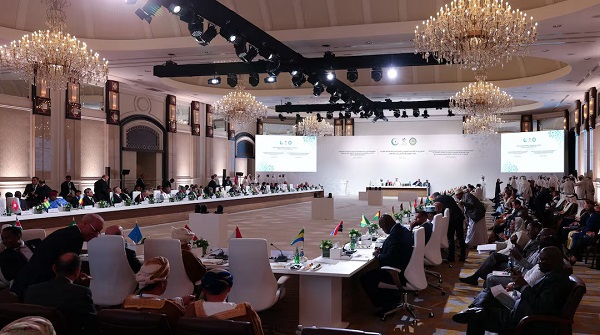
In an unprecedented show of regional unity, leaders of the Gulf Cooperation Council (GCC), alongside representatives from the broader Arab and Islamic worlds, convened an emergency summit in Doha on Monday in response to the recent Israeli airstrike that targeted leaders of Hamas on Qatari soil. The strike, which occurred last Tuesday, was widely condemned as a direct violation of Qatari sovereignty and a dangerous escalation in the ongoing regional conflict.
The summit resulted in a draft communiqué calling for an emergency meeting of the GCC Joint Defense Council to be held in Doha. The move is part of a broader effort to activate regional defense mechanisms and strengthen collective deterrence in the face of what leaders described as a growing Israeli threat.
According to regional media reports, the draft statement also called on the international community to condemn the Israeli attack and take firm action to prevent further violations. The communiqué expressed full solidarity with Qatar, affirming support for any legal or political measures it may take in response.
Strong Reactions from Regional Leaders
Qatar’s Emir delivered a forceful address at the summit, denouncing the attack as a brazen and cowardly act aimed at sabotaging diplomatic negotiations. “What happened was an assault on our peaceful nation, a country that has dedicated itself to peacemaking,” the Emir said. “We are determined to defend our sovereignty by all legal means. This was a targeted act of betrayal, carried out by those who pretend to pursue peace even as they plot destruction.”
Echoing those sentiments, Egyptian President Abdel Fattah el-Sisi described the strike as a premeditated attempt by Israel to derail ceasefire talks in Gaza. “Israel has crossed every red line,” he warned. “This aggression not only undermines peace efforts, but it also puts at risk all existing and future peace accords in the region. The consequences could be dire.”
King Abdullah II of Jordan emphasized the regional implications of the attack, calling it a clear demonstration of Israel’s expanding threat. “This is not just about Qatar. This is about the security of the entire Arab world. Our response must be firm and unified,” he said. He urged the summit to produce actionable resolutions to stop the war in Gaza, prevent the displacement of Palestinians, and protect Islamic holy sites in Jerusalem.
Calls for Concrete Action
Several leaders called for moving beyond statements of condemnation to concrete steps. Turkish President Recep Tayyip Erdoğan urged attendees to issue a formal declaration to the international community. “Israel will not stop unless it is met with a resolute response. The time for diplomatic ambiguity is over,” he said, reiterating Turkey’s earlier move to sever trade relations with Israel due to its military conduct.
Iranian President Ebrahim Raisi described the airstrike as an attack not only on Qatar but on diplomacy itself. “This was more than a crime; it was a message. It tells us that military force has replaced international law as the final arbiter,” Raisi said. He warned that no Arab or Islamic nation is immune from Israeli aggression unless they act together.
Palestinian Authority President Mahmoud Abbas reinforced that peace in the region cannot be achieved without ending the Israeli occupation. “The road to stability begins with stopping the genocide, the forced displacement, and the theft of our land,” he said, calling for Israel’s accountability under international law and urging the formation of mechanisms to prevent further aggression.
Pakistani Prime Minister Shehbaz Sharif praised Qatar’s diplomatic efforts and said the strike exposed Israel’s broader ambitions of regional domination. He proposed suspending Israel’s UN membership and creating a multilateral task force to counter its expansionist agenda.
Syrian President Bashar al-Assad offered a particularly pointed critique, condemning the targeting of diplomatic intermediaries. “Rarely in history do we see the mediator become the victim,” he said. “This strike is not an isolated event; Israel has been bombing Syrian territory for nine months. The entire region is under siege.”
Toward a Unified Regional Response
The emergency summit concluded with a clear consensus: the Israeli strike on Doha represents not only a violation of Qatari sovereignty but also a dangerous escalation with broader implications for regional security. Leaders agreed on the urgent need to activate joint defense mechanisms, strengthen Arab and Islamic coordination, and increase international pressure on Israel to halt its military operations in Gaza and beyond.
The final communiqué is expected to be published in the coming days following further consultation among member states. The GCC Joint Defense Council meeting in Doha will likely set the tone for what could become a significant shift in regional military and diplomatic posture.
As tensions continue to rise, the question now is whether international actors particularly the United Nations and key Western powers will heed the calls from the Arab and Islamic worlds for accountability, or whether the region will be forced to take matters into its own hands.
