

Ahmed Kamel – Egypt Daily News
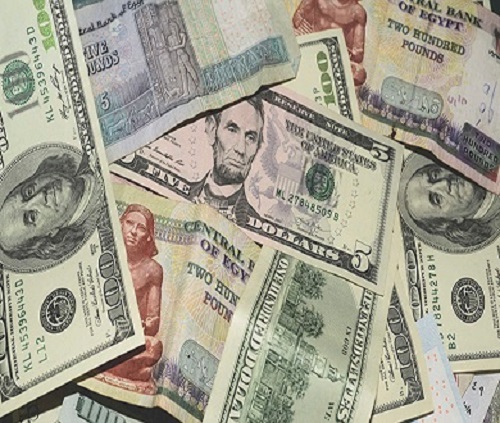
The United States dollar surged past the fifty-pound threshold against the Egyptian pound at Monday’s close of business operations. Institutional currency matrices confirmed the drop materializes as intensifying regional military clashes and the indefinite closure of the Strait of Hormuz disrupt global liquidity corridors.
Commercial data tracking across twelve prominent national banks revealed that the highest buying rates settled between fifty pounds and seventeen piastres to fifty pounds and twenty-seven piastres. Central Bank of Egypt statistical boards registered a daily six-tenths of a percent contraction, reversing the positive valuation milestones achieved during the prior trading cycle.
Escalating Maritime Blockades and Air Strikes Drive High Import Cost Projections
The local currency has depreciated by nearly three percent since the sudden resumption of heavy cross-border missile and drone exchanges between international coalitions last week. The current valuation reflects a total four and a half percent decline compared to the baseline averages recorded before the outbreak of the regional war.
International maritime analysts warn that the total suspension of commercial navigation through the vital Gulf shipping choke point creates immediate risks of global supply bottlenecks. Global oil contracts responded to the transport standstill by jumping four percent to roughly seventy-eight dollars per barrel, raising severe domestic inflationary concerns for the central bank.
Global Dollar Index Strengthens Intermittently to Displace Major European Currencies
The American currency registered generalized strength across broader global exchange matrices, driving down the comparative values of the Euro, British pound, and Japanese Yen. The official international dollar index rose to over one hundred and one, establishing its strongest composite performance baseline since the start of July.
Despite its global contraction against the dollar, the Euro continued to gain ground against the weaker Egyptian pound to trade at over fifty-seven pounds for buying orders. Concurrently, the British sterling advanced toward sixty-seven pounds, remaining significantly elevated above the baseline metrics documented prior to the onset of the maritime transit disruptions.
Regional Gulf Currencies Appreciate While Precious Metal Indices Slip Lower
Prominent Middle Eastern currencies mirrored the European upward trend by gaining substantial ground against the domestic pound during the afternoon clearing cycles. The Kuwaiti dinar jumped to nearly one hundred and sixty-three pounds for consumer purchasing transactions, while the Omani rial and Jordanian dinar posted visible daily gains.
Conversely, domestic precious metal valuations bucked the broader inflationary trend by registering a minor downward price correction across local retail platforms. The traditional gold sovereign coin slipped to forty-six thousand and seven hundred and sixty pounds on Monday as investors realigned liquid cash reserves.
