

Ahmed Kamel – Egypt Daily News
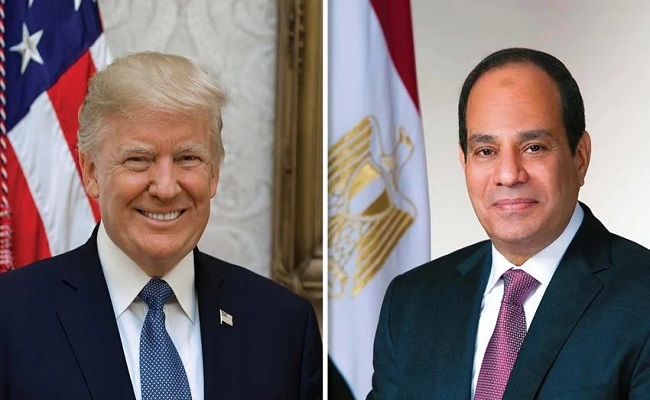
In a defining moment for regional diplomacy, Egypt is set to host the highly anticipated Sharm El-Sheikh Peace Summit, a landmark international gathering aimed at ending the devastating war in Gaza and laying the foundation for long-term peace and stability across the Middle East. The summit, jointly chaired by President Abdel Fattah el-Sisi and President Donald Trump, will convene on Monday in the Red Sea resort city of Sharm El-Sheikh, with participation from more than 20 world leaders and international organizations.
This historic event comes amid escalating humanitarian concerns and heightened geopolitical tensions, following two years of protracted conflict between Israel and Hamas, which has claimed the lives of approximately 70,000 Palestinians and left Gaza’s infrastructure in ruins. The war, which began with a deadly Hamas incursion into southern Israel on October 7, 2023, killing over 1,200 people, has since spiraled into one of the region’s deadliest and most politically charged confrontations in decades.
Egypt’s Diplomatic Drive: A Return to the Center Stage
The Sharm El-Sheikh Summit crowns months of intense Egyptian diplomacy, which has positioned Cairo once again as a central pillar in the region’s peace architecture. Drawing on a legacy of mediation and a balanced foreign policy, Egypt has coordinated closely with the United States, Qatar, and regional stakeholders to broker a ceasefire agreement that addresses not only military de-escalation but also humanitarian and political dimensions of the conflict.
According to political analyst Dr. Mohsen Al-Shoubaki, the summit marks a turning point. “This is not just a ceasefire; it’s a strategic recalibration of the entire region. Egypt has leveraged its experience and credibility to forge a path forward, balancing between political pragmatism and humanitarian urgency,” he said.
The summit is expected to finalize the first phase of a comprehensive ceasefire agreement, originally proposed by President Trump. Key provisions include:
- Exchange of hostages and prisoners: 47 Israeli hostages and the remains of one captured in 2014 to be released by Hamas, in exchange for 250 Palestinian prisoners serving life sentences and 1,700 detainees from Gaza.
- Opening of crossings to allow humanitarian aid and reconstruction efforts under international supervision.
- Immediate cessation of hostilities, overseen by a multinational monitoring mechanism.
- Initiation of a political process aimed at a sustainable, two-state solution based on the pre-1967 borders.
A Broad International Consensus
The summit has drawn wide international participation, reflecting broad consensus on the urgency of ending the conflict. Confirmed attendees include leaders or high-level representatives from the United States, France, the United Kingdom, Germany, Turkey, Jordan, the United Arab Emirates, Saudi Arabia, Pakistan, India, Indonesia, and several European nations. The United Nations Secretary-General and the Secretary-General of the Arab League will also be present.
Despite this broad support, key parties to the conflict namely Israel and Hamas will not be directly involved in the official signing ceremony. Hamas has stated it will not participate in the summit, while Israeli Prime Minister Benjamin Netanyahu’s office has confirmed that no Israeli officials will attend. Nevertheless, the agreement was finalized with their knowledge and input through indirect negotiations facilitated by Egypt, Qatar, and the United States.
A Symbolic and Strategic Platform
Dr. Nauman Tawfiq Al-Abed, a Palestinian expert on international relations, emphasized that Egypt’s role goes beyond logistics. “Egypt prevented forced displacement plans, facilitated aid flows through Rafah, and engaged diplomatically with both Palestinian factions and international actors. Cairo’s steady stance pressured the U.S. to adopt a more critical view of displacement and helped shape a more balanced international position,” he said.
According to Al-Abed, the summit also reflects Egypt’s long-held principles: that any durable peace must be rooted in justice, an end to occupation, and the establishment of an independent Palestinian state with East Jerusalem as its capital. “This isn’t a tactical move, it’s a reaffirmation of Egypt’s strategic vision for the region,” he added.
Political scientist Dr. Jihad Al-Harazin echoed similar views, noting that the summit “is a clear message that Egypt’s leadership is trusted globally. Its balanced foreign policy and refusal to escalate have created a platform where all parties feel secure and heard.”
Redefining Peace in the Middle East
The summit’s significance extends beyond Gaza. As Dr. Saeed Abu Rahma, a Palestinian political analyst, noted, “This is a moment where the language of war is replaced by the vocabulary of peace. The region is shifting military options have been exhausted, and political solutions are back on the table.”
He highlighted three key messages from the summit:
- Military strategies have reached a dead end.
- Political negotiation is the only viable path forward.
- Egypt has demonstrated its unique ability to bridge divides and build consensus in one of the world’s most volatile regions.
High Stakes and Global Expectations
The presence of leaders such as U.S. President Donald Trump, French President Emmanuel Macron, Turkish President Recep Tayyip Erdoğan, British Prime Minister Keir Starmer, and German Chancellor Friedrich Merz underscores the international gravity of the summit. While differing in political ideologies and regional interests, these nations appear unified in their desire to end the humanitarian catastrophe in Gaza and prevent further regional destabilization.
The summit’s outcomes will likely shape not only the future of the Gaza Strip but also the broader trajectory of the Israeli-Palestinian conflict and the region’s political equilibrium. It also marks a pivotal test for the international community’s ability to enforce peace and for Egypt’s role as a guarantor of regional stability.
A City Grieving, A Region Hoping
The run-up to the summit was marked by tragedy. Three staff members from Qatar’s Amiri Diwan were killed, and two others injured, in a car accident near Sharm El-Sheikh just days before the summit. The Qatari Embassy in Cairo confirmed the deaths and said the injured are receiving care at Sharm El-Sheikh International Hospital.
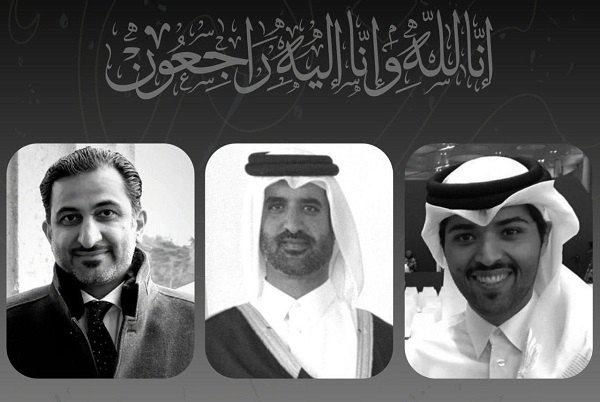
Both Qatari and Egyptian officials expressed deep sorrow, and Egypt’s foreign ministry extended condolences to the Qatari leadership. While unrelated to the summit directly, the incident cast a somber tone over the proceedings.
Conclusion: A Test for Peace, a Chance for Change
As the world turns its attention to Sharm El-Sheikh, the stakes could hardly be higher. Beyond the speeches and photo ops, the success of this summit depends on genuine commitment from both regional actors and international guarantors to transition from conflict management to conflict resolution.
For Egypt, this is a reaffirmation of its historic role as a peace broker in the Arab world. For Gaza, it could be the beginning of healing after unprecedented devastation. For the region, it is a fragile but vital opportunity to choose dialogue over destruction.
Whether the promises made in Sharm El-Sheikh can endure the realities on the ground remains to be seen, but for now, hope has returned to the table.
