

Ahmed Kamel – Egypt Daily News
Egypt’s Foreign Minister and Minister of Emigration, Badr Abdelatty, has reaffirmed Cairo’s long-standing and uncompromising position on the Palestinian cause, stressing that Israel is fully aware of Egypt’s red lines and that Egypt has consistently conveyed its refusal to certain demands at the negotiating table.
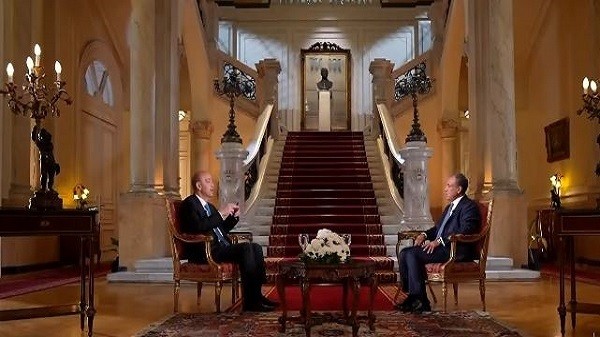
Speaking in a televised interview, Abdelatty said Egypt’s position is clear and unchanged, particularly regarding the rejection of any form of Palestinian displacement and the insistence that the Rafah crossing can only operate through mutual coordination, not unilateral action. “Israel knows our position. When we say no in negotiations, no means no,” he said.
The minister emphasized that Israel, as an occupying power, bears legal responsibility under international law, noting that Gaza has five crossings controlled by Israel that receive far less scrutiny than Rafah. He described what has taken place in Gaza as grave violations of international law, including the use of starvation as a weapon and the targeting of civilians seeking food.
Abdelatty rejected claims that Egypt had closed the Rafah crossing, stating that it has never been shut from the Egyptian side. He said the real obstacle lies on the other side, where Israeli tanks are deployed and where the Palestinian side of the crossing has been destroyed.
Addressing criticism of Egypt’s role during the war on Gaza, the foreign minister drew a distinction between those who raised questions in good faith and others who deliberately sought to target Egypt, particularly through narratives promoted by the Muslim Brotherhood. He argued that such attacks were aimed at deflecting attention from what he described as the real perpetrator of crimes in Gaza: Israel.
He stressed that Egypt has shouldered an extraordinary burden in support of Palestinians, noting that approximately 72 percent of all aid that entered Gaza came from Egypt. “This was a genuine sharing of food and resources between Egyptians and their Palestinian brothers,” he said, adding that Cairo has worked continuously to stop the war and facilitate humanitarian assistance, efforts that eventually led to a ceasefire agreement reached in Sharm el-Sheikh.
On calls for Egypt to enter a direct war with Israel, Abdelatty said Egypt is a state governed by institutions and the rule of law, where decisions on war and peace are made constitutionally and legally by the leadership. He said Egypt’s leadership concluded that war would only result in further destruction, choosing instead to intensify diplomatic and political efforts. He also noted that the events of October 7, 2023, were a unilateral decision by Palestinian factions taken without consultation, yet Egypt still bore heavy consequences and responsibilities in the aftermath.
Regarding diplomatic engagement, Abdelatty said a meeting between President Abdel Fattah el-Sisi and U.S. President Donald Trump is very possible, citing the strength of bilateral relations and Trump’s repeated praise of Egypt and its leadership. However, he firmly denied any arrangements for a meeting between President Sisi and Israeli Prime Minister Benjamin Netanyahu, dismissing reports suggesting such talks were planned before the end of the year.
He explained that progress in implementing ceasefire commitments would have positive implications for Egyptian-Israeli relations, but stressed that the relationship cannot be separated from developments in the Palestinian file. The peace treaty, he said, remains the foundation of relations and a pillar of regional stability, with its security annexes unchanged unless modifications are mutually agreed, as has occurred in the past during Egypt’s fight against terrorism.
Abdelatty also addressed energy cooperation with Israel, stressing that gas agreements are purely commercial arrangements between companies and have no political conditions attached. He said Egypt’s role as the region’s only country with gas liquefaction facilities allows it to receive gas from multiple sources, including Cyprus starting next year, as part of a broader strategy to diversify energy supplies and expand clean energy, which is targeted to reach 42 percent of Egypt’s energy mix.
Turning to Gaza’s future, the foreign minister revealed that Egypt is engaged with Hamas and other Palestinian factions on the next phase, including understandings to limit and consolidate weapons under a unified Palestinian national framework. He cited Northern Ireland as an example of successful weapons control, saying the proposal enjoys broad consensus among Palestinian factions.
Finally, Abdelatty reiterated that the displacement of Palestinians is a red line personally drawn by President Sisi. He rejected both forced and so-called “voluntary” displacement, warning that making life unlivable to push people into leaving is a “false right” masking injustice. He said Egypt had received generous offers to alter its position but refused to compromise, insisting that Cairo will never be a party to injustice against the Palestinian people.
