

Ahmed Kamel – Egypt Daily News
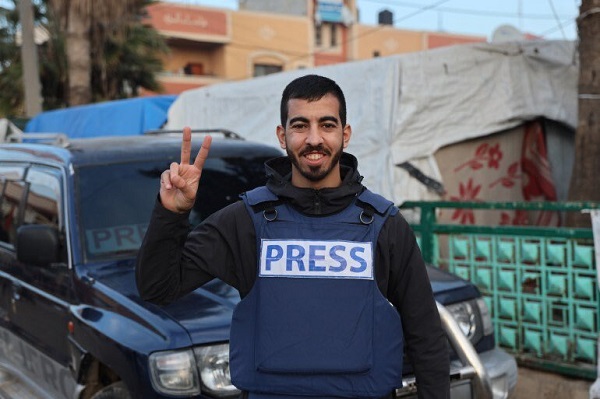
Prominent Palestinian journalist Saleh Aljafarawi was shot seven times in the chest and killed on Saturday in Gaza City by gunmen alleged to be affiliated with Israel, according to Palestinian media and local authorities. His killing marks another devastating loss in what has become the deadliest conflict for journalists in modern history.
Aljafarawi, 28, was covering the aftermath of destruction in the al-Sabra neighborhood when he was fatally shot seven times by armed men believed to be members of a militia linked to Israeli intelligence. The incident occurred just days after the announcement of a U.S.-brokered ceasefire between Hamas and Israel.
According to Gaza’s Interior Ministry, the gunmen were part of a group described as “collaborators” with Israel. Security forces from Hamas had surrounded the group during clashes in Sabra, which reportedly erupted as displaced Palestinians attempted to return to their homes following the Israeli military’s partial withdrawal.
Aljafarawi was documenting the destruction for local and international audiences when he was targeted and killed, according to eyewitnesses and footage circulating online.
“Executed for Telling the Truth”
The Gaza Government Media Office condemned the killing as a targeted assassination, stating:
“This heinous crime is part of Israel’s broader policy of silencing Palestinian journalists through airstrikes and now, through proxy collaborator militias operating within Gaza.”
Independent news outlets, reported that Aljafarawi was executed in cold blood by Israel-backed gunmen accusations that add to growing concerns over the weaponization of local militias to carry out covert operations within Palestinian communities.
His killing brings the death toll of journalists in Gaza to over 270 since Israel launched its military campaign in October 2023, an unprecedented toll on the press corps in any modern conflict, according to international media watchdogs.
A Voice of Gaza Silenced
Saleh Aljafarawi was widely known for his courageous reporting and social media coverage, particularly on Instagram, where he amassed a large following by sharing raw, frontline footage of life under siege in Gaza. He became one of the most prominent Palestinian voices documenting the humanitarian crisis and what many rights groups have described as war crimes.
Just days before his death, a video of Aljafarawi announcing the ceasefire went viral, capturing a brief moment of hope. His joy, however, was short-lived.
Sources close to him say Aljafarawi had been placed on an Israeli “red notice” list, an alleged kill list targeting Palestinian journalists seen as influential in shaping international perception of the war. Others believed to have been on this list include journalist Anas al-Sharif, who was also killed earlier in the conflict.
Ceasefire Undermined by Continued Violence
The ceasefire agreement, brokered with U.S. mediation, was intended to bring about a phased de-escalation, including Israeli troop withdrawals, prisoner exchanges, and the opening of humanitarian crossings. However, the resurgence of violence including the targeted killing of Aljafarawi has cast doubt on the ceasefire’s durability.
Footage released by Gaza’s Interior Ministry showed heavy clashes between Hamas security forces and the suspected collaborator militia in Sabra. Ministry officials say the group was responsible for attacks on returning civilians, deepening public anger and fears of infiltration by foreign-backed elements.
The killing has sparked outrage both in Gaza and internationally. Rights organizations and journalist unions have renewed calls for independent investigations into attacks on media workers.
“Saleh was more than a journalist, he was a chronicler of our suffering and survival,” said a colleague at his funeral on Saturday. “By killing him, they hoped to silence the truth. But the truth will outlive them.”
Aljafarawi is survived by his parents and younger siblings. He had dedicated his final years to reporting on the war’s impact on civilians, often under extreme danger and without protective gear, in a media landscape where press vests no longer guarantee safety.
