

Ahmed Kamel – Egypt Daily News
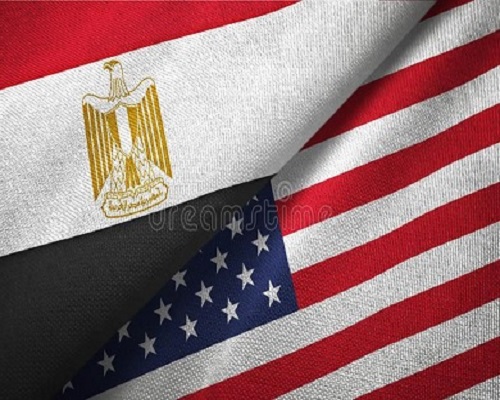
As the war-scarred Gaza Strip inches toward a fragile calm, Egypt has reasserted itself as a central broker in an ambitious U.S.-backed regional plan to reshape the postwar Middle East order. The country’s role reinforced by deepening partnerships with both Washington and Brussels places Cairo at the intersection of a complex web of diplomacy linking the United States, Israel, Europe, and the Arab world.
Cairo Leads Palestinian Reconciliation Talks
Egypt is preparing to host a new round of intra-Palestinian talks aimed at implementing the second phase of U.S. President Donald Trump’s Gaza plan. The meetings, expected to include representatives from Fatah, Hamas, and other Palestinian factions, will focus on establishing a unified administrative framework for Gaza following two years of devastating conflict.
The initiative follows intensive consultations between Egyptian intelligence chief Abbas Kamel, Palestinian Authority official Hussein al-Sheikh, and the head of Palestinian intelligence. Sources said the talks are designed to consolidate the ceasefire, strengthen the Palestinian Authority’s role, and prevent a renewed outbreak of violence.
For Cairo, stability in Gaza is both a national security imperative and a diplomatic opportunity. Egypt’s geographic proximity to the enclave, combined with its historic ties to the Palestinian factions, makes it uniquely positioned to mediate between rival groups and coordinate with Washington on the region’s future.
Washington’s New Strategy: Arab Force and Political Transition
The Trump administration has made no secret of its desire to forge a new security and political arrangement for Gaza. U.S. Vice President J.D. Vance revealed earlier this month that Washington is in discussions with Saudi Arabia, Qatar, and the United Arab Emirates to explore the formation of a joint Arab force that could operate in Gaza once the ceasefire is stabilized.
“We are talking with our friends in Saudi Arabia, Qatar, the UAE, and others about the potential for a combined Arab force in Gaza,” Vance said during a visit to Tel Aviv. He stressed that no American troops would be deployed on the ground, but underscored Washington’s goal of launching phased reconstruction in areas cleared of Hamas influence.
U.S. officials say the plan envisions rebuilding Gaza in stages, beginning in the southern city of Rafah, where the administration hopes to establish a secure zone for up to half a million Palestinians. The effort is tied to a broader diplomatic strategy aimed at restoring governance under the Palestinian Authority while ensuring Israel’s security.
Israeli Political Turmoil Over West Bank Annexation
Yet even as Washington advances its postwar vision, tensions with Israel have surfaced. Prime Minister Benjamin Netanyahu this week ordered coalition members not to submit further legislation on extending Israeli sovereignty to the occupied West Bank a decision prompted by fierce backlash from the United States and divisions within his own government.
The freeze followed a controversial Knesset vote in favor of applying Israeli law to the West Bank, prompting sharp condemnation from Trump. “Annexation will not happen,” the president told TIME magazine, warning that Israel would “lose all support from Washington” if it pursued such a move.
U.S. Vice President Vance called the vote “a foolish political maneuver” and “a personal insult,” while Secretary of State Marco Rubio cautioned that annexation efforts could endanger the fragile ceasefire in Gaza.
Netanyahu’s decision reflects growing awareness in Jerusalem that its internal political maneuvers risk undermining relations with Washington and complicating Egypt’s mediation efforts.
Controversy Over Barghouti’s Future
The U.S. president also stirred debate by suggesting he might consider Israel’s release of jailed Palestinian leader Marwan Barghouti as part of the Gaza political transition. “I’ll make my decision,” Trump said when asked about the idea, describing Barghouti as a potential figure capable of uniting Palestinians.
The comment drew a fierce response from Israel’s far-right National Security Minister Itamar Ben-Gvir, who wrote on X that while he respects Trump, “Barghouti is a vile murderer… He will not be released and will not lead Gaza.”
Barghouti, a senior Fatah figure serving five life sentences, remains a symbol of Palestinian unity for many and a potential successor to Mahmoud Abbas. His name’s re-emergence underscores the deep divisions over who might govern Gaza once the guns fall silent.
Europe Deepens Strategic Ties with Cairo
At the same time, Egypt has bolstered its standing as a regional interlocutor through its partnership with the European Union. During their first-ever joint summit in Brussels, Egyptian and EU leaders unveiled a broad roadmap to strengthen political, economic, and security cooperation positioning Cairo as both a strategic ally and a gateway between Africa, the Middle East, and Europe.
The EU announced a €7.4 billion financial support package for Egypt to stabilize its economy, expand investment, and fund reforms aligned with the International Monetary Fund’s program. The summit also launched preparatory talks for a structured security and defence dialogue, which would include cooperation on maritime operations, cybersecurity, counterterrorism, and joint training under EU missions Aspides and Atalanta.
On regional issues, both sides reaffirmed their commitment to a two-state solution, condemned settler violence and West Bank expansion, and rejected any forced displacement of Palestinians. They also endorsed Egypt’s mediation role in Gaza and pledged joint participation in a reconstruction conference once a permanent ceasefire is in place.
The EU further acknowledged Egypt’s critical dependence on the Nile River, expressing support for Cairo’s water security “in accordance with international law” and encouraging transboundary cooperation among Nile Basin states on the principle of “no significant harm.”
Cairo’s Expanding Role in a Shifting Region
Taken together, these developments illustrate Egypt’s reemergence as a linchpin of regional diplomacy. Whether mediating between Palestinian factions, coordinating reconstruction in Gaza, or anchoring new security cooperation with Europe, Cairo has positioned itself as a bridge between Western and Arab interests — and as a stabilizing force in an increasingly fragmented Middle East.
Yet the challenges ahead remain formidable. The Trump administration’s plan still faces skepticism from parts of the Arab world, deep mistrust among Palestinian groups, and domestic resistance within Israel. For Europe, supporting Egypt’s economic stability while upholding democratic principles will require careful balance.
Still, amid a shifting geopolitical landscape, one fact appears clear: any sustainable peace in Gaza and by extension, in the wider Middle East will likely pass through Cairo.
