

Ahmed Kamel – Egypt Daily News
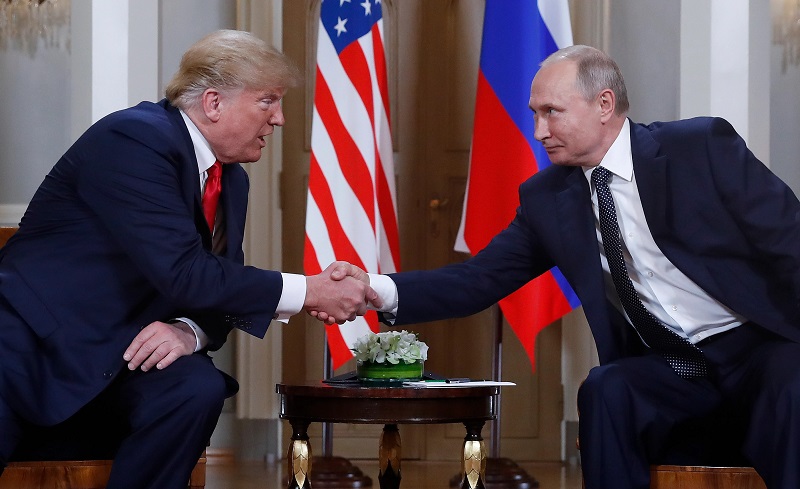
The Kremlin confirmed on Sunday that Russian President Vladimir Putin and former U.S. President Donald Trump have agreed that holding a bilateral summit “makes little sense at the current stage.” The comments came from Kremlin spokesperson Dmitry Peskov, who said Trump was the first to suggest postponing the planned meeting, which had been expected to take place in Budapest.
Speaking to journalist Pavel Zarubin on Russia’s state television channel Rossiya 1, Peskov explained that “the idea that there is no point in holding the summit right now came first from Trump, and President Putin expressed his agreement with that view in his own remarks.”
According to Peskov, both leaders believe a summit should serve a practical purpose, not merely function as a symbolic encounter. “The presidents cannot meet just for the sake of meeting. They cannot simply waste their time, and they have said so publicly,” he noted.
To prepare for future dialogue, Putin and Trump have instructed their foreign ministers Russia’s Sergey Lavrov and the United States’ Marco Rubio to continue coordinating on the groundwork for a possible summit. “This is a complex process,” Peskov said, emphasizing that both sides still aim to hold the meeting “without unnecessary delay,” once substantive progress has been made.
Complex Preparations and Diverging Expectations
Peskov stressed that organizing a new U.S.–Russia summit requires extensive preparatory work. “There is still a great deal to do before a solid foundation for such a meeting can be established,” he said, adding that talk of an outright cancellation is misleading since “no specific date had ever been finalized.”
He also acknowledged that “not everyone is eager to see this summit take place,” hinting at resistance from some Western and European actors who remain wary of direct U.S.–Russia engagement amid ongoing tensions over Ukraine.
While reiterating the Kremlin’s openness to dialogue, Peskov cautioned against unrealistic expectations for quick breakthroughs on major issues, particularly the conflict in Ukraine. “President Trump’s genuine desire to resolve acute crises, including the one surrounding Ukraine, evokes only positive feelings,” he said. “However, such eagerness often clashes with reality, as a conflict like the Ukrainian one with all its deep-rooted causes cannot be resolved overnight.”
Peskov also criticized what he described as the “military hysteria” of the European Union, claiming it has hindered progress toward a negotiated settlement. “Russia’s interests lie in building good relations with all countries, including the United States,” he added.
Russian Officials Call for Pragmatism
Kirill Dmitriev, head of the Russian Direct Investment Fund and special presidential envoy for investment cooperation, echoed Peskov’s remarks, saying that a Putin–Trump summit will take place eventually but is likely to be postponed. Dmitriev emphasized that Moscow seeks more than a temporary ceasefire in Ukraine, arguing that “a ceasefire can be broken at any time and may only serve to allow rearmament and preparation for renewed fighting.”
He added that the parties are “reasonably close” to reaching a comprehensive agreement but that “Russia is interested in a final, lasting resolution to the conflict not just another pause.”
Leaders Exchange Remarks on Postponement
On October 22, Trump announced that the potential meeting with Putin in Budapest had been canceled, explaining that the talks would “be held at a later date.” Putin, commenting the same day, confirmed that the idea of holding the summit in Budapest had originally come from the American side.
While no new date has been set, both the Kremlin and Trump’s team have signaled their continued interest in keeping communication channels open, despite political and diplomatic headwinds.
As relations between Moscow and Washington remain strained, the decision to delay the summit underscores the challenges of reviving dialogue between the two nuclear powers at a time of deep strategic mistrust and competing priorities on both sides.
