

Ahmed Kamel – Egypt Daily News
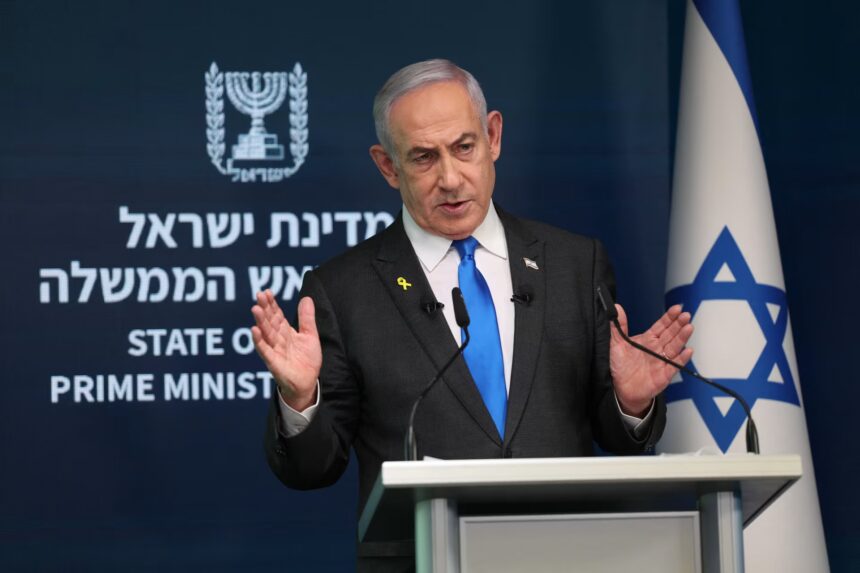
Israeli Prime Minister Benjamin Netanyahu has unveiled a post-war blueprint for the Gaza Strip, reaffirming that while Israel does not intend to permanently occupy the enclave, it aims to dismantle Hamas’s military capabilities and install a new civilian administration that excludes both Hamas and the Palestinian Authority.
In a statement published Friday on the social media platform X (formerly Twitter), Netanyahu stated that Gaza would be entirely disarmed and governed by a neutral civil body. “Gaza will be disarmed, and a peaceful civilian administration will be established one that is not Hamas, not the Palestinian Authority, and not affiliated with any terrorist organization,” he wrote.
This declaration comes amid growing domestic and international debate over Israel’s long-term objectives in Gaza, where an intense military campaign has continued for nearly two years. Just a day earlier, Netanyahu had announced Israel’s intention to assert full military control over the entire Gaza Strip as part of what he described as a temporary measure to ensure security and create a buffer zone against future threats.
“This is not about reoccupying Gaza,” Netanyahu said. “It’s about ensuring that Gaza never again becomes a launchpad for terrorism against Israel.”
According to reports, the Security Cabinet has formally approved a multi-pronged plan to guide the next phase of operations. The core elements include the dismantling of Hamas’s military infrastructure, the return of all Israeli hostages estimated to be around 50 individuals still in captivity ensuring Israeli oversight of Gaza’s security, and the installation of an interim civilian authority to manage governance in the post-conflict period.
Humanitarian assistance, Netanyahu added, would continue to be offered to civilians outside combat zones, and steps would be taken to prevent a vacuum of power that could enable the resurgence of armed factions.
The Israeli Cabinet also outlined five key conditions it will seek to enforce in any future ceasefire or diplomatic resolution with Hamas. These include: the complete disarmament of Hamas; the return of all hostages; the demilitarization of the entire Gaza Strip; sustained Israeli security control; and the establishment of an alternative civilian government with no ties to existing Palestinian leadership entities.
The prime minister defended the strategy as essential for both national security and regional stability. “These steps will bring our hostages home and ensure that Gaza will no longer pose a threat to Israel in the future,” he said.
However, the announcement has sparked varied reactions. Inside Israel, critics question the feasibility of establishing a new governing body without broader Palestinian involvement or international backing. Some political opponents warn that such a plan may lead to a prolonged military presence in Gaza under a different name, while others argue that sidelining both Hamas and the Palestinian Authority could further destabilize the region.
Internationally, the proposal is likely to meet resistance from governments and organizations that have long supported a two-state solution or recognized Palestinian self-rule under the Palestinian Authority. There are also concerns that creating a new administrative structure in Gaza without local or electoral legitimacy, could face rejection from the Palestinian population itself.
As the conflict continues with mounting casualties and humanitarian suffering, Israel’s post-war vision appears to be taking shape around core principles of disarmament, containment, and unilateral security measures. But key questions remain unanswered: Who will govern Gaza? How will such a government be chosen? And can it gain legitimacy among Palestinians and the international community alike?
For now, Netanyahu’s government is signaling a future for Gaza that breaks sharply from the past, but one that remains deeply contested, both politically and morally, on the world stage.
