

Ahmed Kamel – Egypt Daily News
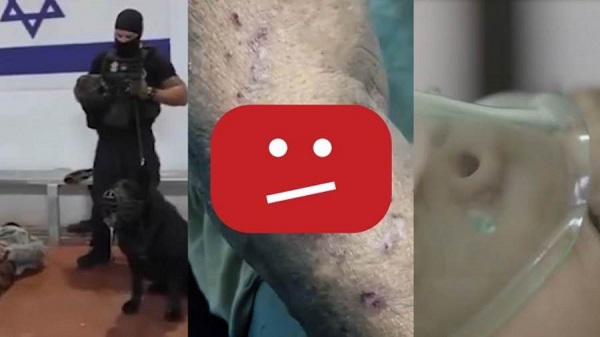
YouTube is facing mounting international criticism after reportedly deleting hundreds of videos that documented Israeli human rights violations in Gaza and the occupied West Bank, a move rights groups have condemned as an act of digital censorship that erases vital evidence of war crimes.
A report by the U.S.-based investigative outlet The Intercept, published Tuesday, revealed that the platform had removed more than 700 videos and shut down multiple Palestinian rights organizations’ channels since October 2023. The deleted content included field footage, investigative reports, and a documentary featuring mothers who survived what the report described as “genocidal attacks” in Gaza.
The Intercept: Digital Collusion to Conceal War Crimes
According to The Intercept, the takedowns are part of a broader pattern of U.S. government pressure on technology companies to suppress documentation of alleged Israeli war crimes. The report said YouTube has targeted “hundreds of Palestinian accounts and pieces of content,” effectively silencing key sources of information on the ground.
Among the deleted videos were investigative pieces about the killing of Palestinian-American journalist Shireen Abu Akleh, who was shot dead while covering an Israeli raid in Jenin in 2022, as well as footage showing home demolitions and civilian casualties in the West Bank and Gaza.
Rights Groups’ Accounts Removed
The platform also shut down official channels belonging to several major Palestinian human rights organizations, including Al-Haq, the Al Mezan Center for Human Rights, and the Palestinian Centre for Human Rights (PCHR). These groups are among the most prominent legal and documentation institutions in the occupied territories and are often cited by the United Nations and international courts.
The deleted channels reportedly contained hours of first-hand footage documenting potential violations of international humanitarian law from airstrikes on residential neighborhoods in Gaza to shootings of unarmed civilians in the West Bank.
YouTube’s Response and Legal Justifications
In response to the criticism, YouTube spokesperson Paul Bullwinkel said the company complies with “U.S. sanctions and commercial compliance laws,” implying that the deletions were tied to legal restrictions related to American sanctions on certain Palestinian entities.
However, human rights groups dismissed that reasoning as “a legal pretext for silencing Palestinian voices.” They argued that the move constitutes an alarming precedent for the digital erasure of evidence that could support future war crimes investigations.
“This decision represents a grave violation of freedom of expression and a setback for universal human rights principles,” said a spokesperson for Al-Haq, whose channel was deleted on October 3. “U.S. sanctions are being weaponized today to obstruct accountability and suppress Palestinian narratives.”
The Palestinian Centre for Human Rights, recognized by the UN as Gaza’s oldest human rights organization, accused YouTube of “protecting perpetrators from accountability” and contributing to a culture of impunity.
Global Condemnation
The backlash against YouTube has spread quickly among international advocacy groups and legal experts. Sarah Leah Whitson, executive director of Democracy for the Arab World Now (DAWN), called the removals “deeply disappointing and shocking.”
“Caving in to this arbitrary labeling of Palestinian organizations and then censoring them undermines the very principles of free expression and transparency that platforms like YouTube claim to uphold,” Whitson said.
Catherine Gallagher, a senior attorney at the Center for Constitutional Rights in New York, described YouTube’s actions as “a disgraceful endorsement of former U.S. President Donald Trump’s agenda to conceal evidence of human rights violations and war crimes.”
The Broader Implications
The removals highlight growing concerns over the role of major tech companies in shaping narratives about conflicts and human rights abuses. Digital rights advocates warn that platforms’ moderation policies — often influenced by geopolitical pressures risk turning social media into tools of state censorship.
For many Palestinian and international organizations, YouTube’s actions represent not just a violation of digital freedom, but the destruction of an irreplaceable archive of evidence. As conflicts in Gaza and the West Bank continue, the loss of such documentation could have lasting consequences for justice and historical record.
