

Ahmed Kamel – Egypt Daily News
Venezuela’s political upheaval and sudden reemergence as a focal point of U.S. foreign policy are reverberating far beyond Latin America, reviving long-dormant claims that the country has been treated as a bargaining chip in a broader struggle among global powers. As President Donald Trump presses ahead with plans to reshape Venezuela’s leadership and secure its oil resources, a former senior adviser has recalled that Russia once floated an extraordinary geopolitical trade-off: U.S. freedom of action in Venezuela in exchange for Russian latitude in Ukraine.
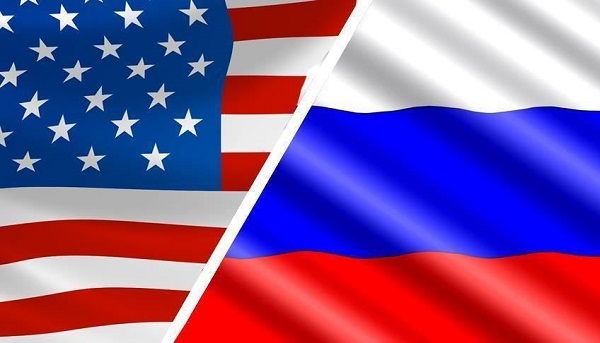
Fiona Hill, who served as President Trump’s top adviser on Russia and Europe, said Russian officials in 2019 repeatedly suggested what she described as a “very strange swap” linking Venezuela and Ukraine. According to Hill, the Kremlin signaled it was willing to pull back support for Venezuelan President Nicolás Maduro if the United States, in turn, refrained from interfering in Europe—particularly in Ukraine.
Hill’s remarks, first delivered during congressional testimony in 2019, resurfaced this week and gained renewed attention following the recent U.S. operation that led to Maduro’s removal. Speaking again to the Associated Press, Hill clarified that Russia never made a formal offer. However, she said the message was conveyed multiple times through indirect channels, including conversations with Russia’s then-ambassador to Washington, Anatoly Antonov.
“The implication was always there,” Hill said. “It was like they were saying, ‘How about we make a deal?’ But at the time, no one in the United States was interested.”
The idea was reinforced, she noted, through articles in Russian media that invoked the Monroe Doctrine—a 19th-century principle opposing European interference in the Western Hemisphere in exchange for U.S. non-interference in Europe. Trump himself later cited the doctrine to justify American intervention in Venezuela, lending new resonance to Moscow’s earlier messaging.
In April 2019, the Trump administration sent Hill to Moscow to deliver a blunt response. “Ukraine and Venezuela are not linked,” she recalled telling Russian officials. At the time, Washington was aligned with its European and regional allies in recognizing opposition leader Juan Guaidó as Venezuela’s interim president, while Russia continued backing Maduro.
Seven years later, the geopolitical landscape looks markedly different.
Following Maduro’s ouster, the United States has declared that it will effectively administer Venezuela’s transition, while simultaneously moving to unlock the country’s vast oil reserves for American energy companies. Trump has announced plans for the United States to receive between 30 and 50 million barrels of Venezuelan oil at market prices and has instructed his energy secretary to execute the plan immediately. The White House is also preparing high-level talks with executives from Exxon, Chevron, and ConocoPhillips to discuss Venezuela’s energy future.
At the same time, Trump has reignited controversy on multiple fronts, renewing threats to seize Greenland, an autonomous Danish territory and NATO member and warning of possible military action against Colombia, which he has accused of facilitating global cocaine trafficking.
For Hill, these moves reinforce a worldview long championed by the Kremlin. She said Russia would be “delighted” by the normalization of great powers carving out spheres of influence, because it validates the idea that “might makes right.”
She warned that U.S. actions in Venezuela could undermine the moral and legal arguments used by Kyiv’s allies to condemn Russia’s ambitions in Ukraine. “It becomes much harder to argue that Russia’s goals in Ukraine are illegitimate,” Hill said, “when we have just witnessed a case in which the United States has overthrown, or at least removed, the leadership of another country using highly questionable justifications.”
The Trump administration has rejected such comparisons, insisting that its actions in Venezuela constituted a law-enforcement operation and that Maduro’s arrest was carried out legally. Russian officials, for their part, have condemned the U.S. intervention as “aggression,” though President Vladimir Putin has not commented directly on the operation. The Russian Foreign Ministry has issued statements denouncing Washington’s actions, while declining to address Hill’s account of past diplomatic overtures.
As Venezuela becomes the latest stage for a renewed contest among major powers, Hill’s revelations underscore a persistent and uncomfortable reality: for all the rhetoric about sovereignty and international law, smaller nations often find themselves reduced to leverage in negotiations among the world’s strongest states. Whether Venezuela’s future will be shaped by its own people or by the calculations of distant capitals remains an open and deeply contested question.
